TRENDING

Friday, 18 September 2026
----------------------
7 Rabi' Al-Thani 1448 AH
In two years, Trump’s second term saw a cascade of trade, technology, and supply‑chain moves that let China close gaps in AI, rare‑earths and market influence. The fallout lands on American factories, farmers and global consumers while the power balance tilts eastward.
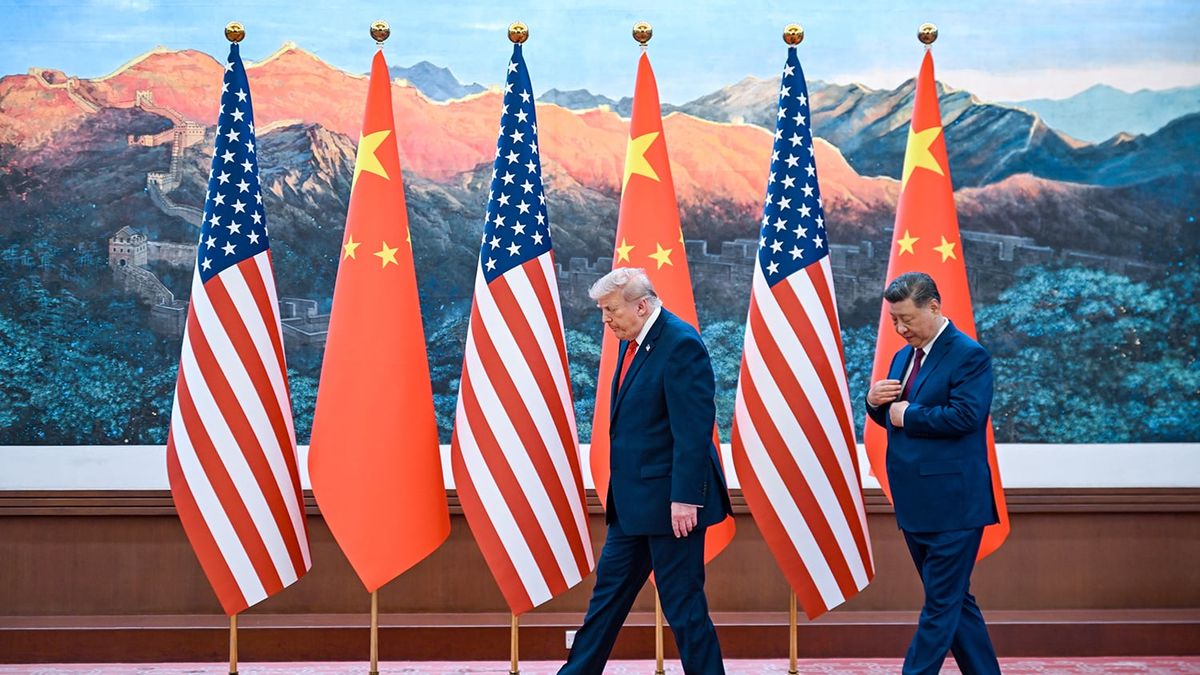
In the first 19 months of Donald Trump’s second administration, the United States pursued a renewed trade war with China, imposed volatile tariffs on hundreds of Chinese goods, and attempted to tighten export controls on advanced chips. At the same time, Beijing accelerated its AI research, secured rare‑earth supplies, and deepened ties with Russia and the Global South. The upcoming Xi‑Trump summit on September 24 is framed as a diplomatic courtesy, but the underlying shift in economic and technological leverage is already evident.
Trump’s domestic calculus drove the policy mix. Election‑year rhetoric demanded a visible “America First” stance, making tariffs a political trophy even as they strained U.S. manufacturers and farmers. The 2025 National Security Strategy omitted China as a primary competitor, leaving the bureaucracy to interpret the threat through fragmented lenses—trade, military, and technology—without a unified metric of success.
China, by contrast, pursued a long‑term “rise of the East” agenda articulated by Xi Jinping. By weathering the tariff storm, Beijing rerouted exports through Vietnam, Taiwan and Mexico, preserving market share while the United States bore higher consumer prices. Simultaneously, Beijing invested in rare‑earth and magnet production, turning supply‑chain chokepoints into bargaining chips. In AI, state‑backed labs and private firms leveraged cheaper compute and open‑weight models to narrow the gap with U.S. firms, exploiting gaps in U.S. export‑control enforcement. The result: a multidimensional erosion of American leverage—economic, technological, and diplomatic—without a single, headline‑grabbing crisis to signal the loss.
The human cost spreads across continents. In the Midwest, soybean growers saw revenues plunge when China retaliated with import bans, forcing the administration into a truce that left farmers with unpaid contracts and volatile market prices. Mid‑Atlantic factories faced higher input costs as tariffs on steel and electronics rose, prompting layoffs and reduced overtime. American consumers felt the pinch at the checkout, paying more for everything from smartphones to kitchen appliances.
Across the Pacific, Chinese workers in rare‑earth mines and AI data‑labeling centers saw job creation surge, but often under precarious labor conditions. In Vietnam and Mexico, factories expanded to absorb diverted Chinese output, creating low‑wage employment that masks the broader displacement of U.S. manufacturing jobs. The Global South, increasingly courted by Beijing for infrastructure projects, now bears the environmental and debt burdens of new supply‑chain routes that were hastily built to sidestep U.S. restrictions.
Washington’s official narrative emphasizes “protecting American jobs” and “defending national security,” yet downplays the systemic loss of bargaining power. Statements from the Trade Representative celebrate a “balanced trade relationship” while ignoring that the trade deficit merely shifted to third‑party exporters. Congressional hearings spotlight Chinese cyber‑espionage but rarely address how U.S. export‑control loopholes allowed banned chips to re‑enter Chinese factories via allied nations.
Beijing, meanwhile, frames its rise as “peaceful development,” sidestepping the strategic intent to constrain U.S. influence in Asia, weaken Western institutions, and reshape global standards. Corporate lobbying groups in Washington, especially those tied to agribusiness and heavy industry, receive policy concessions that mask the broader strategic cost, a nuance absent from mainstream coverage.
Watch the Xi‑Trump summit for concrete language on rare‑earth licensing, AI export limits, and any revision of the Busan‑type truce. Legislative proposals in the U.S. Congress to re‑shoring critical minerals and to tighten semiconductor export controls will test whether the administration can translate rhetoric into durable security measures.
In the tech arena, the next wave of AI model regulation—both domestic and multilateral—will determine if China can sustain its rapid catch‑up or if the U.S. can re‑assert a lead. Finally, the global supply‑chain realignment in Southeast Asia will reveal who ultimately benefits: multinational firms seeking cheaper production or a more resilient, diversified network that reduces both U.S. and Chinese leverage. The trajectory of these developments will shape whether the current power shift is a temporary wobble or a lasting rebalancing toward Beijing.
Editor's Note: Analysis based on publicly available policy statements and recent academic studies; some internal U.S. deliberations remain undisclosed.
Source referenced: FOREIGNPOLICY
This brief was synthesized by our Editorial Engine and reviewed by The Ground Narrative team.


