TRENDING

Thursday, 15 October 2026
----------------------
4 Jumada Al-Awwal 1448 AH
The US Department of Justice's subpoena of New York Times journalists over a story about security concerns involving President Trump's new Qatari-donated Air Force One has sparked concerns about press freedom and national security.
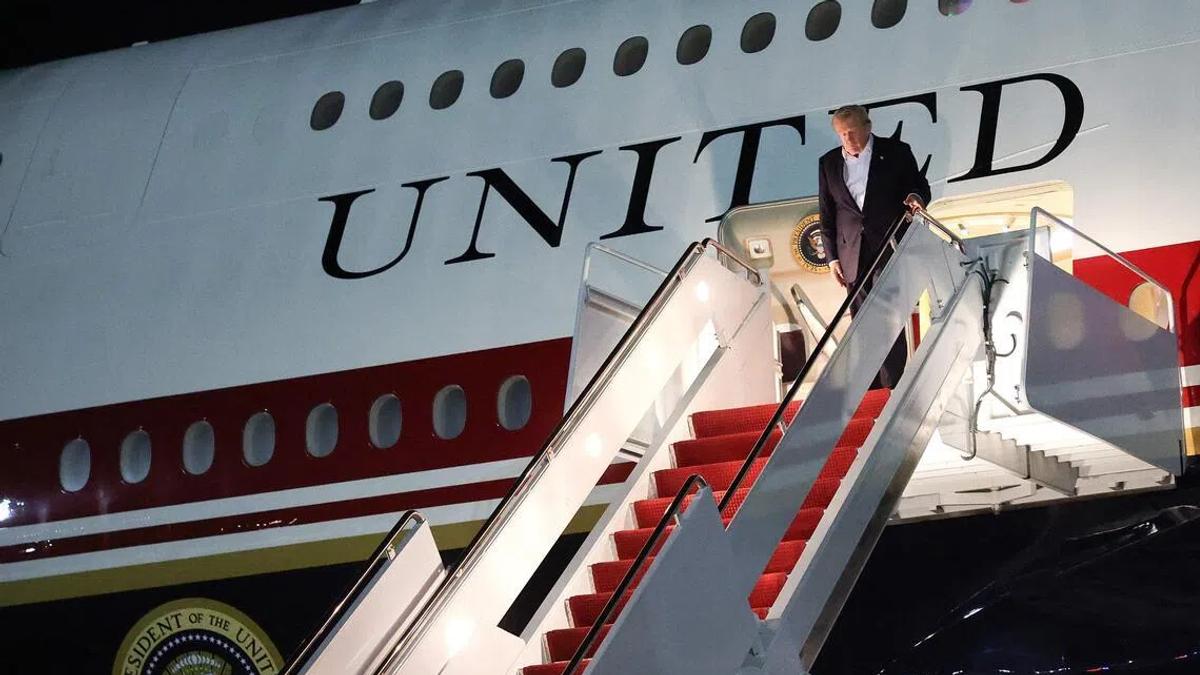
The US Department of Justice's decision to subpoena several New York Times journalists over a story about security concerns involving President Trump's new Qatari-donated Air Force One has sent shockwaves through the media and civil liberties communities. The subpoenas, which were issued on July 10 and delivered to reporters' homes by federal agents, are seen as an attempt to intimidate independent media and silence critical reporting.
This move is not an isolated incident. President Trump has a long history of attacking the press, labeling it 'fake news' and 'enemies of the people.' His administration has also taken steps to restrict access to information and undermine the credibility of the media. The subpoena of NYT journalists is a continuation of this trend, and it raises serious concerns about the administration's commitment to press freedom.
The Trump administration's motivation for subpoenaing the NYT journalists is likely twofold. Firstly, it is an attempt to control the narrative around the new Air Force One, which has been the subject of security concerns. By targeting the journalists who reported on these concerns, the administration is trying to silence the story and prevent further scrutiny. Secondly, it is a broader attempt to intimidate the press and prevent critical reporting on the administration's actions.
The implications of this move are not limited to the United States. The Trump administration's actions set a dangerous precedent for other governments around the world, who may see this as a green light to target and intimidate journalists. This has serious implications for global press freedom, as it undermines the ability of journalists to report on critical issues and hold those in power accountable.
The consequences of this move will be far-reaching. It will have a chilling effect on journalism, as reporters and editors will be hesitant to report on sensitive topics for fear of retribution. This will lead to a lack of transparency and accountability, as the administration will be able to operate with impunity. It will also undermine the credibility of the media, as the public will question the accuracy and reliability of reporting.
Editor's Note: The motivations behind the administration's actions are uncertain, but it is clear that this move is a threat to press freedom and national security.
Source referenced: STRAITSTIMES
This brief was synthesized by our Editorial Engine and reviewed by The Ground Narrative team.