TRENDING

Thursday, 15 October 2026
----------------------
4 Jumada Al-Awwal 1448 AH
The 2026 FIFA World Cup in the United States has become a testing ground for policing technologies, with the Department of Homeland Security (DHS) coordinating security efforts across host cities. This raises concerns about the use of facial recognition, biometric scanners, and other surveillance tools, which may infringe on civil liberties.
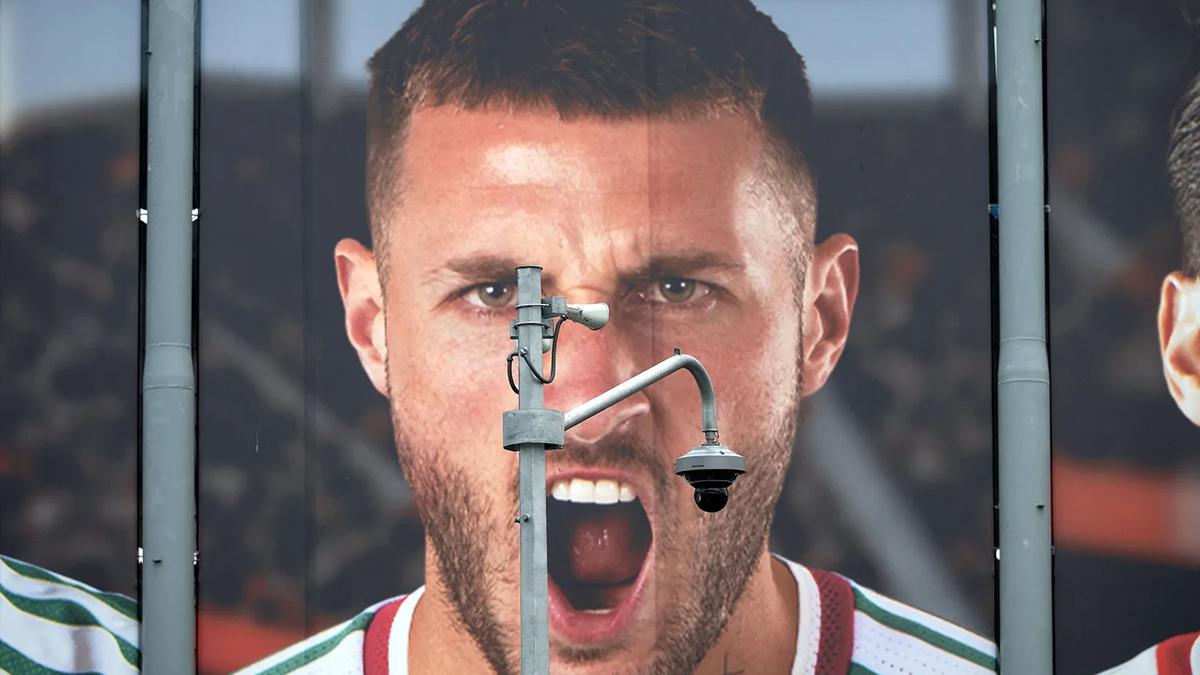
The 2026 FIFA World Cup in the United States has become a significant event for the Department of Homeland Security (DHS) to test and deploy advanced policing technologies. The tournament has been designated as a SEAR 1 and SEAR 2 event, requiring the most stringent security measures, including the use of facial recognition, biometric scanners, and other surveillance tools.
DHS oversees events like the World Cup and the Super Bowl, using a federal mechanism called the Special Event Assessment Rating (SEAR) to designate events as national security priorities. This classification triggers coordination between federal and local law enforcement agencies, leaving FIFA with limited oversight in stadium security planning.
The World Cup has seen the deployment of various surveillance technologies, including:
* Facial recognition: Flock Safety's platform, which uses 30 billion images scraped from the internet without express consent, has been used to identify individuals in the crowd.
* Biometric scanners: IDEMIA's fingerprint or facial matching sensors are used to verify pre-verified ticket holders and credentialed personnel.
* Audio detectors: Flock's audio detectors are designed to alert law enforcement after identifying sounds like gunfire or general cries of distress.
* Location data: U.S. Immigration and Customs Enforcement (ICE) agents are equipped with license plate readers, facial recognition platforms, and location data, obtained commercially or through legal processes.
The widespread use of surveillance technologies raises concerns about the infringement of civil liberties. The Electronic Frontier Foundation's Adam Schwartz notes that the fine print of ticket purchases may not be comprehensible to a reasonable person, effectively obtaining consent for surveillance.
The use of policing technologies in the World Cup has regional implications, particularly in the context of the European Union and Canada, which have effectively banned Clearview AI. The United States' approach to surveillance may set a precedent for other countries, highlighting the need for international cooperation and regulation.
The World Cup has become a testing ground for policing technologies, with potential long-term consequences for civil liberties and international relations. As the use of surveillance technologies becomes more widespread, it is essential to address the concerns surrounding their deployment and ensure that they are used in a manner that respects human rights and dignity.
Editor's Note: The analysis is based on publicly available information and may not reflect the full scope of the issue.
Source referenced: FOREIGNPOLICY
This brief was synthesized by our Editorial Engine and reviewed by The Ground Narrative team.


