TRENDING

Thursday, 15 October 2026
----------------------
4 Jumada Al-Awwal 1448 AH
Taiwanese President Lai Ching-te emphasized that maintaining the political status quo with Beijing is vital for securing global technology supply chains, particularly in high-end semiconductors. His remarks at the COMPUTEX trade fair underscore Taiwan's indispensable role in the global economy amidst persistent geopolitical tensions.
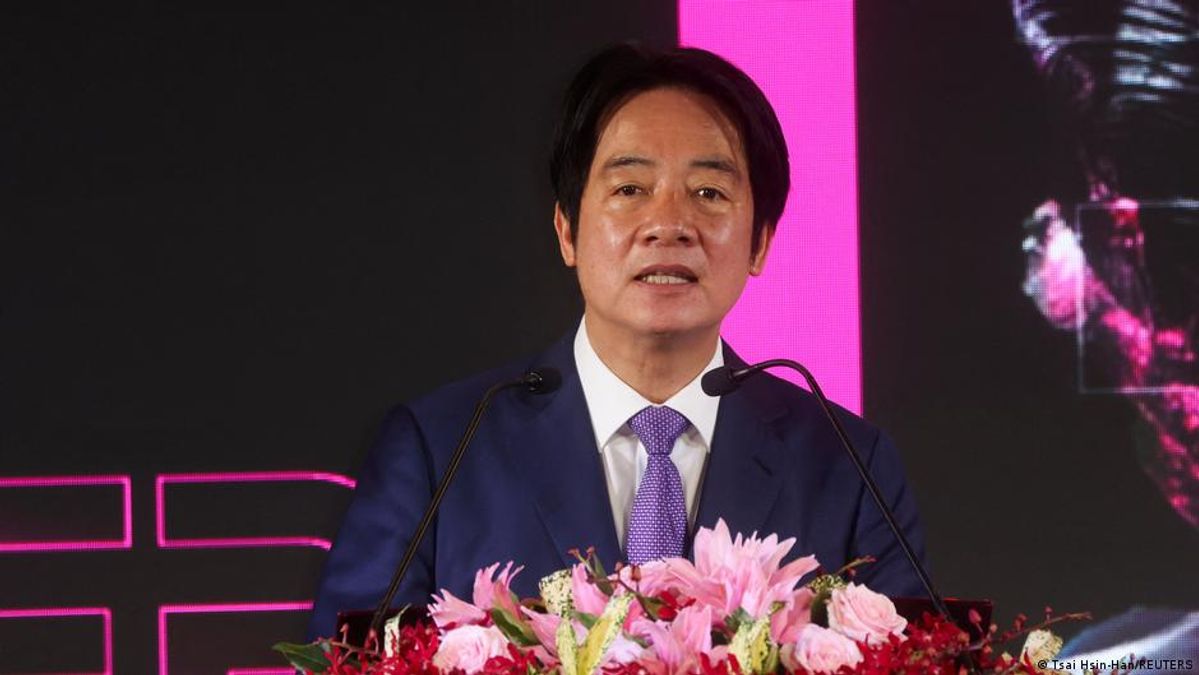
Taiwanese President Lai Ching-te, speaking at the COMPUTEX technology trade fair in Taipei, has articulated a clear strategic imperative: the preservation of the political status quo across the Taiwan Strait is the most responsible and effective approach to safeguard global technology supply chains. This statement, delivered on Tuesday, June 4, 2024, to an assembly of leading tech executives, underscores the profound intersection of geopolitics, economic security, and technological advancement in the Indo-Pacific region.
At the heart of President Lai's message is Taiwan's critical position as the global epicenter for advanced semiconductor manufacturing. As the home of TSMC, the world's largest contract chipmaker, Taiwan is an indispensable supplier for tech giants like Nvidia and Apple. The burgeoning demand for Artificial Intelligence (AI) technologies, which rely heavily on high-end chips and semiconductors, further amplifies Taiwan's strategic importance. Nvidia CEO Jensen Huang, also present at COMPUTEX, echoed this sentiment, calling Taiwan the "epicenter of the ecosystem" and highlighting the island's unparalleled capabilities in technology manufacturing. This concentration of advanced manufacturing capacity means that any disruption to Taiwan's stability would send catastrophic ripples through the global economy, impacting everything from consumer electronics to critical infrastructure and defense systems.
President Lai's commitment to maintaining the "status quo" refers to the long-standing, albeit uneasy, arrangement governing Taiwan's relationship with mainland China and the wider international community. For decades, this stalemate has seen Beijing assert its claim over Taiwan as an integral part of its territory, reserving the right to unify it by force, while simultaneously refraining from immediate military action. Concurrently, most nations, including the United States and Germany, adhere to a "one China" policy, formally recognizing only one Chinese state, yet many maintain robust unofficial relations with Taiwan, often serving as crucial trade partners and security guarantors. This delicate balance allows Taiwan to operate as a de facto independent entity, fostering its democratic institutions and economic prowess, while avoiding a direct confrontation that could destabilize the region.
President Lai's emphasis on stability is a strategic move designed to reassure international partners and investors. By framing Taiwan's political stability as a prerequisite for global economic security, he seeks to reinforce the island's value as a reliable and trustworthy partner. This approach aims to garner continued international support and deter potential aggression from Beijing, which views any move towards formal independence by Taiwan as a red line. The United States, for instance, walks a fine line, adhering to the "one China" policy while simultaneously being Taiwan's most significant backer and security guarantor, providing defensive capabilities and maintaining strategic ambiguity regarding intervention in a cross-strait conflict. The complexities of this relationship are further highlighted by past political rhetoric, which has sometimes questioned the economic benefits or security commitments related to Taiwan, underscoring the constant need for Taiwan to articulate its strategic importance.
The Taiwan Strait remains one of the world's most significant geopolitical flashpoints. A shift from the current status quo, whether through an assertive move by Beijing or a declaration of independence by Taipei, carries immense risks. Such an event could trigger a major international crisis, potentially drawing in global powers and leading to widespread economic disruption far beyond the tech sector. The global reliance on Taiwan's semiconductor industry means that the island's stability is not merely a regional concern but a matter of global economic and national security. President Lai's remarks, therefore, serve as a crucial reminder to the international community of the high stakes involved and the collective responsibility to uphold peace and stability in the Taiwan Strait, ensuring the continued flow of essential technologies that power the modern world.
Editor's Note: The original article contained a factual error regarding a 'recent trip' by 'US President Donald Trump' to China. This specific detail was omitted from the analysis to maintain accuracy and journalistic integrity, as it appears to be incorrect.
Source referenced: DW
This brief was synthesized by our Editorial Engine and reviewed by The Ground Narrative team.