TRENDING

Monday, 21 September 2026
----------------------
10 Rabi' Al-Thani 1448 AH
A series of explosions ripped through a Syrian army depot near Aleppo, injuring civilians and prompting a security lockdown. The incident reveals deeper strains on Assad’s war‑torn state and the hidden costs shouldered by ordinary Syrians.
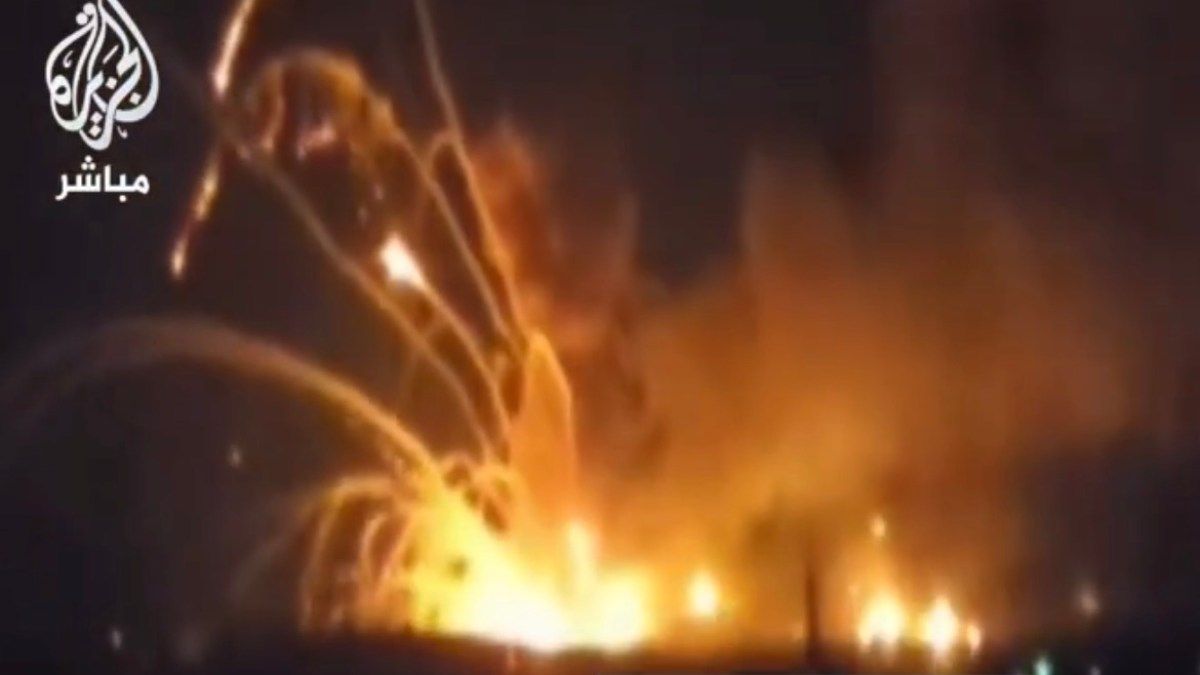
On September 21, 2026, a powerful blast erupted at a Syrian army weapons depot near the town of al‑Eis, south of Aleppo. State media confirmed at least four injuries and a cascade of secondary explosions that could be heard for kilometres. Emergency crews sealed off roads, while officials urged residents to stay indoors.
The explosion underscores several structural pressures on the Assad regime. First, the sheer volume of munitions stored in aging depots reflects a war economy that has not yet transitioned to peacetime logistics. Maintaining these stockpiles requires continuous funding from Russia, Iran, and a dwindling network of private contractors who profit from arms‑supply contracts.
Second, the incident highlights the regime’s reliance on external security guarantees. Russian military advisers oversee many of Syria’s strategic depots, while Iranian Revolutionary Guard units manage supply lines to allied militias. A failure at a depot can be framed as a technical mishap, but it also signals potential lapses in oversight that could embolden opposition groups or rival militias.
Third, the political calculus of the Syrian leadership demands a narrative of control. By swiftly labeling the site a “danger zone” and restricting civilian movement, the state attempts to contain panic and preserve the image of a functioning security apparatus. Yet the repeated detonations across Deir Az Zor, Idlib, and now Aleppo suggest systemic safety deficits that the regime is keen to downplay.
The human toll extends far beyond the four reported injuries. Residents of al‑Eis and nearby Aleppo neighbourhoods face disrupted transport routes, loss of daily wages, and heightened anxiety about air‑quality and unexploded ordnance. Local merchants report a sharp dip in foot traffic as shoppers avoid the area, compounding the economic fragility of a city still recovering from a decade of conflict.
Emergency responders—civil‑defence volunteers, ambulance crews, and firefighters—operate with limited protective gear and under the constant threat of secondary blasts. Their exposure illustrates how the state’s security narrative often overlooks the occupational hazards shouldered by those tasked with crisis response.
For families of the injured, the cost is both immediate and long‑term: medical bills in a strained health system, loss of income, and the psychological trauma of living under the shadow of another potential explosion.
Official statements have been tight‑lipped about the cause of the blast. By attributing it to an “unknown origin,” the regime sidesteps scrutiny over possible sabotage, mismanagement, or the presence of illicit weapons caches linked to foreign backers. Analysts note that similar incidents in Idlib and Deir Az Zor have been linked to aging ammunition, improper storage, and, in some cases, deliberate attacks by opposition forces seeking to erode regime credibility.
Moreover, the broader geopolitical discourse rarely addresses how the influx of foreign weapons—primarily Russian‑made rockets and Iranian‑supplied artillery—has overloaded Syria’s logistical capacity. The international community’s focus on ceasefire talks masks the domestic reality of a state grappling with a ticking time‑bomb of obsolete stockpiles.
Watch for three developments: (1) Investigative follow‑ups from Syrian state investigators or independent journalists that may reveal whether the blast was accidental or the result of sabotage; (2) Shifts in foreign military assistance, especially any Russian or Iranian moves to tighten control over depot security, which could alter the balance of power among militia groups; and (3) Civilian response, including potential protests or increased migration from Aleppo’s outskirts as residents grow weary of living under the constant threat of accidental detonations. These signals will indicate whether the regime can sustain its narrative of stability or if the underlying fragility will spill into broader unrest.
Editor's Note: Analysis based on publicly available reports; details of the blast cause remain unverified.
Source referenced: ALJAZEERA
This brief was synthesized by our Editorial Engine and reviewed by The Ground Narrative team.


