TRENDING

Sunday, 25 October 2026
----------------------
14 Jumada Al-Awwal 1448 AH
Sweden's innovative 'Battery on Wheels' project harnesses electric vehicle batteries to power homes, reducing energy costs and grid strain.
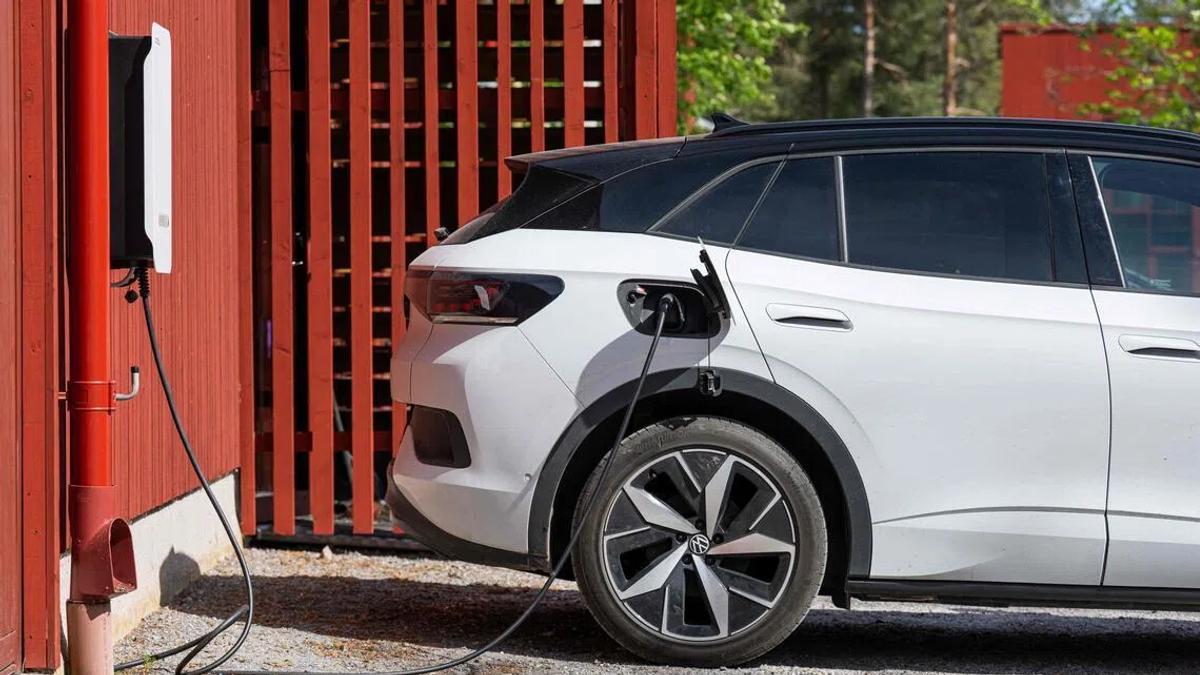
Sweden's small town of Hudiksvall is at the forefront of a revolutionary new approach to energy management, harnessing the power of electric vehicle (EV) batteries to power homes. The 'Battery on Wheels' project, a joint initiative between housing association BRF Stenberg, carmaker Volkswagen, and Swedish utility company Vattenfall, has successfully demonstrated the potential of Vehicle-to-Grid (V2G) technology on a residential scale.
The project involves connecting EVs to charging points in the residents' garages, which are equipped with bidirectional chargers. When the EVs are not in use, their surplus energy is fed back into the grid, powering the homes' electrical appliances, lighting, and other systems. The software controlling the system ensures that the car batteries charge up in off-peak hours, when demand for electricity in the flats is low, and switches the flow so the batteries feed electricity back into the local power grid during peak usage hours.
The 'Battery on Wheels' project is driven by a desire to reduce energy costs and grid strain. By leveraging the stored energy in EV batteries, the project aims to stabilize the grid, lower electricity bills, and promote the adoption of renewable energy sources. This innovative approach also highlights the potential of EVs to serve as mobile energy storage units, reducing the need for traditional power plants and grid infrastructure.
Sweden's 'Battery on Wheels' project has significant regional implications, particularly in the context of Europe's growing demand for EVs. As more countries transition to electric transportation, the potential for V2G technology to become a mainstream solution for energy management grows. The project's success in Sweden could serve as a model for other European countries, particularly those with high EV adoption rates, such as Norway and Denmark.
The widespread adoption of V2G technology could have far-reaching consequences for the energy sector, including reduced greenhouse gas emissions, lower energy costs, and increased grid resilience. However, several obstacles must be overcome before this technology can be scaled up, including the need for a large share of the vehicle fleet to be electric, bureaucratic hurdles, and concerns about potential wear on EV batteries.
Sweden's 'Battery on Wheels' project is a groundbreaking example of innovative energy management, harnessing the power of EV batteries to power homes and reduce energy costs. As the world transitions to a more sustainable energy future, this technology has the potential to play a significant role in shaping the energy landscape.
Editor's Note: While the project's success is promising, further research is needed to address concerns about potential wear on EV batteries and bureaucratic hurdles.
Source referenced: STRAITSTIMES
This brief was synthesized by our Editorial Engine and reviewed by The Ground Narrative team.