TRENDING

Sunday, 18 October 2026
----------------------
7 Jumada Al-Awwal 1448 AH
Sudan's government has vehemently rejected new U.S. sanctions imposed over alleged chemical weapons use by its army, labeling them as illegal and unilateral. This diplomatic standoff exacerbates tensions as the civil war against the Rapid Support Forces continues, raising concerns about international law and humanitarian impact.
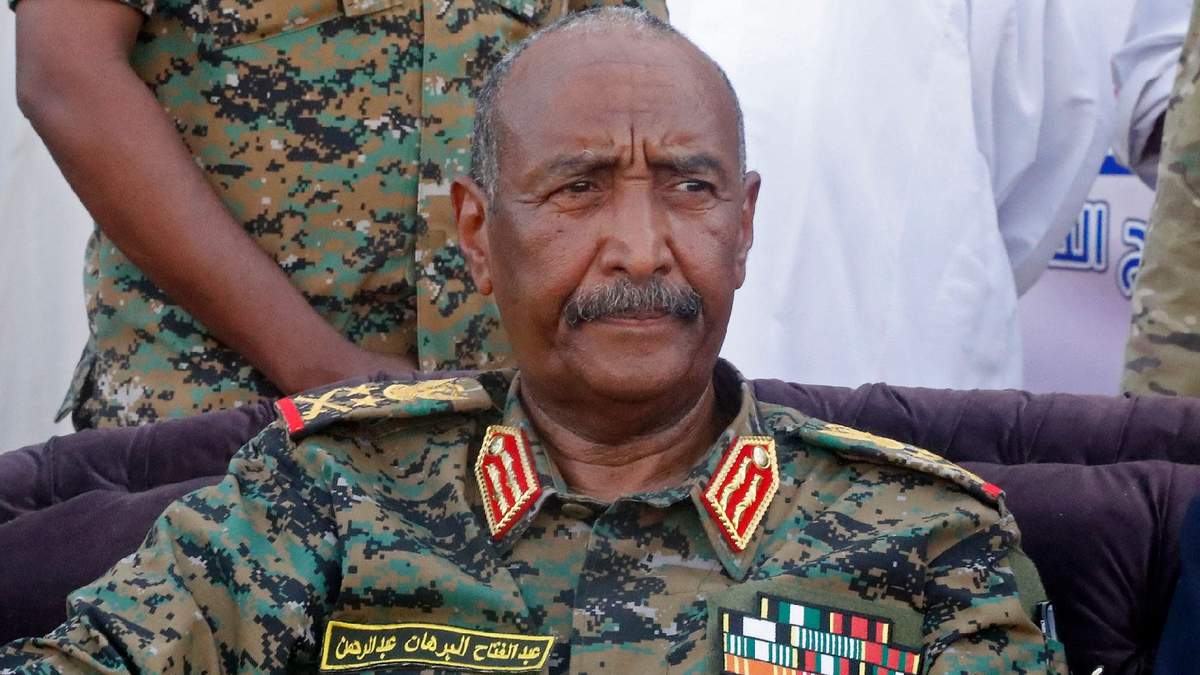
The Sudanese government has officially rejected sanctions imposed by the United States, which cite allegations of chemical weapons use by the Sudanese Armed Forces (SAF) in the ongoing conflict against the Rapid Support Forces (RSF). In a statement issued by its Foreign Ministry, Sudan described the U.S. measures as unilateral, illegal, and based on "false claims," urging Washington to adhere to established international legal procedures and present any supporting evidence.
On July 17, 2026, the United States announced additional sanctions against Sudan, which took effect on July 20, 2026. These measures encompass economic, financial, and trade restrictions, including a directive for the U.S. to oppose international loans, financial, and technical assistance to Sudan. Crucially, core food assistance and urgent humanitarian aid are explicitly exempted from these restrictions. The U.S. administration justified these sanctions by stating that the Sudanese government failed to comply with the requirements of the Chemical and Biological Weapons Control and Warfare Elimination Act within a three-month deadline.
Sudan's rejection, articulated by its Foreign Ministry, asserts that the allegations of chemical weapons use are baseless and rely on anonymous media sources. The ministry accused Washington of bypassing recognized international mechanisms and undermining international legitimacy by imposing what it termed "unlawful measures." This stance underscores a fundamental disagreement over the legitimacy of unilateral sanctions and the evidentiary standards required for such punitive actions.
This diplomatic escalation unfolds against the backdrop of a devastating civil war in Sudan, which erupted in April 2023 between the SAF, led by army chief Abdel Fattah al-Burhan, and the paramilitary RSF. The conflict has plunged Sudan into a severe humanitarian crisis, displacing millions and causing widespread destruction. The U.S. sanctions introduce a new layer of complexity to an already volatile situation.
From Washington's perspective, the sanctions are likely intended to uphold international norms against the use of chemical weapons, a grave violation of international law. By invoking the Chemical and Biological Weapons Control and Warfare Elimination Act, the U.S. aims to exert pressure on the SAF, potentially to deter further alleged use, influence the conduct of the conflict, or compel greater adherence to international humanitarian law. The exemption of humanitarian aid suggests an attempt to mitigate the impact on the civilian population, though the broader economic restrictions will undoubtedly exacerbate Sudan's already dire economic conditions.
Sudan's rejection, however, highlights its determination to resist external pressure and maintain its sovereignty. By challenging the legality and basis of the sanctions, Khartoum seeks to delegitimize the U.S. actions on the international stage. This move could also be an attempt to rally support from other nations that are critical of unilateral sanctions or that maintain closer ties with the current Sudanese leadership. The accusation of the U.S. bypassing international mechanisms points to a broader debate about the role of multilateral institutions versus individual state actions in enforcing international law.
The imposition of these sanctions and Sudan's defiant rejection carry significant implications for regional stability and international relations. Sudan is a strategically vital country in the Horn of Africa, bordering several nations grappling with their own internal challenges. A further destabilized Sudan, economically crippled and diplomatically isolated by Western powers, could become more susceptible to influence from other global actors less concerned with human rights or international legal norms.
Economically, the sanctions will likely deepen Sudan's financial woes, making it even harder for the war-torn nation to secure much-needed international aid, investment, and reconstruction funds. This could prolong the conflict, intensify the humanitarian crisis, and further entrench the suffering of the Sudanese people. The effectiveness of these sanctions in altering the SAF's behavior remains to be seen, particularly given the government's strong denial and its historical resilience to external pressure.
Diplomatically, the episode further strains the already fraught relationship between Sudan and the United States. It underscores the challenges of international intervention in complex civil conflicts, particularly when allegations of severe violations are met with outright denial and accusations of overreach. The international community will be closely watching for any independent verification of the chemical weapons allegations, as well as the broader impact of these sanctions on the trajectory of Sudan's devastating civil war and its geopolitical alignment.
Source referenced: CGTN
This brief was synthesized by our Editorial Engine and reviewed by The Ground Narrative team.