TRENDING

Sunday, 25 October 2026
----------------------
14 Jumada Al-Awwal 1448 AH
South Africa's President Cyril Ramaphosa has announced a plan to tackle illegal migration, but anti-migrant protests and retaliatory measures from neighboring countries threaten regional stability.
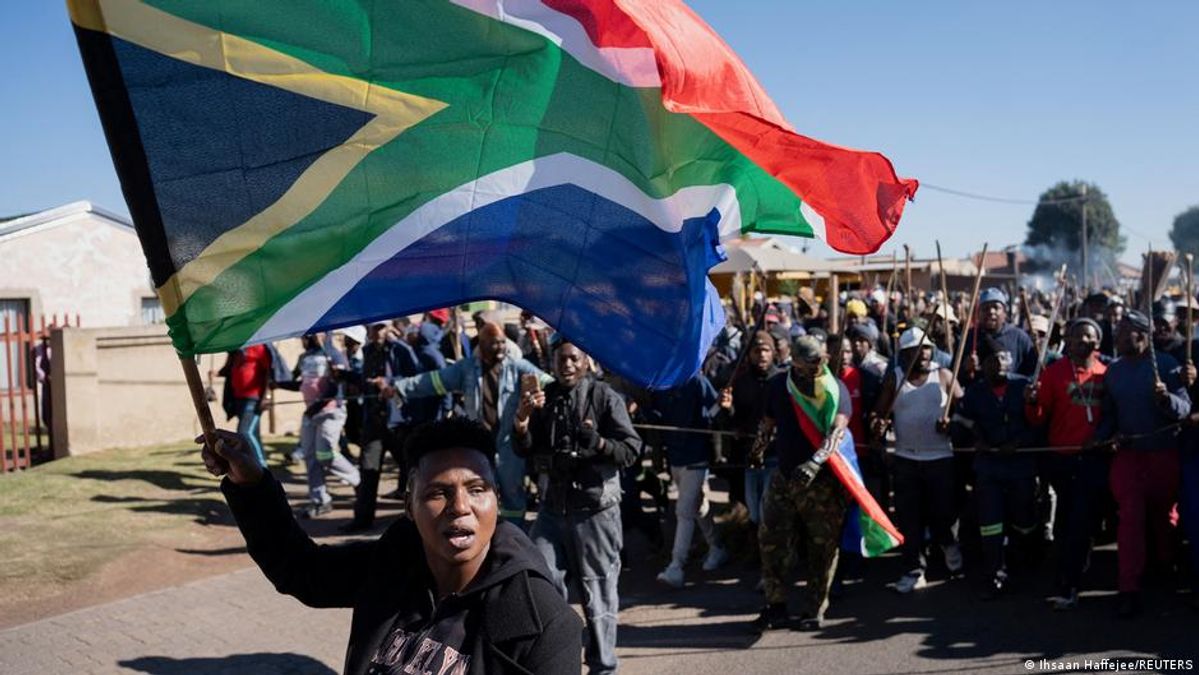
South Africa, a country with a rich history and diverse culture, has been grappling with a migration crisis that has far-reaching implications for regional stability, economic growth, and social cohesion. The crisis has been fueled by a combination of economic, political, and social factors that have created an environment conducive to migration.
South Africa's economy has been struggling in recent years, with high unemployment rates and a lack of job opportunities. This has led to a brain drain, as many skilled workers have left the country in search of better opportunities. The country's mining sector, which has historically relied on migrant labor, has also been declining, leading to a decrease in the number of migrant workers.
The South African government has been criticized for its handling of the migration crisis. President Cyril Ramaphosa's plan to tackle illegal migration has been met with skepticism, as many believe that it does not address the root causes of the problem. The government's failure to create jobs and address corruption has contributed to the rise of anti-migrant sentiment.
The social fabric of South Africa is complex, with a history of apartheid and ongoing social and economic inequalities. The country's xenophobic attacks have been a major concern, with many migrants facing violence and harassment. The government's failure to address these issues has contributed to the migration crisis.
The migration crisis has far-reaching implications for regional stability. Neighboring countries, such as Ghana and Nigeria, have threatened retaliatory measures against South Africa, which could lead to a destabilization of the region. The crisis has also raised concerns about the safety of migrants, who are often vulnerable to exploitation and violence.
The future consequences of the migration crisis are uncertain, but it is clear that the situation will continue to deteriorate unless the government takes decisive action. The government must address the root causes of the problem, including unemployment, corruption, and social inequality. It must also work with neighboring countries to find a solution to the migration crisis.
* President Cyril Ramaphosa: The President of South Africa who has announced a plan to tackle illegal migration.
* Anti-migrant groups: Groups that have been protesting against migrants and calling for their deportation.
* Neighboring countries: Countries such as Ghana and Nigeria that have threatened retaliatory measures against South Africa.
* The migration crisis: A complex web of economic, political, and social factors that has created an environment conducive to migration.
* President Ramaphosa's plan: A plan to tackle illegal migration that has been met with skepticism.
* Xenophobic attacks: Attacks against migrants that have been a major concern.
* The migration crisis has been ongoing for several years, with the situation deteriorating in recent months.
* President Ramaphosa's plan was announced in June 2026.
* South Africa: A country with a rich history and diverse culture that has been grappling with a migration crisis.
* Neighboring countries: Countries such as Ghana and Nigeria that have threatened retaliatory measures against South Africa.
* Economic factors: The country's struggling economy has led to high unemployment rates and a lack of job opportunities.
* Political factors: The government's failure to create jobs and address corruption has contributed to the rise of anti-migrant sentiment.
* Social factors: The social fabric of South Africa is complex, with a history of apartheid and ongoing social and economic inequalities.
* The government must address the root causes of the problem, including unemployment, corruption, and social inequality.
* It must also work with neighboring countries to find a solution to the migration crisis.
The South African migration crisis is a complex web of economic, political, and social factors that has created an environment conducive to migration. The government must take decisive action to address the root causes of the problem and work with neighboring countries to find a solution. The future consequences of the migration crisis are uncertain, but it is clear that the situation will continue to deteriorate unless the government takes action.
Editor's Note: The analysis is based on publicly available information and may not reflect the full complexity of the situation.
Source referenced: DW
This brief was synthesized by our Editorial Engine and reviewed by The Ground Narrative team.