TRENDING

Monday, 19 October 2026
----------------------
8 Jumada Al-Awwal 1448 AH
Armed clashes erupted in Somalia's capital, Mogadishu, between government forces and opposition-allied militias, signaling a dangerous escalation of political tensions. The violence follows President Hassan Sheikh Mohamud's controversial term extension and precedes planned anti-government protests, raising concerns about the nation's fragile stability and counter-terrorism efforts.
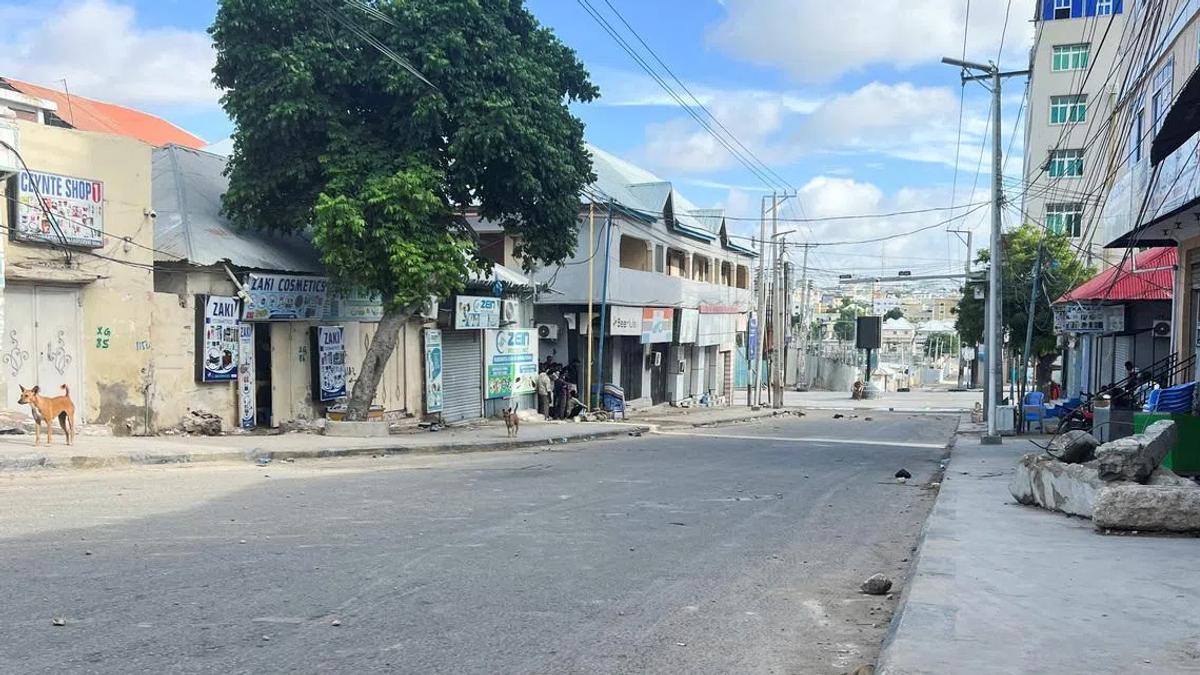
Somalia's capital, Mogadishu, was plunged into renewed instability on June 4, 2026, as government troops and militias aligned with opposition figures engaged in overnight and morning firefights. The clashes, which caused property damage and forced civilians to flee, mark a significant escalation of the political crisis stemming from President Hassan Sheikh Mohamud's decision to remain in office beyond his term, following constitutional changes approved by parliament in March. This development threatens to unravel the delicate political progress made in the Horn of Africa nation and divert critical resources from the ongoing fight against the al-Qaeda-linked al-Shabaab insurgency.
The immediate catalyst for the violence is President Mohamud's extended tenure. His term officially expired last month, but a parliamentary vote on constitutional amendments has been interpreted by his administration as a mandate to extend his stay by a year and postpone elections. This move has been vehemently opposed by key political figures, including former President Sharif Sheikh Ahmed and former Prime Minister Hassan Ali Khaire, who accuse the government of illegally altering the constitution and orchestrating a power grab. The opposition had planned anti-government protests for Thursday, which were preceded by the armed confrontations.
Former President Ahmed reported that government forces targeted his home, vowing to resist what he termed an "aggressive attack." Similarly, former Prime Minister Khaire alleged that government troops used heavy weapons, including anti-tank weapons and drones, in densely populated areas, claiming the assault was aimed at assassinating him and Ahmed. While Reuters could not independently verify these specific claims, witness accounts confirmed widespread fighting, with mortar shells landing on residential properties, houses ablaze, and civilians fleeing with their children. At least two armored vehicles were reportedly destroyed by opposition-allied militias, underscoring the intensity of the combat.
The resurgence of armed conflict in Mogadishu carries profound geopolitical and internal implications for Somalia and the broader Horn of Africa region. Internally, the clashes undermine the already fragile state-building process that has been underway since the collapse of the central government in 1991. Somalia has long grappled with clan-based conflicts and a persistent insurgency by al-Shabaab. A political crisis escalating into armed confrontation between state and opposition forces risks fracturing the security apparatus, which is already stretched thin by counter-terrorism operations. This internal strife could inadvertently create a vacuum or opportunity for al-Shabaab to regroup, expand its influence, and launch more devastating attacks, thereby reversing hard-won security gains.
From a geopolitical perspective, Somalia's stability is crucial for regional security. The Horn of Africa is a strategically vital area, bordering key shipping lanes and serving as a battleground against various extremist groups. Instability in Somalia can have spillover effects, potentially destabilizing neighboring countries and creating new humanitarian crises. International partners, including the United States and the United Kingdom, have swiftly reacted to the violence, urging restraint and dialogue. The U.S. embassy in Mogadishu condemned the "reckless" violence, emphasizing the responsibility of Somali leaders to preserve stability and resolve differences peacefully. Such international calls highlight the global concern over Somalia's trajectory and the potential for broader regional ramifications if the political impasse is not resolved through diplomatic means.
The current situation presents a critical juncture for Somalia. The government's actions, particularly the constitutional changes and the use of force against political opponents, risk alienating significant segments of the population and further entrenching political divisions. The opposition, for its part, faces the challenge of channeling grievances into peaceful political action rather than armed confrontation, which could further destabilize the nation. The immediate priority must be a de-escalation of hostilities and a return to dialogue. Without a credible and inclusive political process to address the contentious issue of the presidential term and future elections, Somalia risks descending into a deeper cycle of violence and political fragmentation. The international community's role in facilitating such dialogue and ensuring adherence to democratic principles will be crucial in preventing a full-blown crisis and safeguarding the fragile peace in the country.
Source referenced: STRAITSTIMES
This brief was synthesized by our Editorial Engine and reviewed by The Ground Narrative team.