TRENDING

Friday, 16 October 2026
----------------------
5 Jumada Al-Awwal 1448 AH
Mexico's first female president, Claudia Sheinbaum, is forging a distinct path, balancing a legacy of activism with a pragmatic approach to domestic security and assertive diplomacy against US pressure. Her leadership is pivotal for Mexico's stability and its critical relationship with the United States.
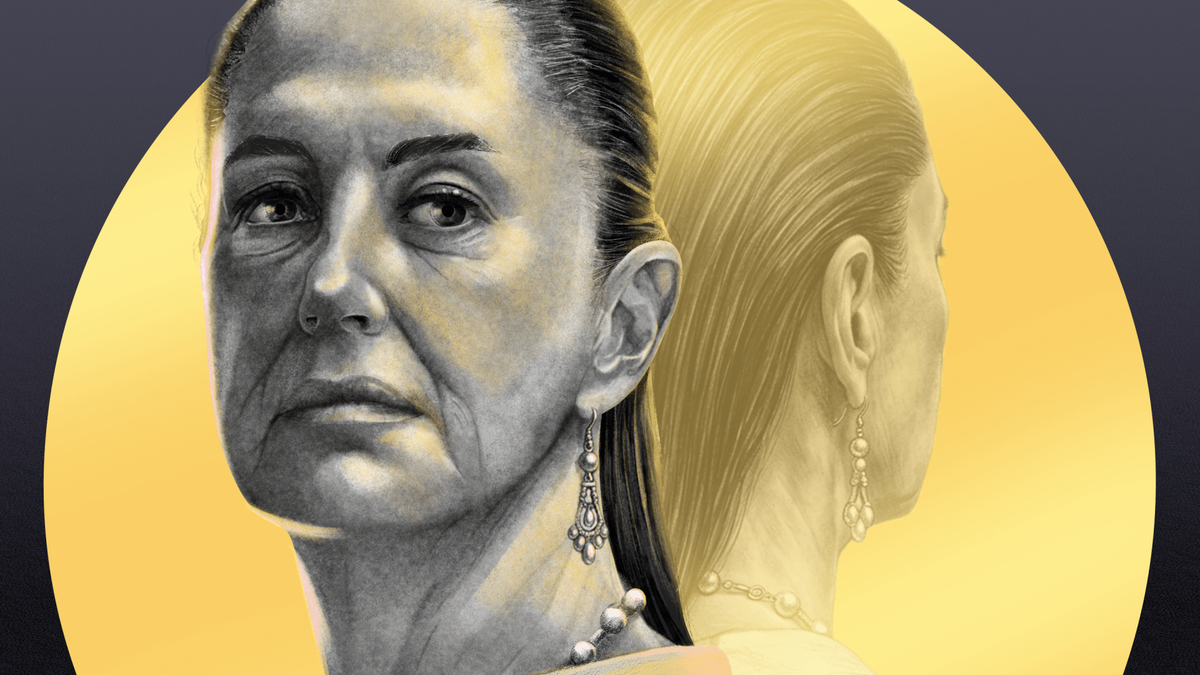
Claudia Sheinbaum's ascent to the Mexican presidency in 2024 marks a pivotal moment in the nation's history, not only as its first female head of state but also as a leader confronting a complex array of domestic and international challenges. Her tenure is defined by a pragmatic yet firm approach to Mexico's entrenched issues, particularly the pervasive influence of drug cartels and the often-strained relationship with the United States. Sheinbaum's political identity, deeply rooted in the student movements of 1968 and a commitment to national sovereignty, shapes her strategy as she navigates these critical geopolitical currents.
Born in 1962, Sheinbaum's political consciousness was forged in the crucible of Mexico's 1968 student protests, a period of intense dissent against the Institutional Revolutionary Party (PRI)'s decades-long authoritarian rule. Her parents, both activists, exposed her early to the struggles for democracy and human rights, instilling a profound commitment to social justice and national self-determination. This background, coupled with her family's history of fleeing persecution, underscores her deep-seated belief in sovereignty and non-intervention. As a student activist at the National Autonomous University (UNAM), Sheinbaum actively participated in movements against tuition hikes and the North American Free Trade Agreement (NAFTA), which the Mexican left viewed as detrimental to domestic industry and agriculture. This formative experience provides crucial context for her current stance against external pressures, particularly from the United States.
One of Sheinbaum's most immediate and formidable challenges is the pervasive power of drug cartels, which exert significant influence over vast swathes of Mexican territory and pose a direct threat to state authority and public safety. Unlike her predecessor and mentor, Andrés Manuel López Obrador (AMLO), who often favored a less confrontational approach, Sheinbaum has demonstrated a more security-minded and decisive strategy. This was starkly illustrated in early 2026 with the operation targeting Nemesio Ruben Oseguera Cervantes, "El Mencho," the notorious leader of the Jalisco New Generation Cartel (CJNG). The successful, albeit fatal, confrontation with Mexico's most-wanted drug lord signaled Sheinbaum's willingness to deploy federal forces aggressively against organized crime. This move, while risky, aims to reassert state control and project an image of strength, crucial for domestic stability and international confidence. The effectiveness of such high-profile operations in dismantling cartel structures and reducing overall violence remains a long-term test for her administration.
Sheinbaum's presidency coincides with a period of heightened tension in US-Mexico relations, particularly under the specter of a potential re-elected Donald Trump administration. Following a controversial US operation in Venezuela in January 2026, President Trump publicly suggested expanding anti-cartel operations onto Mexican soil. Sheinbaum's response was immediate and unequivocal: "Cooperation, yes; subordination and intervention, no." This firm rejection of unilateral US military action within Mexico's borders underscores a core tenet of her foreign policy – the unwavering defense of national sovereignty.
The US has also exerted significant economic pressure, employing tariffs and signaling a reluctance to renew the United States-Mexico-Canada Agreement (USMCA) in its current form. These actions highlight the complex interplay of security, trade, and diplomatic leverage in the bilateral relationship. Sheinbaum's challenge is to balance the necessity of cooperation with Mexico's largest trading partner and neighbor against the imperative to protect national interests and maintain an independent foreign policy. Her ability to manage these pressures without succumbing to perceived subordination will be a defining feature of her time in office, impacting not only Mexico's economy but also its standing in the region.
While Sheinbaum shares a political lineage with AMLO, having served in his cabinet and benefiting from his populist appeal, she has actively sought to define her own leadership style. Her pragmatic approach to security, coupled with her scientific background as a climate scientist, distinguishes her from her mentor's more ideologically driven governance. Sheinbaum's public appearances, such as giving away her World Cup ticket to a young fan, echo AMLO's "man-of-the-people" image, yet her decisive actions against cartels and her assertive diplomatic stance demonstrate a willingness to forge her own path. This balancing act is crucial for consolidating her authority and demonstrating effective governance in a country grappling with deep-seated issues of crime, inequality, and external influence.
Sheinbaum's presidency carries significant geopolitical weight. Domestically, her success in curbing cartel violence and strengthening state institutions will be critical for Mexico's long-term stability and economic development. Internationally, her administration's ability to manage the intricate relationship with the United States, particularly concerning security cooperation, trade, and migration, will have profound implications for North American regional dynamics. Her firm stance on sovereignty could set a precedent for other Latin American nations facing similar pressures. As Mexico's first female president, Sheinbaum also represents a powerful symbol of progress in a historically "macho" society, potentially inspiring broader social and political change within the country and beyond. Her leadership will shape not only Mexico's future but also its role as a key player in global affairs.
Editor's Note: The article is dated July 2026 and describes events (e.g., Trump's statements, El Mencho operation) as having occurred in that future timeline. The analysis treats these events as presented in the article's context.
Source referenced: ALJAZEERA
This brief was synthesized by our Editorial Engine and reviewed by The Ground Narrative team.