TRENDING

Thursday, 15 October 2026
----------------------
4 Jumada Al-Awwal 1448 AH
Russian forces have reportedly advanced to the outskirts of Zaporizhzhia, a strategically vital city in southern Ukraine, following an airstrike that caused civilian casualties. This development signals a potential escalation in the conflict's southern front, with significant implications for regional control and humanitarian concerns.
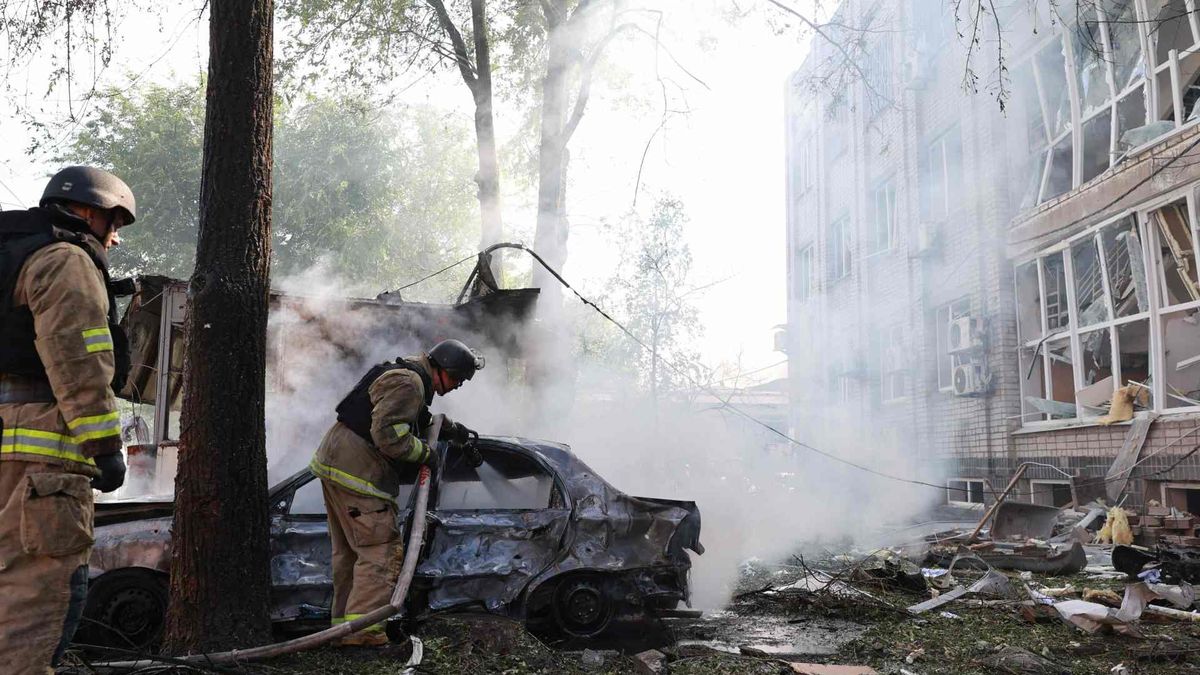
Reports from Zaporizhzhia's mayor on July 11, 2026, indicate a significant escalation in the conflict, with Russian forces advancing to within 20 kilometers of the city's outskirts. This ground movement coincides with a recent Russian airstrike on the city, which tragically resulted in at least one fatality and 29 injuries, including two children, underscoring the severe humanitarian cost of the ongoing hostilities. The convergence of ground advances and aerial bombardment suggests a concerted effort by Russian forces to exert increased pressure on this critical Ukrainian urban center.
The city of Zaporizhzhia holds immense strategic importance for both Ukraine and Russia, making it a focal point in the broader geopolitical struggle. Geographically, it is a major industrial hub situated on the Dnieper River, a vital waterway that bisects Ukraine. Control over Zaporizhzhia would significantly bolster Russia's ambition to solidify a land bridge connecting its territory to the Crimean Peninsula, which it annexed in 2014, and to establish full control over Ukraine's Azov Sea coastline. This would effectively cut off Ukraine's access to the Azov Sea, severely impacting its economy and maritime capabilities.
Furthermore, Zaporizhzhia is home to Europe's largest nuclear power plant, located in Enerhodar, which has been under Russian occupation since early in the conflict. While the plant itself is not directly within the city of Zaporizhzhia, the city's proximity and administrative ties to the broader region make its fate intrinsically linked to the security and operational status of the nuclear facility. Any direct military engagement near the plant or its supporting infrastructure carries profound risks of a nuclear incident, with potentially catastrophic environmental and humanitarian consequences extending far beyond Ukraine's borders. International bodies, including the International Atomic Energy Agency (IAEA), have repeatedly expressed grave concerns over the militarization of the plant's vicinity.
The reported Russian advance suggests a potential shift in the dynamics of the southern front, indicating either a renewed offensive push or a consolidation of gains following previous engagements. For Russia, securing Zaporizhzhia would represent a major strategic victory, allowing it to further entrench its control over occupied territories in southern Ukraine and potentially free up forces for operations elsewhere. It would also provide a more secure logistical corridor for its forces operating in the south.
For Ukraine, defending Zaporizhzhia is paramount. Its loss would not only be a significant blow to national morale and economic stability but would also complicate any future counter-offensive operations aimed at reclaiming southern territories. The ongoing airstrikes and ground assaults highlight the brutal nature of modern warfare, where urban centers become battlegrounds, and civilian populations bear the brunt of the conflict.
The airstrike on Zaporizhzhia, resulting in civilian casualties, underscores the persistent humanitarian crisis gripping Ukraine. Such incidents invariably draw international condemnation and intensify calls for adherence to international humanitarian law, which prohibits indiscriminate attacks and the targeting of civilian infrastructure. The continuous threat to civilian lives and critical infrastructure, including energy supplies and residential areas, exacerbates the displacement crisis and strains emergency services.
The international community continues to monitor the situation closely, with implications for diplomatic efforts, sanctions regimes, and military aid to Ukraine. The escalation around Zaporizhzhia will likely reinforce arguments for sustained military support to Kyiv, as well as for increased humanitarian assistance to affected populations. The long-term consequences of such intense urban warfare include not only immediate loss of life and destruction but also profound psychological trauma for survivors and the immense challenge of post-conflict reconstruction.
In conclusion, the Russian advance on Zaporizhzhia represents a critical juncture in the ongoing conflict, with significant military, economic, and humanitarian ramifications. The city's strategic value, coupled with the inherent risks associated with its proximity to a major nuclear facility, ensures that developments in this region will continue to command global attention and shape the broader geopolitical narrative of the war in Ukraine.
Source referenced: ALJAZEERA
This brief was synthesized by our Editorial Engine and reviewed by The Ground Narrative team.