TRENDING

Sunday, 18 October 2026
----------------------
7 Jumada Al-Awwal 1448 AH
Russia launched its most extensive ballistic missile attack on Kyiv since the war began, exploiting perceived vulnerabilities in Ukraine's air defense capabilities and internal political tensions. The assault underscores the escalating challenges for Ukraine as it seeks sustained Western military aid and navigates domestic leadership changes.
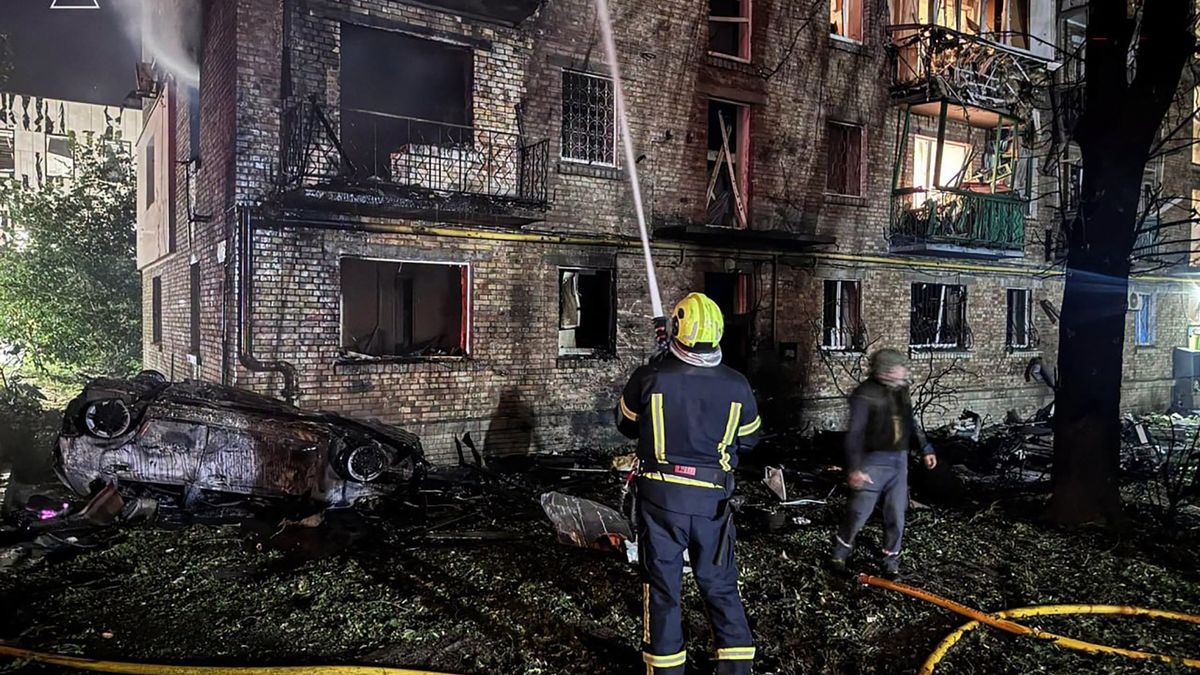
In a significant escalation of its air campaign, Russia unleashed its largest ballistic missile attack on Kyiv since the onset of the full-scale invasion. The hours-long barrage, which occurred early on Sunday, July 17, 2026, resulted in at least one fatality and 15 injuries, causing widespread damage across six districts of the Ukrainian capital. This intensified assault signals a calculated shift in Moscow's strategy, aiming to overwhelm Ukrainian air defenses and exploit perceived vulnerabilities.
The scale and nature of the attack, characterized by Ukraine's Foreign Minister Andrii Sybiha as a "brutal terrorist attack," highlight Russia's continued intent to degrade Ukraine's civilian infrastructure and military capabilities. The use of a high volume of ballistic missiles, which are notoriously difficult to intercept, suggests an effort to exhaust Ukraine's dwindling supply of advanced air defense systems, particularly the US-made Patriot missiles, which are crucial for downing such threats. Ukrainian air forces reported intercepting 18 of the 41 missiles launched, indicating a significant portion successfully penetrated defenses.
The timing of this intensified bombardment is critical, coinciding with two major challenges for Ukraine. Firstly, the nation is grappling with a documented shortage of Patriot interceptor missiles, a vulnerability that Russia appears keen to exploit. This scarcity has been a persistent concern for Kyiv and its Western allies, underscoring the urgent need for continuous and robust military assistance.
Secondly, the attacks occurred amidst heightened domestic political tensions in Ukraine. President Volodymyr Zelenskyy's recent dismissal of his defense minister, Mykhailo Fedorov, as part of a cabinet reshuffle, has sparked public protests and dismay within military ranks. Critics have labeled the decision a significant misstep, particularly as Ukraine seeks to maintain momentum in the ongoing conflict. Russia's decision to launch such a massive strike during this period of internal political flux could be interpreted as an attempt to further destabilize the country, undermine public confidence in its leadership, and test the resilience of the Ukrainian state.
Beyond Kyiv, Russian drone strikes also targeted other regions, including Dnipropetrovsk, a central area bordering the front line, where one person was killed. In the Zaporizhia region, a Russian drone struck a passenger train, killing its conductor and further demonstrating Russia's intent to disrupt critical infrastructure and logistics across Ukraine.
Despite the severe challenges, Ukraine continues to demonstrate resilience and strategic initiative. In a retaliatory or concurrent action, Ukrainian forces reportedly struck two Russian oil tankers in the Black Sea. This move aligns with Ukraine's broader strategy to disrupt Russian logistics and supply lines, particularly those supporting the occupied Crimean peninsula. Such maritime operations are crucial for Ukraine to exert pressure on Russia's naval presence and economic interests in the Black Sea, a vital strategic waterway.
The ongoing struggle for control and influence in the Black Sea remains a critical component of the broader conflict. Ukrainian strikes on Russian shipping not only aim to starve Crimea of fuel and supplies but also challenge Russia's perceived dominance in the region, impacting its ability to project power and sustain its forces.
The international community's response to these escalating attacks remains pivotal. United States President Donald Trump's stated willingness to grant Ukraine licenses to produce Patriot interceptor missiles domestically offers a potential long-term solution to Ukraine's air defense shortages. However, the specifics and timeline of such an initiative are currently unclear, and immediate needs for interceptors persist.
The latest Russian offensive underscores the enduring nature of the conflict and the continuous need for robust, timely military aid from Ukraine's Western partners. The ability of Ukraine to withstand such large-scale attacks, protect its population, and maintain its counter-offensive capabilities is directly linked to the sustained provision of advanced weaponry and ammunition. The geopolitical implications are profound, signaling Russia's unwavering commitment to its war aims and its willingness to escalate tactics, while simultaneously testing the resolve and unity of the international coalition supporting Ukraine. The coming months will likely see continued intense fighting, with air defense capabilities and logistical resilience remaining central to the conflict's trajectory.
Source referenced: ALJAZEERA
This brief was synthesized by our Editorial Engine and reviewed by The Ground Narrative team.