TRENDING

Friday, 16 October 2026
----------------------
5 Jumada Al-Awwal 1448 AH
A new analysis challenges conventional wisdom, asserting that only four nations truly qualify as great powers in the current geopolitical landscape. This redefinition is based on stringent criteria encompassing military might, economic resilience, global reach, and international reputation, offering critical insights into the evolving global order.
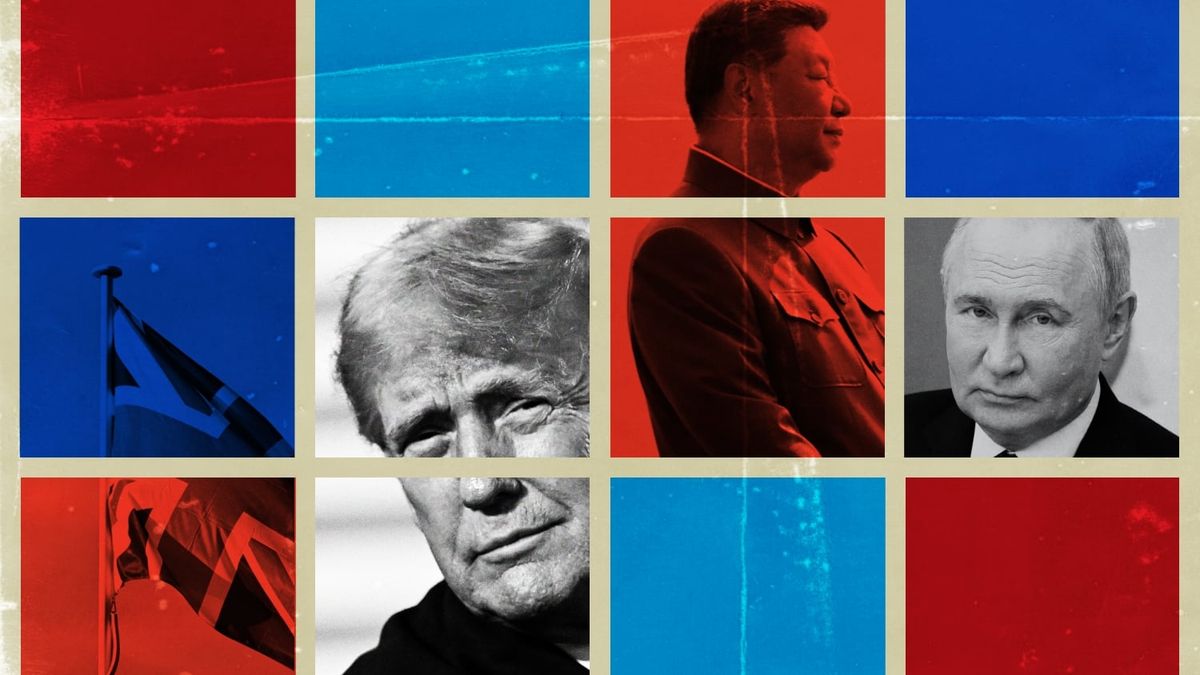
The international system is increasingly characterized by an era of renewed great-power competition, prompting a critical re-evaluation of which states genuinely hold this coveted status. While the term "great power" is frequently invoked, its precise definition and the identification of its current members remain subjects of considerable debate. A recent analysis posits a highly selective view, arguing that only four nations currently possess the requisite attributes to be considered true great powers: the United States, China, the United Kingdom, and Russia. This perspective, articulated by Brendan Simms, director of the Centre for Geopolitics at the University of Cambridge, challenges broader interpretations and offers a stringent framework for understanding global influence.
The analysis establishes a multi-faceted definition for great-power status, moving beyond mere economic size or military spending. Fundamentally, great powers are characterized by their behavior: they expect to shape or be consulted on major global issues, their absence creates a vacuum, and they often assert absolute sovereignty for themselves while admitting only qualified sovereignty for lesser states. Crucially, they reserve the right to intervene in regimes that threaten their interests and can claim to be above or to vindicate international law, acting as "rule-makers" rather than "rule-takers."
These behaviors are underpinned by superior capabilities, which are categorized into three main areas:
* Resources: This includes substantial military capacity, measured by spending, effectiveness, and critically, the possession of deployable nuclear weapons. The analysis asserts that all great powers are nuclear powers, highlighting the indispensable role of atomic deterrence in today's world. Economic strength is also paramount, assessed by GDP, purchasing power parity, and the ability to sustain significant military efforts and withstand economic pressures like sanctions or blockades. Command of global commons, particularly sea lanes, is identified as vital for economic resilience and projecting power.
* Reach: A great power must demonstrate global, not merely regional, influence. This involves the ability to deploy force far from home, maintain a global network of military bases, control key transport nodes and chokepoints, and possess sophisticated intelligence capabilities across all domains, including cyberspace and space. A large and effective diplomatic service and substantial overseas aid budgets also contribute to global reach. Furthermore, influence over global institutions and control over critical supply chains and raw materials (like lithium) are increasingly important indicators of a state's capacity to project power and shape global outcomes.
* Reputation: Finally, a state's status as a great power must be recognized by others, especially by its peers, and it must also perceive itself as such. This mutual recognition solidifies its position within the international hierarchy.
Applying these rigorous criteria, the analysis identifies four nations that meet the threshold:
* The United States stands as the preeminent great power, comfortably leading in military capabilities, economic strength, and an unparalleled global network of bases and intelligence reach. Its capacity to project power and influence across all domains remains unmatched.
* China is recognized as a rapidly ascending great power, possessing one of the world's largest economies and a formidable military. Its global reach is expanding through strategic investments, a growing naval presence (e.g., Djibouti), and significant control over global supply chains and critical minerals essential for technological advancement.
* The United Kingdom, despite a diminished global footprint compared to its imperial past, retains its great-power status through a combination of a strong military, a leading economy, and a network of strategically important sovereign bases worldwide (e.g., Gibraltar, Cyprus, Falkland Islands, Duqm). Its historical legacy and continued diplomatic influence contribute to its reputation as a major power, particularly within Europe.
* Russia, while economically weaker than the other three, secures its position primarily due to its outsized nuclear arsenal, the largest in the world. This capability grants it an unparalleled capacity to deter and disrupt the global order, despite its more limited conventional global reach and economic vulnerabilities. Its influence in its "near-abroad" and its global reach in areas like propaganda and cyber activity further underscore its disruptive potential.
This refined definition of great powers carries significant implications for understanding contemporary geopolitics. It suggests a more concentrated distribution of ultimate power, where a select few states possess the unique combination of capabilities and behaviors to genuinely shape global events. The emphasis on nuclear weapons underscores their enduring role as the ultimate guarantor of sovereignty and a prerequisite for top-tier global influence.
The analysis highlights that great-power competition is not solely a military contest but a multi-domain struggle encompassing economic resilience, technological dominance, control over global commons, and informational warfare. For aspiring powers, the bar for entry into this exclusive club is exceptionally high, requiring not just economic growth or regional military strength, but a truly global projection of power and an ability to act as a rule-maker on the international stage. The identified powers, by their very nature, will continue to be the primary actors driving global security, economic, and diplomatic agendas, often challenging or redefining international norms to suit their strategic interests.
Editor's Note: The article's publication date (June 2, 2026) is in the future. The analysis proceeds as if this is a current, forward-looking assessment from that date.
Source referenced: FOREIGNPOLICY
This brief was synthesized by our Editorial Engine and reviewed by The Ground Narrative team.