TRENDING

Sunday, 20 September 2026
----------------------
9 Rabi' Al-Thani 1448 AH
North Korea's recent ballistic missile launches underscore its defiant assertion of nuclear status, rejecting international calls for disarmament. This analysis examines the power dynamics driving Pyongyang's actions and the unseen costs borne by its citizens.
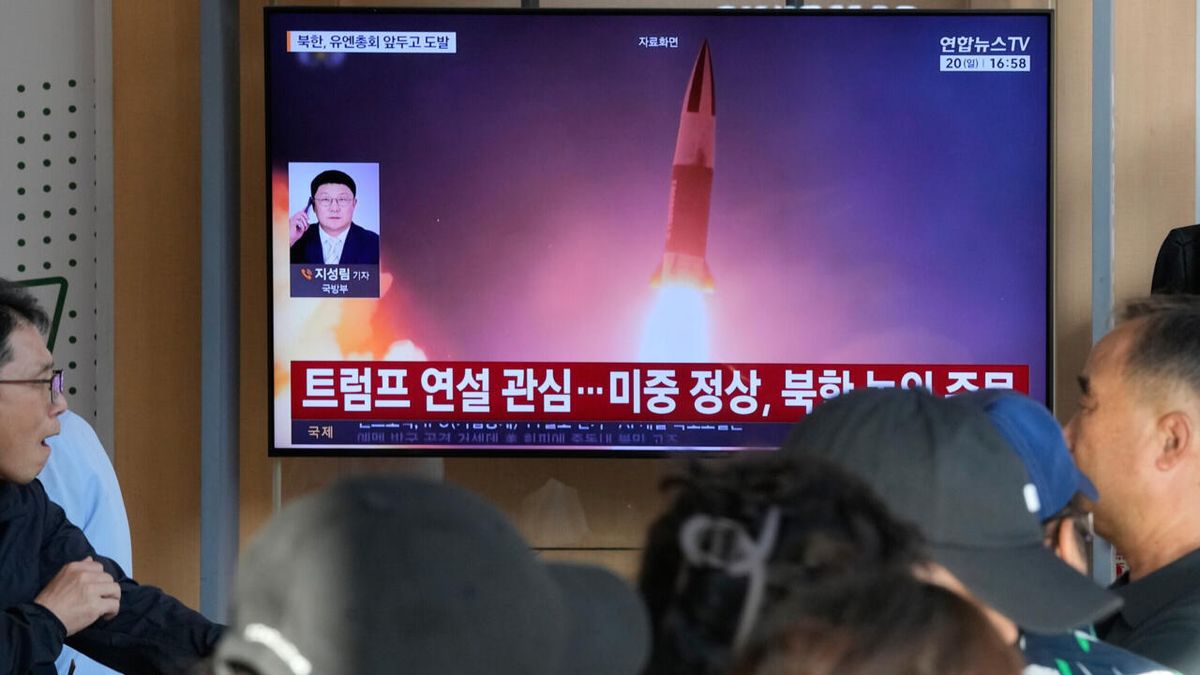
North Korea recently conducted two short-range ballistic missile launches into the East Sea, with one flying over 600 kilometers. These tests followed Pyongyang's explicit rejection of a United Nations resolution demanding an end to its nuclear activities and a strong reaffirmation of its status as an 'absolute' nuclear-armed state, a position echoed by high-ranking officials like Kim Yo Jong.
North Korea's repeated missile launches and its declaration of 'absolute' nuclear status are not random acts but calculated moves within a deeply entrenched power dynamic. For Pyongyang, its nuclear arsenal is the ultimate guarantor of regime survival, a lesson drawn from the fates of other states that relinquished their weapons programs. The launches serve multiple purposes: they demonstrate evolving military capabilities, act as a deterrent against perceived threats from the United States and South Korea, and project internal strength and resolve to its own population. By rejecting UN resolutions, North Korea signals its unwillingness to negotiate away what it considers its fundamental security. The trilateral cooperation between South Korea, the US, and Japan in tracking these launches, and Japan's stern protest, highlight the regional security dilemma where each actor's defensive measures are seen as provocative by the other, perpetuating a cycle of escalation.
While the international community focuses on missile trajectories and strategic implications, the most profound costs are borne by the ordinary people of North Korea. The immense resources required to develop, test, and maintain a sophisticated nuclear and ballistic missile program are diverted from an economy already struggling to provide basic necessities. Food insecurity, inadequate healthcare, and limited access to education are chronic issues, exacerbated by international sanctions imposed in response to these very weapons programs. Every missile fired represents a choice to prioritize military might over the welfare of its citizens, trapping them in a cycle of isolation and deprivation. The psychological toll on neighboring populations in South Korea and Japan, living under the shadow of these tests, is also a significant, often unquantified, human cost.
What powerful actors often downplay or omit is the systemic failure of past approaches to denuclearization. The international community, led by the US, has largely operated under the premise that sanctions and pressure will eventually compel North Korea to disarm. However, Pyongyang's consistent actions, including its latest 'absolute' declaration, suggest this strategy has failed to address its core security concerns. There's a reluctance to acknowledge that North Korea views its nuclear weapons as non-negotiable, not merely a bargaining chip. Furthermore, the internal political stability of the Kim regime, despite external pressure, is rarely interrogated as a factor that allows it to continue prioritizing its military program over its people's well-being. The long-term implications of a de facto nuclear North Korea, and the limited credible off-ramps available, are often framed as a problem to be solved rather than a reality that requires a fundamentally different approach.
Moving forward, observers should watch for several key indicators. Firstly, the frequency and sophistication of future missile tests will signal North Korea's ongoing technological advancements and its intent to further solidify its 'absolute' status. Secondly, any shifts in the rhetoric or actions of China, North Korea's primary economic lifeline, could be significant. Beijing's willingness to enforce sanctions or offer diplomatic alternatives is crucial. Thirdly, the response from the US, South Korea, and Japan, particularly regarding joint military exercises and potential new sanctions, will shape the regional security environment. Finally, any subtle cues from within North Korea itself, however rare, regarding its internal economic priorities or leadership succession, could offer insights into the regime's long-term trajectory.
Source referenced: FRANCE24
This brief was synthesized by our Editorial Engine and reviewed by The Ground Narrative team.


