TRENDING

Wednesday, 4 November 2026
----------------------
24 Jumada Al-Awwal 1448 AH
The UK's highest court is deliberating whether a pro-Palestine direct action group should be legally classified as a terrorist organization, a decision with profound implications for civil liberties. This legal battle exposes the widening gap between state security narratives and the public's right to protest.
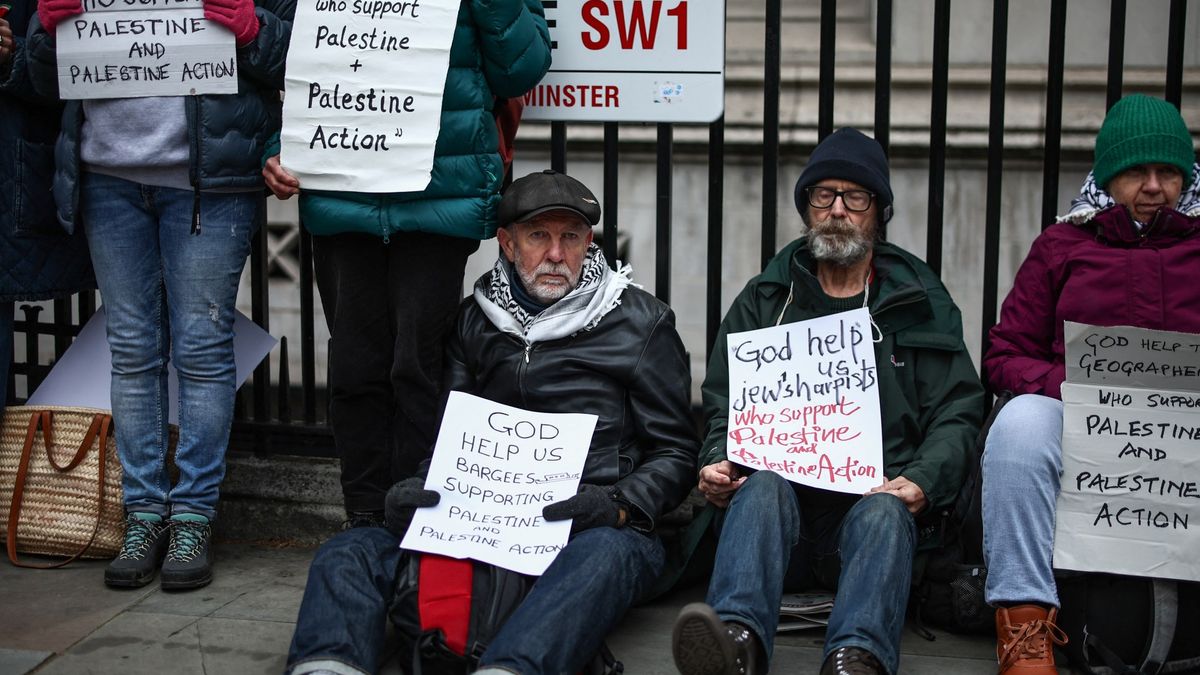
In a case poised to redefine the boundaries of protest and state power, the UK Supreme Court has begun hearing an appeal against the government's designation of Palestine Action as a "terrorist" organization. The two-day hearing in London follows a decision by the then-government under Prime Minister Keir Starmer in July of the previous year to proscribe the direct action group. This classification places Palestine Action alongside armed entities like al-Qaeda and ISIL (ISIS), making membership or support punishable by up to 14 years in prison. Outside the court, demonstrators gathered to protest the ban, with approximately 25 individuals arrested, highlighting the immediate human cost of the state's expanding security apparatus. Rights groups, including Amnesty International and Liberty, have swiftly condemned the proscription, arguing it disproportionately infringes upon fundamental freedoms of speech and assembly. This legal challenge arrives amidst heightened scrutiny of the UK government's approach to pro-Palestine voices, including the recent denial of entry to Swedish academic Andreas Malm, a vocal critic of Israel's actions in Gaza, further signaling a tightening grip on dissent.
The proscription of Palestine Action under the UK's counter-terrorism laws reveals a complex interplay of political calculation, legal interpretation, and foreign policy alignment. At its core, the state wields immense power through its ability to define and label threats. The UK's Terrorism Act provides a broad framework, originally designed to combat armed groups, but increasingly applied to non-violent direct action. This expansion of definition allows the government to cast a wide net, effectively criminalizing forms of protest that challenge established economic or political interests. For the Labour government under Keir Starmer, the decision to proscribe Palestine Action was likely a strategic move to project an image of robust national security, avoid accusations of being
Palestine Action is a direct action movement that aims to end global participation in Israel's 'apartheid regime' by targeting companies involved in the arms trade. It was proscribed by the UK government under then-Prime Minister Keir Starmer, classifying it as a 'terrorist' organization.
The proscription means that belonging to or supporting Palestine Action carries a risk of up to 14 years in prison. Rights groups argue it has a disproportionate effect on freedom of speech and the right to protest, creating a chilling effect on dissent in the UK.
Huda Ammori, cofounder of Palestine Action, is leading the appeal, arguing that the ban infringes on freedom of speech and the right to protest. Rights groups like Amnesty International and Liberty have also denounced the government's decision.
Editor's Note: The analysis is based on the provided raw intelligence and standard geopolitical frameworks. The interpretation of motivations and implications is consistent with TGN's editorial doctrine.
Source referenced: ALJAZEERA
This brief was synthesized by our Editorial Engine and reviewed by The Ground Narrative team.


