TRENDING

Monday, 26 October 2026
----------------------
15 Jumada Al-Awwal 1448 AH
Russian President Vladimir Putin has acknowledged that Ukrainian attacks are inflicting damage on Russia's economy and society, marking a significant shift in Moscow's public narrative regarding the conflict's domestic impact. This admission underscores Ukraine's evolving strategy of targeting Russian strategic depth, particularly its vital energy infrastructure and logistical supply lines.
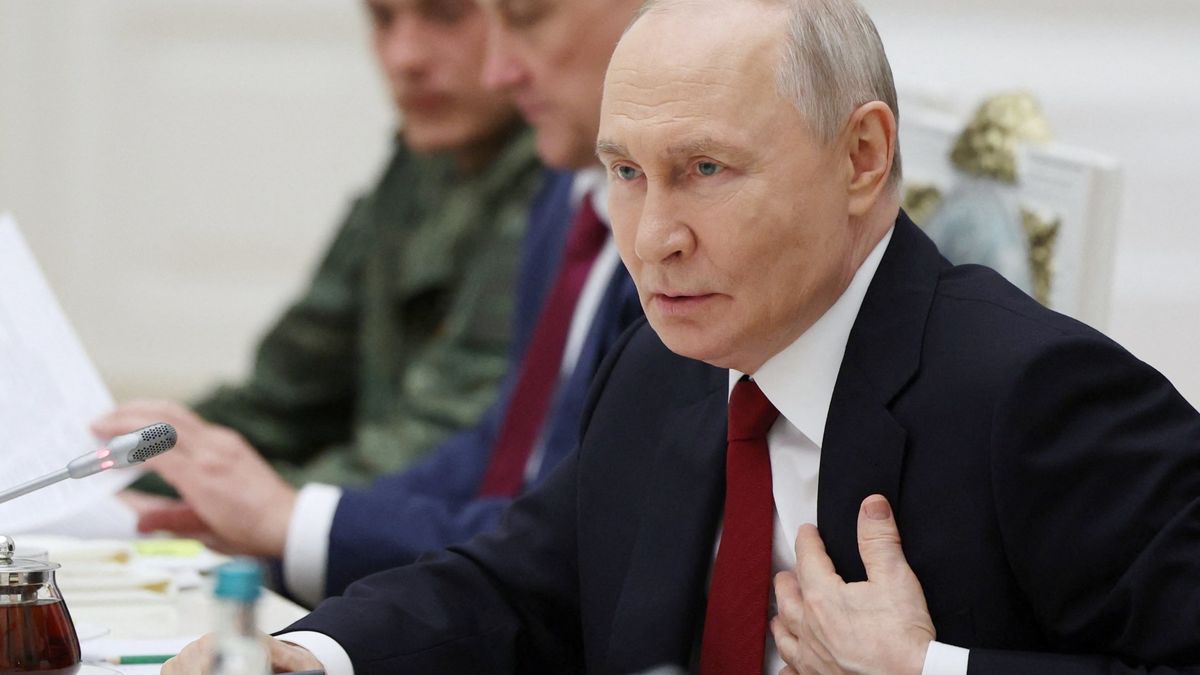
In a notable shift in rhetoric, Russian President Vladimir Putin recently acknowledged that intensifying Ukrainian attacks are causing damage to Russia's economy and society. This admission, made on June 12, 2026, follows weeks of escalating Ukrainian strikes targeting critical Russian infrastructure, including oil refineries, depots, and pipelines deep within Russian territory, as well as supply routes to Russian-occupied Crimea.
For months, the Kremlin has largely downplayed the domestic impact of the conflict, maintaining a narrative of stability and resilience. Putin's concession, therefore, represents a significant acknowledgment of the tangible effects of Ukraine's evolving military strategy. While he insisted that the economy would 'recover quickly' and that the strikes would not 'sow confusion' or 'divide society,' the very act of addressing these concerns publicly suggests a growing internal pressure.
Ukraine's campaign of long-range strikes is a deliberate and strategic effort to degrade Russia's capacity to sustain its war effort. By targeting key oil and gas infrastructure, which are vital to Russia's lucrative export revenues, Kyiv aims to inflict economic pain and reduce Moscow's financial resources for the conflict. The attack on a major oil refinery in Nizhnekamsk, for instance, highlights Ukraine's capability to strike deep into Russian territory, far from the front lines.
Beyond economic targets, Ukraine has also focused on disrupting Russia's logistical networks, particularly those supplying occupied Crimea. Attacks on fuel trucks and other supply lines have led to the worst fuel crisis on the Black Sea Peninsula since its illegal annexation by Russia in 2014. As noted by the Washington-based Institute for the Study of War (ISW), this dual approach—reducing production capacity through long-range strikes and hindering transportation through mid-range attacks—creates a synergistic effect that amplifies the overall impact on Russia's war machine.
This strategy is a direct response to Russia's own sustained aerial bombardments of Ukrainian cities and critical infrastructure. Ukraine views these strikes as legitimate retaliation, aiming to demonstrate that Russia is not immune to the consequences of its aggression and to force Moscow to divert resources to domestic defense.
In response to the escalating Ukrainian attacks, President Putin vowed that Russia's military would intensify its own strikes on 'the enemy’s infrastructure' to 'discourage them from attacking our civilian facilities.' This statement signals a likely escalation in the tit-for-tat targeting of critical infrastructure, potentially leading to a more destructive phase of the conflict.
Furthermore, Putin's call for improvements to Russia's air defenses—the second such public directive within a month—underscores the growing challenge posed by Ukrainian drones and missiles. The need to bolster air defense capabilities across vast territories, including deep inside Russia, represents a significant military and financial burden for Moscow, diverting resources that could otherwise be used on the front lines.
Kremlin spokesman Dmitry Peskov's acknowledgment of fuel shortages in Crimea and promises of 'measures being taken' further confirm the operational impact of Ukraine's strikes, even as the official narrative attempts to project an image of control and rapid recovery.
The expanding geographical scope of the conflict, with Ukraine increasingly striking targets within Russia, carries significant geopolitical implications. It demonstrates Ukraine's growing asymmetric warfare capabilities and its determination to impose costs on the aggressor beyond the immediate battlefield. This strategy could potentially influence Russia's long-term ability to sustain its military operations, especially if the economic damage becomes substantial and prolonged.
The slowing of Russian advances on the front line in eastern Ukraine, coupled with Ukrainian claims of reclaiming more territory than lost in May, suggests a highly contested and dynamic battlefield. The strategic strikes on Russian infrastructure are designed to complement these ground efforts, creating pressure points that could ultimately affect Moscow's military calculus.
However, this escalation also raises concerns about the potential for a broader and more intense conflict, with both sides increasingly targeting each other's strategic depth. The international community will closely watch how this new phase of economic and infrastructural warfare impacts the overall trajectory of the conflict and the prospects for any future diplomatic resolution, which currently appears distant given Putin's recent rejection of face-to-face talks with Ukrainian President Volodymyr Zelenskyy.
Source referenced: ALJAZEERA
This brief was synthesized by our Editorial Engine and reviewed by The Ground Narrative team.


