TRENDING

Friday, 23 October 2026
----------------------
12 Jumada Al-Awwal 1448 AH
Poland's main opposition party, Law and Justice (PiS), is facing its greatest crisis since its founding in 2001, as a group of delegates led by former Prime Minister Mateusz Morawiecki has been expelled from the party. The move is seen as a shift to the far-right, with PiS leader Jaroslaw Kaczynski accusing Morawiecki of attempting to split the party.
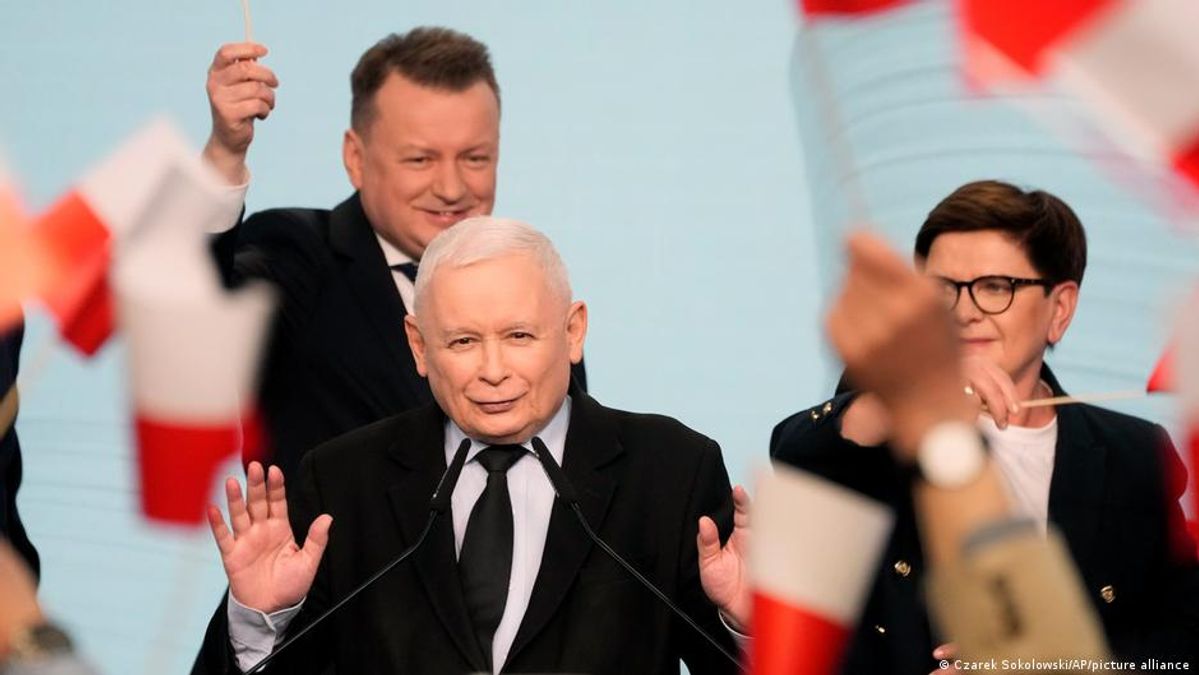
Poland's main opposition party, Law and Justice (PiS), is facing its greatest crisis since its founding in 2001. The party, led by Jaroslaw Kaczynski, has been accused of shifting to the far-right, with a group of delegates led by former Prime Minister Mateusz Morawiecki being expelled from the party.
The crisis began when Kaczynski accused Morawiecki of attempting to split the party. Morawiecki, who was prime minister from 2015 to 2023, had been traveling the country, speaking with local politicians and businesses, and launching a new political association called Development Plus. He had also been emphasizing his intention to remain within the PiS party and to open it to new voters.
The collapse of the main opposition party in Poland has significant implications for the country's politics and its relationship with the European Union. Poland has been a key player in the EU, and the shift to the far-right could lead to a more isolationist and nationalist policy.
The PiS party has been in power twice since its founding in 2001, and has occupied the office of state president since 2015. However, the party has been losing support in recent years, and the far-right confederation parties have been gaining popularity.
The collapse of the main opposition party in Poland could have implications for the region, particularly for neighboring countries such as Germany and the Czech Republic. Poland's shift to the far-right could lead to a more isolationist and nationalist policy, which could have negative consequences for regional stability.
The future consequences of the collapse of the main opposition party in Poland are uncertain. However, it is likely that the party will continue to shift to the far-right, which could lead to a more isolationist and nationalist policy. This could have negative consequences for regional stability and Poland's relationship with the European Union.
Jaroslaw Kaczynski, the leader of the PiS party, is at the center of the crisis. He has accused Mateusz Morawiecki of attempting to split the party and has expelled him and his followers from the party. Morawiecki, who was prime minister from 2015 to 2023, has denied the allegations and has emphasized his intention to remain within the PiS party.
The crisis began in April, when Kaczynski accused Morawiecki of threatening the party's unity. However, the party head went along with Morawiecki's efforts and spoke of "two lungs" within the PiS party. The ultimatum that Kaczynski had placed on rebel party members ended at midnight, and by then, they were expected to deliver a written declaration that they would refrain from activities in the Rozwoj Plus (Development Plus) association led by Morawiecki.
Poland is heading towards a more isolationist and nationalist policy, which could have negative consequences for regional stability and the country's relationship with the European Union. The collapse of the main opposition party has significant implications for the country's politics and its relationship with the EU.
This is happening because of the shift to the far-right within the PiS party. Kaczynski has been accused of pushing the party further to the right in an attempt to win back voters who have defected to the far-right confederation parties.
This could lead to a more isolationist and nationalist policy, which could have negative consequences for regional stability and Poland's relationship with the European Union.
Source referenced: DW
This brief was synthesized by our Editorial Engine and reviewed by The Ground Narrative team.