TRENDING

Tuesday, 27 October 2026
----------------------
16 Jumada Al-Awwal 1448 AH
Thousands have rallied in Northern Ireland against anti-immigrant violence, exposing a critical challenge to social cohesion and political leadership in a region with a delicate peace. The unrest, sparked by a viral knife attack video, underscores growing xenophobia and the inadequacy of current responses.
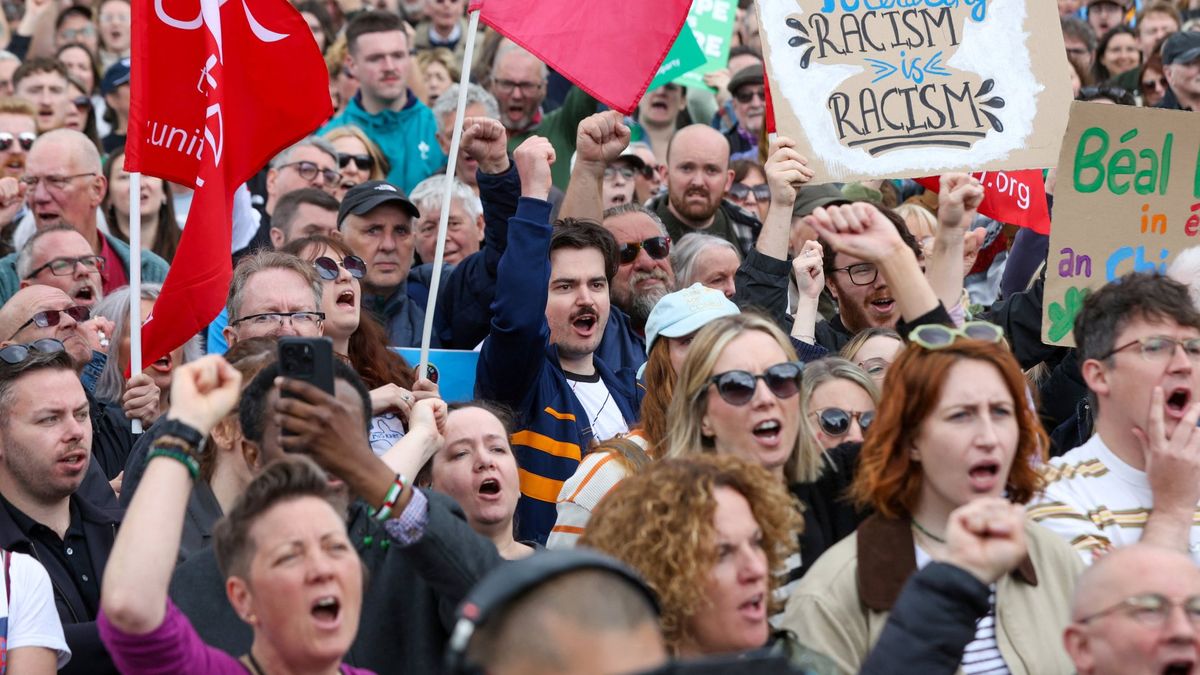
Northern Ireland has recently witnessed a significant surge in social unrest, culminating in widespread anti-racism rallies following two nights of anti-immigrant violence. On Saturday, June 13, 2026, thousands gathered in Belfast and Londonderry (Derry) to protest against xenophobia, carrying placards with messages like “Hate is the only threat to our streets” and “Belfast stands against racism.” These demonstrations, described as the “biggest” anti-racism rallies ever seen in Belfast, were a direct response to a period of public disorder and targeted attacks against immigrant communities.
The catalyst for the recent violence was a viral social media video depicting a knife attack on Monday night, which showed a man assaulting another in the street. Subsequently, Sudanese national Hadi Alodid was charged with the attempted murder of Stephen Ogilvie. This incident ignited two nights of anti-immigrant rioting, during which masked individuals reportedly intimidated residents, stopped people in their cars to question their nationality, and even burned down homes based on the victims' ethnicity. Northern Ireland Secretary Hilary Benn condemned these acts, highlighting the profound fear and displacement they caused within minority communities.
The unrest in Northern Ireland is not an isolated incident but rather the “third consecutive summer of racist violence,” according to Patrick Corrigan, Northern Ireland director of Amnesty International UK. This pattern suggests a systemic issue that authorities have been insufficiently prepared to address. The broader context reveals that immigration has become a highly contentious issue across both the United Kingdom and Ireland, contributing to the rise of right-wing political movements, such as the Reform UK party led by Nigel Farage. This national sentiment undoubtedly fuels local tensions, creating a fertile ground for anti-immigrant sentiment to manifest violently.
While the current violence is primarily framed around anti-immigrant sentiment rather than traditional sectarian divisions, it occurs within a region with a complex history of internal conflict and social fragility. Northern Ireland's delicate peace, established after decades of 'The Troubles,' means that any form of widespread public disorder or targeted violence carries significant implications for regional stability. The imagery of “masked thugs” and the burning of homes, though distinct from historical paramilitary actions, evokes a sense of lawlessness and fear that resonates deeply within a society striving for lasting reconciliation.
Critics, including Amnesty International, have called for “clear political leadership from the top down” to prevent future incidents. They argue that mere condemnation, such as that offered by UK Prime Minister Keir Starmer, is “wholly inadequate to the task.” Local councillor Seamas de Faoite of the SDLP nationalist party emphasized the need for concerted efforts to rehouse and support those displaced by the violence, underscoring the immediate humanitarian and social costs.
The events in Belfast and Londonderry highlight a critical challenge for both the UK and Northern Irish governments: how to effectively manage growing anti-immigrant sentiment while upholding human rights and maintaining social cohesion. The rallies, organized by groups like Unite Against Racism, demonstrate a strong counter-narrative from a significant portion of the population that is welcoming to migrants and rejects xenophobia. This societal division presents a test for political leaders to move beyond rhetoric and implement robust strategies for community integration, law enforcement, and addressing the root causes of prejudice.
Ultimately, the recent unrest serves as a stark reminder that Northern Ireland, despite its progress towards peace, remains susceptible to new forms of social tension. The ability of its political institutions and civil society to navigate these evolving challenges will be crucial for ensuring long-term stability and protecting the rights of all its residents.
Source referenced: ALJAZEERA
This brief was synthesized by our Editorial Engine and reviewed by The Ground Narrative team.