TRENDING

Monday, 19 October 2026
----------------------
8 Jumada Al-Awwal 1448 AH
Israeli Prime Minister Benjamin Netanyahu faces a significant decline in support from northern voters, who demand a tougher stance against Hezbollah amidst ongoing rocket fire and perceived government inaction. This domestic pressure complicates Netanyahu's political future and Israel's strategic response, caught between internal hawkish demands and US-led de-escalation efforts.
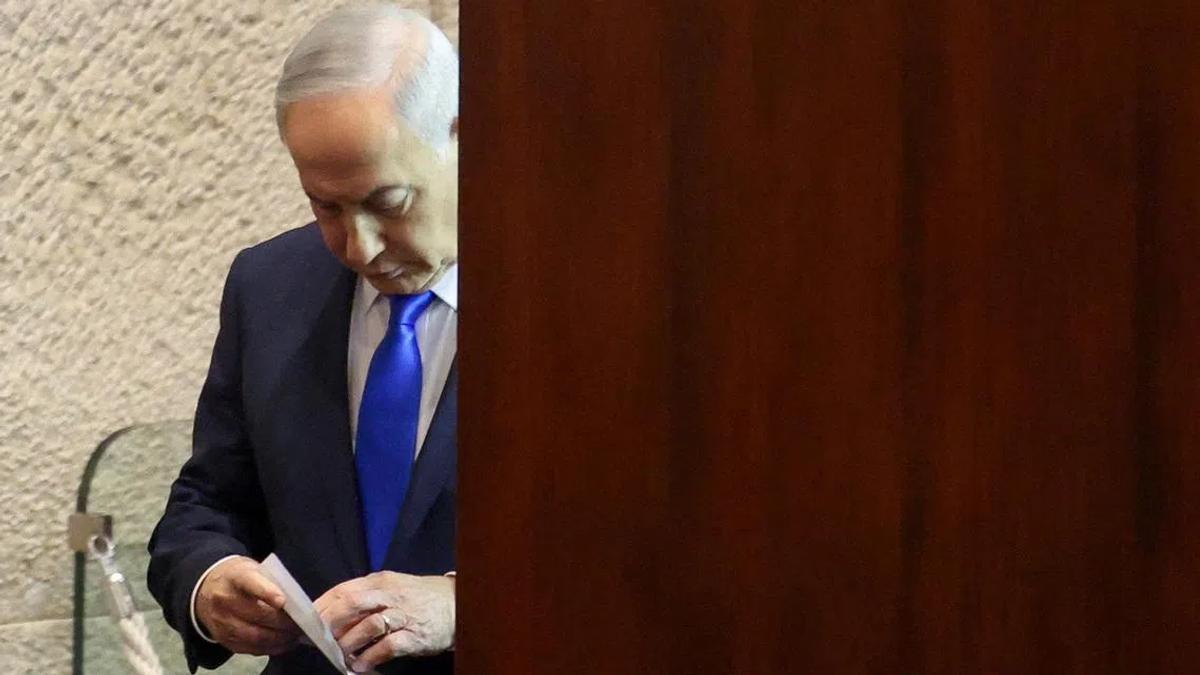
Israeli Prime Minister Benjamin Netanyahu is experiencing a substantial erosion of political support in the country's northern region, a critical electoral stronghold. A May 2026 poll conducted by Agam Labs at Israel's Hebrew University, and exclusively shared with Reuters, indicates that residents in the north are abandoning Netanyahu's Likud party at a faster rate than voters elsewhere in Israel. This decline in approval is directly linked to widespread dissatisfaction with his government's handling of the persistent conflict with Hezbollah, the Iran-backed Lebanese militant group.
The poll reveals that only 23 percent of northern voters would back Likud in the upcoming general election, a sharp drop from the 35 percent it garnered in 2022. This represents a three-fold greater decrease in support compared to other parts of Israel, with approximately 70 percent of northern voters disapproving of the government's strategy in Lebanon. This sentiment is particularly acute in communities like Kiryat Shmona, which has borne the brunt of near-daily rocket and drone attacks since October 2023, following the Hamas assault that triggered Hezbollah's involvement. Residents, many of whom previously supported Likud, now describe their once-prosperous towns as 'ghost towns,' demanding decisive military action to dismantle Hezbollah rather than relying on what they perceive as fragile ceasefires.
Netanyahu's predicament highlights a complex interplay between domestic political survival and international diplomatic pressures. Northern Israeli voters are advocating for an intensified military campaign against Hezbollah, unfettered by external influence. This hawkish stance is driven by a desire for immediate security and a permanent end to the threat posed by Hezbollah, which has resulted in over 50 civilian deaths in northern Israel since October 2023.
However, this domestic demand for escalation clashes with the diplomatic efforts of Israel's key ally, the United States. US President Donald Trump has reportedly pressured Israel to agree to de-escalation and ceasefires, particularly as Washington pursues a broader deal with Iran, which has conditioned any peace agreement on an end to Israel's military campaigns. The article notes a ceasefire agreement between Israel and Lebanon on June 3, 2026, and mentions that Israel and the US launched a war on Iran on February 28, 2026, which prompted renewed Hezbollah fire. This intricate web of alliances and rivalries places Netanyahu in a precarious position, where satisfying his electoral base could jeopardize crucial international relationships and broader regional stability.
The ongoing conflict with Hezbollah carries significant strategic implications for regional stability. Hezbollah initiated its attacks on Israel following the October 7, 2023, Hamas incursion, escalating a long-standing rivalry into a more active front. While Israel has conducted intense military operations in Lebanon, reportedly killing many of Hezbollah's leaders and forcing an initial ceasefire, the group's continued capacity for rocket fire demonstrates its resilience and the enduring nature of the threat. Lebanese officials report over 7,500 fatalities from Israeli military action in Lebanon since October 2023, though these figures do not distinguish between combatants and civilians.
The demand from northern Israeli voters to 'dismantle' Hezbollah presents a formidable military and political challenge. Such an objective would likely necessitate a full-scale ground invasion of southern Lebanon, risking a wider regional conflagration that could draw in other actors, including Iran. The perception among some voters that Netanyahu is 'buckling to pressure' from President Trump further complicates the strategic calculus, suggesting a potential disconnect between the government's perceived actions and the public's security expectations.
With a general election due by October 2026, the plummeting support in the north poses a significant threat to Netanyahu's long political career and the stability of his right-wing governing coalition. His electoral rivals are actively capitalizing on this discontent, adopting a more hawkish rhetoric and making frequent visits to the affected northern communities, a stark contrast to Netanyahu's absence. Former military chief of staff Gadi Eizenkot, a prime ministerial hopeful, has publicly criticized any perceived restraint on the Israel Defense Forces, advocating for strikes 'everywhere Hezbollah is deployed.'
This political dynamic suggests that the future leadership of Israel may be heavily influenced by the perceived effectiveness of its response to the Hezbollah threat. A government seen as weak or indecisive on national security could face severe electoral repercussions. The current situation forces Netanyahu to weigh the immediate security demands of a traumatized populace against the broader geopolitical considerations and the imperative of maintaining strategic alliances, particularly with the United States. The outcome of this balancing act will not only determine Netanyahu's political fate but also shape Israel's future security posture and its role in the volatile Middle East.
Source referenced: STRAITSTIMES
This brief was synthesized by our Editorial Engine and reviewed by The Ground Narrative team.