TRENDING

Tuesday, 6 October 2026
----------------------
25 Rabi' Al-Thani 1448 AH
The recent NATO summit in Ankara marked a significant pivot towards accelerated defense production and integrated military supply chains, driven by evolving geopolitical realities. New initiatives aim to bolster the alliance's capabilities, though ambitious spending targets face public opposition.
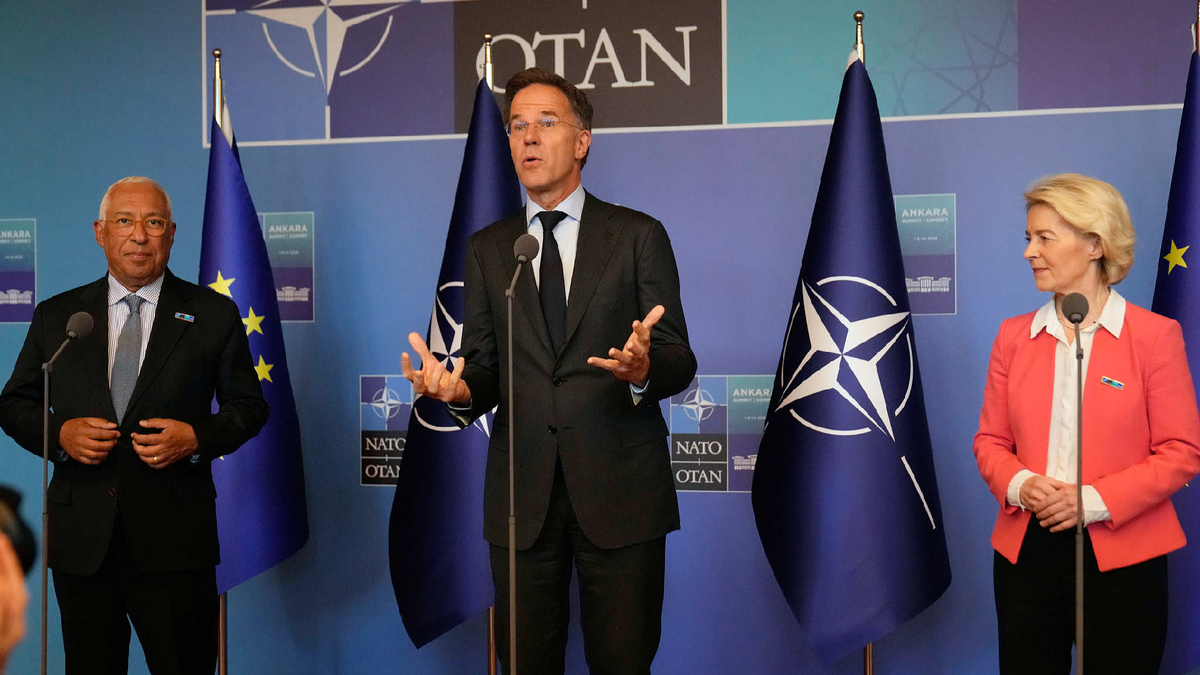
The North Atlantic Treaty Organization (NATO) convened its leaders' summit in Ankara, Türkiye, on July 7, 2026, signaling a profound strategic shift towards enhanced defense industrialization and military readiness. The centerpiece of the summit was the inaugural Defense Industry Forum, a platform designed to integrate military supply chains across member states and accelerate the production and procurement of advanced weaponry. This gathering brought together senior NATO officials and leading Western defense contractors, underscoring a concerted effort to adapt the alliance's capabilities to a more volatile global security landscape.
Under the leadership of Secretary General Mark Rutte, several key initiatives were launched, reflecting a comprehensive approach to modernizing NATO's defense posture. The Drone Edge Initiative stands out with a commitment of over $40 billion from member states over the next five years, aimed at significantly strengthening counter-drone capabilities. This investment acknowledges the critical role of unmanned aerial systems in contemporary warfare and the necessity for robust defenses against them. Concurrently, the Front Door platform was introduced to streamline access for private defense companies to alliance contracts, fostering greater collaboration between the public and private sectors in defense innovation and production.
Further emphasizing transatlantic cooperation, a $2.8 billion industrial cooperation initiative was unveiled. This program facilitates partnerships between U.S. and European defense firms, enabling the production of U.S.-designed weapons, such as Abrams tanks and ATACMS missiles, within Europe. This move is strategically significant, aiming to enhance European defense autonomy, reduce reliance on direct U.S. imports, and bolster the continent's industrial capacity to meet its own security needs. Additionally, several allies, including Türkiye, initiated joint procurement efforts to expand NATO's fleets of strategic transport and aerial refueling aircraft, crucial for logistical support and power projection across vast distances. Türkiye further committed to contributing two domestically produced observation satellites, enhancing NATO's space-based intelligence and surveillance capabilities.
The impetus behind these ambitious defense initiatives is rooted in heightened security concerns across Europe and beyond. While not explicitly stated in the immediate reporting, the context of recent global conflicts and geopolitical tensions has undoubtedly driven NATO members to re-evaluate their defense readiness and collective deterrence capabilities. The push for increased defense spending, with Secretary General Rutte advocating for a target of 5% of GDP by 2035, reflects a long-term commitment to a more robust and self-reliant European defense architecture. This call aligns with persistent demands from Washington for European members to shoulder a greater share of the alliance's defense responsibilities, shifting the burden-sharing dynamic within NATO.
Economically, these initiatives represent a substantial injection of capital into the defense sector. The integration of supply chains and the fostering of industrial cooperation are expected to create jobs, stimulate technological innovation, and enhance the competitiveness of European defense industries. The focus on local production of key military assets like tanks and missiles also has significant economic implications, potentially reducing lead times for equipment delivery and strengthening national industrial bases. However, such large-scale military investments inevitably raise questions about resource allocation and their potential impact on other sectors of national economies.
Despite the strategic imperative articulated by NATO leadership, the alliance's expanding militarization and the push for increased defense spending have not been universally embraced. In the host country, Türkiye, the summit was met with significant public opposition. Anti-NATO rallies were held in Ankara, where students, socialist groups, and lawmakers protested the alliance's growing defense budgets. A broader wave of demonstrations occurred over the preceding weekend in Istanbul, Ankara, and Izmir, with thousands denouncing NATO's pressure to prioritize military spending over public welfare. These protests highlight a recurring tension within democratic societies: the balance between national security expenditures and investments in social programs, healthcare, and education.
This internal dissent underscores a critical challenge for NATO members. While governments may perceive an urgent need to bolster defense in response to external threats, their populations often express concerns about the opportunity costs of such investments. The protests in Türkiye serve as a reminder that public support for defense policies is not guaranteed, and leaders must navigate these domestic pressures while pursuing their strategic objectives. The long-term success of NATO's ambitious defense agenda will depend not only on its ability to integrate industrial capabilities and increase spending but also on its capacity to maintain public consensus and address the legitimate concerns of its citizens regarding the societal impact of militarization.
The Ankara summit marks a pivotal moment in NATO's evolution, signaling a decisive move towards a more integrated, technologically advanced, and industrially self-sufficient defense alliance. The initiatives launched, from drone capabilities to joint production of heavy weaponry and space assets, reflect a comprehensive strategy to enhance deterrence and collective defense in a complex geopolitical environment. While these efforts are driven by a clear strategic rationale, the significant financial commitments and the perceived shift towards greater militarization will continue to generate debate and public scrutiny, particularly concerning the allocation of national resources. The coming years will reveal how effectively NATO can balance its strategic imperatives with the domestic welfare concerns of its member states, shaping the future of European and transatlantic security. The alliance's trajectory is set towards a more robust defense posture, but the path forward will require careful diplomatic navigation and sustained public engagement.
Source referenced: CGTN
This brief was synthesized by our Editorial Engine and reviewed by The Ground Narrative team.