TRENDING

Sunday, 4 October 2026
----------------------
23 Rabi' Al-Thani 1448 AH
China is grappling with a series of deadly extreme weather events, including tornadoes, floods, and landslides, prompting President Xi Jinping to order an 'all-out' national response. These escalating natural disasters underscore the growing impact of climate change on a major global power and test Beijing's governance capacity and resource allocation.
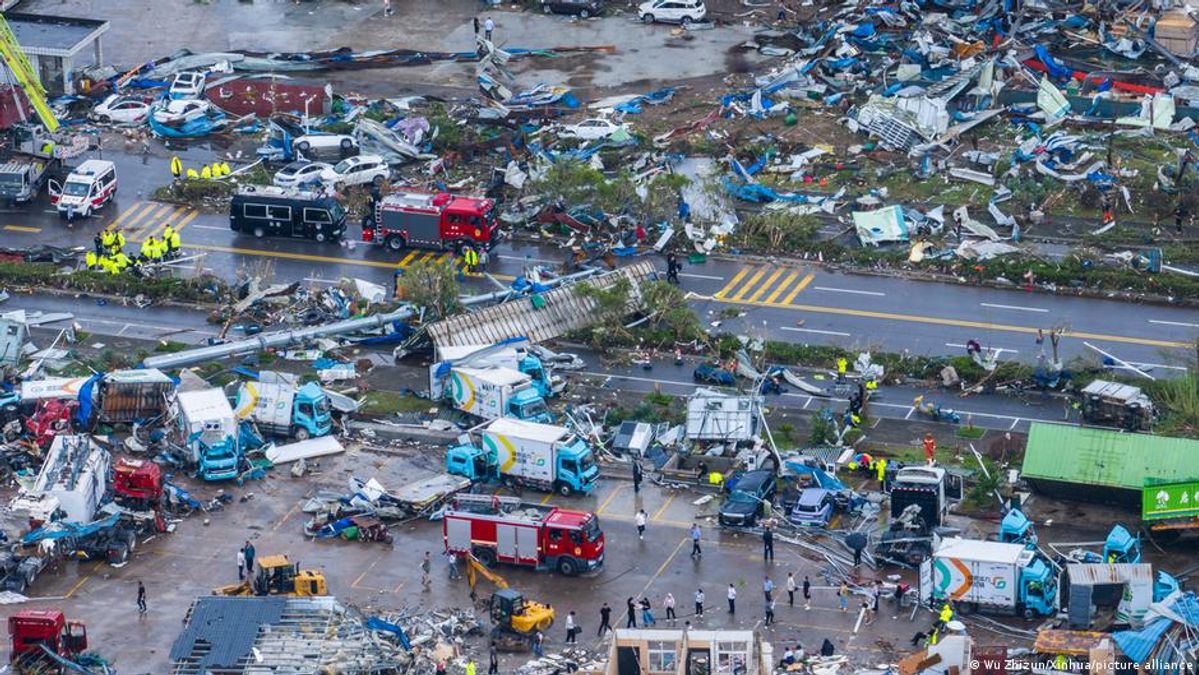
China is currently experiencing a severe and widespread onslaught of extreme weather, leading to significant loss of life, injuries, and extensive damage across multiple provinces. The events, which unfolded rapidly over recent days, include rare tornadoes, torrential rainfall, widespread flooding, and devastating landslides, prompting an urgent and comprehensive national response from Beijing.
On Monday night, central Hubei province was struck by severe convective weather, including tornadoes—a phenomenon rarely observed in the region, with the last recorded instance in May 2021. These powerful gales, reaching level 13 on the Beaufort scale, resulted in at least 11 fatalities and over 330 injuries. The storms caused widespread destruction, overturning vehicles, ripping roofs from buildings, and demolishing 22 residential structures while damaging nearly 5,000 others. Rescue operations are actively underway to locate one missing person and assist those affected.
Simultaneously, China's southern Guangxi and Guangdong provinces elevated their flood alerts to the highest level on Tuesday morning. This region is still reeling from the effects of Typhoon Maysak, which brought torrential rains to Nanning on Saturday and again on Monday. The heavy rainfall led to breached water reservoirs, affecting approximately 55,000 people and necessitating the evacuation of 48,000 residents. Authorities in Guangxi have reported at least two deaths related to these floods.
Further compounding the crisis, a landslide occurred in the northwestern Gansu Province on Tuesday morning, burying 33 individuals. While 17 people have been successfully rescued, 16 remain trapped, with rescue efforts continuing amidst challenging conditions. The specific trigger for this landslide has not yet been publicly identified.
In response to the escalating crisis, Chinese President Xi Jinping issued a directive for officials to launch an "all-out" effort to rescue those affected. State media channel CCTV reported that Xi called for the mobilization of all necessary resources for "treating the injured, resettling affected residents, and carrying out disaster prevention and relief work effectively." This high-level intervention underscores the gravity of the situation and the Chinese leadership's commitment to demonstrating strong governance and crisis management capabilities.
The scale and intensity of these concurrent disasters carry significant geopolitical implications for China. Domestically, the government's ability to effectively manage such widespread emergencies is crucial for maintaining social stability and public trust. A robust and efficient disaster response is a key indicator of state capacity and can either bolster or challenge the legitimacy of the ruling Communist Party. Xi's direct involvement and the call for an "all-out" effort signal the political imperative to mitigate human suffering and economic disruption swiftly.
Economically, the damage to infrastructure, residential areas, and potentially agricultural land across multiple provinces will incur substantial costs. While China possesses significant resources for disaster relief and reconstruction, the increasing frequency and severity of such events, particularly in economically vital regions, could pose long-term challenges to regional development and national economic resilience. The diversion of resources towards disaster relief may also impact other planned development projects or strategic initiatives.
These extreme weather events are not isolated incidents but rather align with a global trend of increasing climate volatility. China, a vast country with diverse geographies, is particularly vulnerable to the impacts of climate change, experiencing both severe droughts and unprecedented floods in recent years. The National Meteorological Center's warning of more torrential rainfall for central and southern provinces, coupled with the impending arrival of Super Typhoon Bavi along China's eastern coast, highlights the persistent and evolving nature of this challenge.
From a geopolitical perspective, China's experience with climate-induced disasters reinforces its dual role as both the world's largest emitter of greenhouse gases and a nation highly susceptible to climate change's consequences. This reality shapes its approach to international climate negotiations, where it often advocates for differentiated responsibilities while simultaneously investing heavily in renewable energy and climate adaptation measures. The ongoing crises serve as a stark reminder of the urgent need for both domestic resilience building and international cooperation on climate action.
In conclusion, the current wave of deadly extreme weather across China represents a multifaceted challenge for Beijing. Beyond the immediate humanitarian crisis, it tests the government's administrative capacity, strains economic resources, and underscores the profound and escalating impact of climate change on a global superpower. The "all-out" response reflects the strategic importance of effective disaster management in maintaining internal stability and projecting national strength in an era of increasing environmental uncertainty.
Source referenced: DW
This brief was synthesized by our Editorial Engine and reviewed by The Ground Narrative team.