TRENDING

Thursday, 8 October 2026
----------------------
27 Rabi' Al-Thani 1448 AH
The Nagasaki prefectural assembly has urged the Japanese government to uphold its Three Non-Nuclear Principles, reflecting a broader societal debate as calls emerge within the ruling Liberal Democratic Party to revise the long-standing policy. This development underscores the tension between Japan's historical commitment to peace and its evolving security concerns in a volatile East Asian landscape.
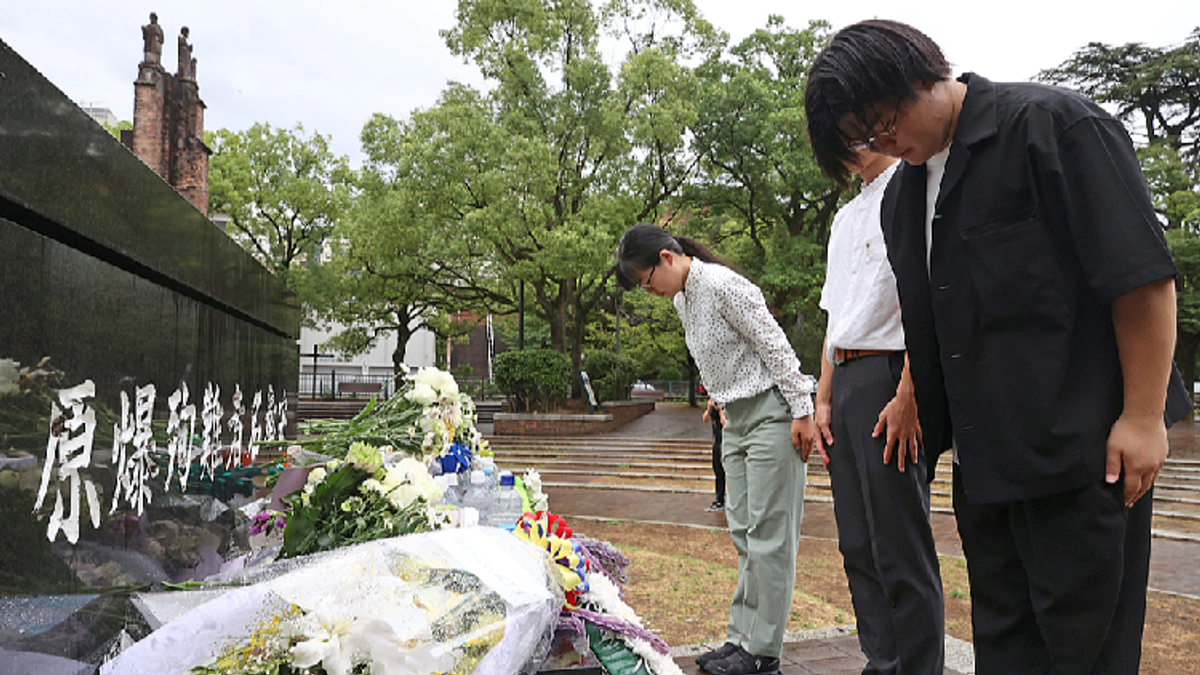
In a significant move reflecting Japan's ongoing internal debate over its defense posture, the prefectural assembly of Nagasaki formally urged the Japanese government on Thursday, July 9, 2026, to strictly uphold the nation's Three Non-Nuclear Principles. This appeal, delivered as a written opinion, comes amidst growing discussions within the ruling Liberal Democratic Party (LDP) regarding a potential revision of these foundational principles, which prohibit Japan from possessing, producing, or permitting the introduction of nuclear weapons into its territory.
The call from Nagasaki, one of only two cities in the world to have suffered an atomic bombing, carries profound historical and symbolic weight. It echoes a similar resolution adopted by the Hiroshima prefectural assembly in December 2025, underscoring a unified stance from the cities most directly impacted by nuclear warfare. These principles, formally adopted by the Japanese parliament in 1971, have long served as a cornerstone of Japan's post-World War II identity and its commitment to peace and nuclear non-proliferation.
The emergence of calls within the LDP to reconsider the Three Non-Nuclear Principles is not an isolated development but rather a reflection of a rapidly evolving and increasingly complex security environment in East Asia. For decades, Japan has relied on the extended deterrence provided by its alliance with the United States, often referred to as the 'nuclear umbrella.' However, the escalating nuclear and missile programs of North Korea, coupled with China's rapid military modernization and assertive regional posture, have prompted some policymakers in Tokyo to question the adequacy of Japan's current defense strategy.
Proponents of revising the principles argue that a more robust and potentially independent deterrent capability might be necessary to safeguard national security in an era of heightened regional instability. This perspective often highlights the perceived limitations of relying solely on a foreign power for ultimate security guarantees, particularly as geopolitical dynamics shift. The debate also touches upon the concept of 'nuclear sharing' or hosting U.S. nuclear weapons, a move that would directly contravene the 'not permitting introduction' clause of the principles.
The debate over Japan's nuclear policy exposes a deep societal cleavage within the country. On one side are the peace advocates and those who emphasize Japan's unique historical experience as the only nation to have suffered atomic attacks, viewing the non-nuclear principles as an inviolable moral and ethical commitment. The appeals from Nagasaki and Hiroshima are powerful manifestations of this sentiment, stressing that these principles form the bedrock of regional stability and should be strictly maintained.
On the other side are those, primarily within conservative political circles, who prioritize national security in the face of perceived external threats. They argue that a pragmatic reassessment of defense policy is essential for Japan's survival and influence in a dangerous world. This internal struggle highlights the tension between historical memory and contemporary strategic imperatives.
Regionally, any move by Japan to revise its non-nuclear principles would send significant shockwaves. Neighboring countries, particularly China and South Korea, which harbor historical grievances and contemporary strategic rivalries with Japan, would likely view such a shift with deep suspicion and concern. It could potentially trigger an arms race in the region, undermine global non-proliferation efforts, and destabilize existing security architectures. The United States, Japan's primary security ally, would also closely monitor such developments, as any change could necessitate a re-evaluation of the bilateral alliance's framework and the nature of extended deterrence.
The calls from Nagasaki and Hiroshima underscore the enduring power of historical memory and the strong public sentiment in favor of Japan's non-nuclear stance. However, the persistent debate within the LDP signals that the question of Japan's future security posture, particularly concerning nuclear weapons, remains a live and complex issue. As East Asia continues to navigate a period of geopolitical flux, the Japanese government faces the delicate task of balancing its historical commitments with evolving security demands. The outcome of this internal deliberation will not only shape Japan's future but also have profound implications for regional stability and the global non-proliferation regime for years to come.
Source referenced: CGTN
This brief was synthesized by our Editorial Engine and reviewed by The Ground Narrative team.