TRENDING

Tuesday, 6 October 2026
----------------------
25 Rabi' Al-Thani 1448 AH
An alleged cross-border shooting has sparked a diplomatic row, with the US deploying troops and Mexico demanding evidence. This incident highlights simmering tensions over sovereignty and security along the shared frontier.
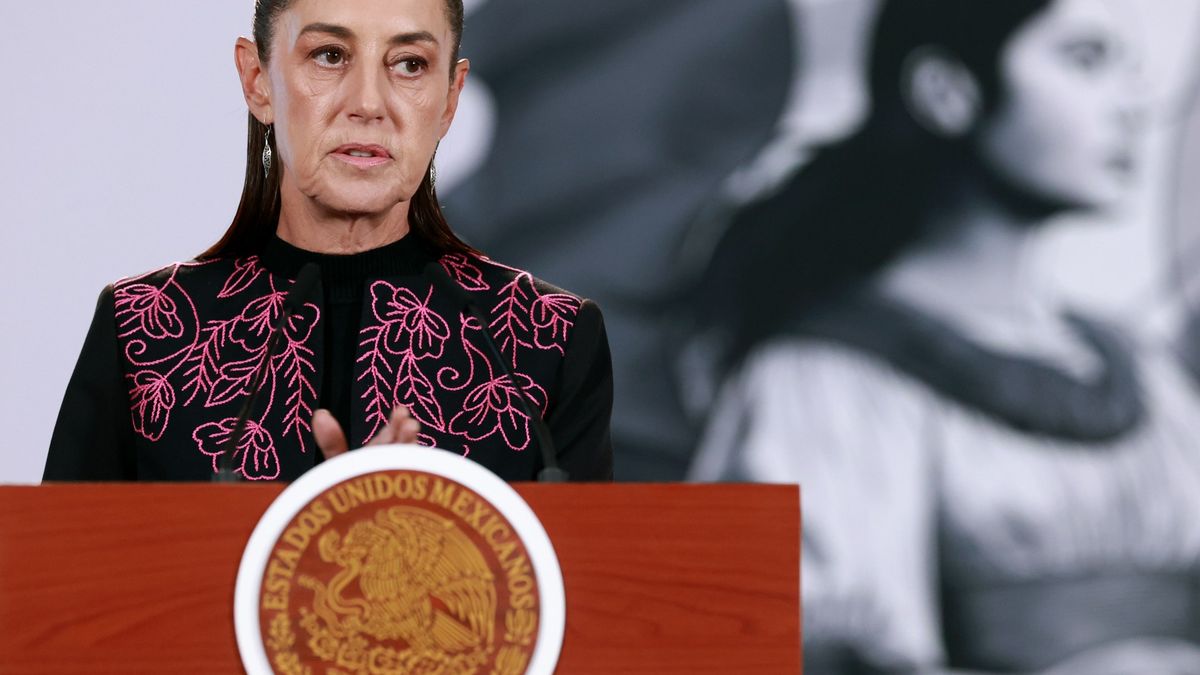
The United States has alleged that its Coast Guard personnel were targeted by gunfire from the Mexican side of the border, specifically from the state of Tamaulipas into Texas, in late September. In response, the US swiftly deployed approximately 500 troops, along with helicopters, drones, and anti-drone equipment, to the border region. However, Mexican President Claudia Sheinbaum publicly stated that her government's forces, including the National Guard, Army, and Navy, detected no shots fired from Mexican territory and has formally requested all evidence from the US to substantiate the claim. Despite the dispute over the alleged incident, Mexico has also deployed its own forces to the border as part of a joint initiative called "Operation Mirror," which President Sheinbaum described as a measure "to forestall any issues" that might arise.
This latest border incident is not an isolated event but a flashpoint in a deeper, ongoing struggle over sovereignty and influence, particularly under US President Donald Trump's second term. Trump's administration has adopted an assertive foreign policy towards Latin America, informally dubbed the "Donroe Doctrine," a clear echo of the 19th-century Monroe Doctrine. This policy aims to significantly increase US economic and security influence in the region, often framed through the lens of combating narcotics trafficking and criminal organizations. Trump has repeatedly threatened direct military strikes inside Mexico to target cartels, portraying their presence as a direct threat to US national security.
For Mexico, under President Sheinbaum, the situation is a delicate balancing act. Her government is committed to addressing internal security challenges, but critically, it must also defend national sovereignty against perceived US overreach. Any direct US military operation on Mexican soil without federal consent would be a profound violation of the Mexican constitution and a severe blow to the legitimacy of her administration. Sheinbaum's political survival and public standing depend on her ability to project strength and protect Mexico's autonomy, even when facing pressure from a far more powerful neighbor.
The role of US Ambassador Ronald Johnson is central to understanding these power dynamics. A former US Army Green Beret and CIA operative, Johnson has been a direct and often confrontational extension of Trump's assertive policy. His use of social media to announce the alleged shooting and criticize the Mexican government's approach to cartels bypasses traditional diplomatic channels, signaling a more direct, less nuanced approach to bilateral relations. This tactic puts Sheinbaum in a difficult position, forcing her to publicly push back against what she views as violations of diplomatic norms and internal political interference. The "Operation Mirror" joint deployment, while seemingly cooperative, underscores the asymmetry of power; Mexico's participation appears to be a strategic move to manage and contain a US military presence that might otherwise be unilateral and more expansive.
When international disputes escalate into military deployments, the most immediate and profound impact is rarely felt by the powerful actors in capital cities, but by ordinary people living in the affected regions. Along the US-Mexico border, increased militarization directly impacts daily life for millions.
Border towns and cities, often vibrant hubs of cross-cultural exchange and economic activity, transform into zones of heightened tension. Residents face increased scrutiny, checkpoints, and the psychological burden of living in an area perceived as a conflict zone. The presence of armed troops, helicopters, and drones, regardless of their stated purpose, can instill fear and disrupt the social fabric. Local economies, heavily reliant on cross-border trade and labor, can suffer significantly from delays, restrictions, and a general climate of instability. Businesses on both sides of the border, from small vendors to larger manufacturing operations, depend on predictable and open movement, which is jeopardized by security crackdowns.
Perhaps no group bears a greater human cost than the vulnerable populations of migrants and asylum seekers. Already fleeing violence, poverty, and instability in their home countries, they find themselves caught in the crossfire of geopolitical disputes. Increased troop presence and advanced surveillance technologies on both sides of the border will inevitably lead to harsher enforcement, making already perilous journeys even more dangerous. This militarization often pushes migrants into more remote and hazardous routes, increasing their risk of exploitation by criminal organizations, injury, or death. Human rights organizations frequently report an uptick in abuses and a decrease in access to legal protections when borders become heavily militarized.
For Mexican citizens, particularly those living far from the border, the perceived erosion of national sovereignty carries a significant emotional and political cost. The idea that a foreign power can unilaterally deploy troops or dictate security policy on or near Mexican territory, especially without clear evidence of justification, can foster resentment and a sense of national humiliation. This can undermine public trust in their own government if it is seen as unable to protect the nation's integrity, potentially leading to internal political instability or a rise in nationalist sentiment. The long-term cost is a damaged bilateral relationship, built on suspicion rather than cooperation, making it harder to address shared challenges like economic development, environmental protection, and genuine security threats.
The official narratives surrounding the alleged border shooting and subsequent troop deployment leave significant gaps, pointing to deeper, unacknowledged dynamics at play. The most glaring omission is the absence of concrete evidence from the US regarding the alleged attack on its Coast Guard. President Sheinbaum's public demand for proof, coupled with her assertion that Mexican forces detected no such incident, casts a shadow of doubt over the entire premise for the US deployment. If the evidence is lacking or inconclusive, it suggests the incident may be exaggerated, misidentified, or, more cynically, used as a convenient pretext for actions that serve other strategic objectives.
President Trump's aggressive stance on border security and his "Donroe Doctrine" are not solely about international relations; they are powerful tools in his domestic political playbook. A tough-on-cartels image and a willingness to project US military power resonate strongly with his political base, particularly in an election cycle or as a means to consolidate power. Framing criminal organizations as a national security threat allows for a broader interpretation of intervention, justifying actions that might otherwise be seen as violations of international law. The alleged shooting, regardless of its veracity, provides a timely justification for demonstrating decisive action and fulfilling campaign promises to secure the border and confront perceived threats from Mexico.
A more insidious untold story lies in the persistent reports of US intelligence and law enforcement operations within Mexico that often bypass federal Mexican authority. The alleged deaths of two CIA agents in Chihuahua earlier this year, reportedly involved in a state-led raid on a drug lab without federal knowledge, underscore this pattern. While a state official denied their involvement in the raid, claiming they were on a drone training mission, President Sheinbaum's statement that neither she nor her cabinet were informed of any CIA activities is highly revealing. This suggests a parallel track of US engagement, operating in the shadows and potentially leveraging local or state-level contacts, which directly undermines the authority of the Mexican federal government. The current alleged shooting incident could be a direct or indirect consequence of these undeclared operations, or it could be used to justify an expansion of such covert activities under the guise of overt military protection.
Finally, the powerful drug cartels, often portrayed as the singular threat, are also strategic actors who benefit from the friction between the two governments. Instability, lack of clear governance, and diplomatic disputes create permissive environments for their operations. When US and Mexican federal authorities are at odds, it can create operational vacuums or divert attention, allowing cartels to consolidate power, expand their networks, and continue their illicit activities with less coordinated resistance. The focus on border militarization, while addressing symptoms, often fails to tackle the root causes of cartel power, which are deeply embedded in economic disparities, corruption, and social disenfranchisement on both sides of the border.
The coming weeks will be critical in determining the trajectory of US-Mexico relations and the future of border security. The immediate focus will be on whether the United States provides compelling, verifiable evidence of the alleged cross-border shooting. If the US fails to produce such evidence, or if the evidence is deemed insufficient by Mexico, President Sheinbaum will face immense pressure to escalate her pushback against the US deployment, potentially risking a direct diplomatic confrontation with the Trump administration. Conversely, if convincing evidence emerges, it could significantly alter the narrative and put Mexico on the defensive.
Beyond the initial incident, observers should closely monitor the nature and duration of the US troop deployment. Will the 500 troops be a temporary measure, or will their presence become semi-permanent, signaling a de facto expansion of US military footprint along the border? The use of anti-drone equipment is particularly noteworthy; its deployment could be defensive, but also hints at capabilities that could be used for surveillance or even interdiction deeper into Mexican airspace, further challenging Mexican sovereignty.
Another key area to watch is the ongoing investigation into the alleged deaths of CIA agents in Chihuahua. The findings of this investigation, if made public, could expose the true extent of covert US operations within Mexico and reveal the complex, often unauthorized, interactions between US agencies and Mexican state-level actors. Such revelations would undoubtedly fuel Sheinbaum's arguments about US overreach and complicate future bilateral security cooperation. Finally, observe how President Trump's "Donroe Doctrine" evolves. Will this incident serve as a template for further assertive actions, potentially including his threatened military strikes inside Mexico, or will Sheinbaum's firm stance force a more cautious approach from Washington? The balance of power at the border is shifting, and the consequences will ripple far beyond the immediate frontier.
The US claims its Coast Guard personnel were fired upon from the Mexican side of the border in late September. This alleged incident prompted the US to deploy 500 troops and military assets to the border area.
Mexican President Claudia Sheinbaum has denied any evidence of shots fired from Mexican territory and has formally requested proof from the US. While Mexico has deployed its own forces as part of a joint operation, Sheinbaum has strongly defended Mexican sovereignty against perceived US overreach.
The 'Donroe Doctrine' is an informal term for US President Trump's assertive policy to increase US influence and security involvement in Latin America, often justified by combating drug cartels. This doctrine provides the broader context for the US's rapid military response and its ongoing pressure on Mexico regarding border security.
Source referenced: ALJAZEERA
This brief was synthesized by our Editorial Engine and reviewed by The Ground Narrative team.