TRENDING

Tuesday, 6 October 2026
----------------------
25 Rabi' Al-Thani 1448 AH
The Saudi‑led coalition says a Houthi drone struck a power station in Medina, while the rebels deny involvement. The incident highlights the widening spill‑over of Yemen’s war into Saudi holy sites and the human toll on civilians on both sides.
The Saudi‑led coalition announced that a drone strike damaged a power distribution station in Medina, the city that hosts the Prophet’s Mosque. The attack knocked one transformer out of service but, according to the coalition, did not disrupt the broader electricity network. The coalition released drone wreckage as evidence and accused the Iran‑aligned Houthi movement of planning and executing the strike. The Houthi side, speaking through the Saba news agency, called the claim a lie and suggested the accusation was a cover‑up for Saudi claims that the Houthis had previously targeted Mecca.
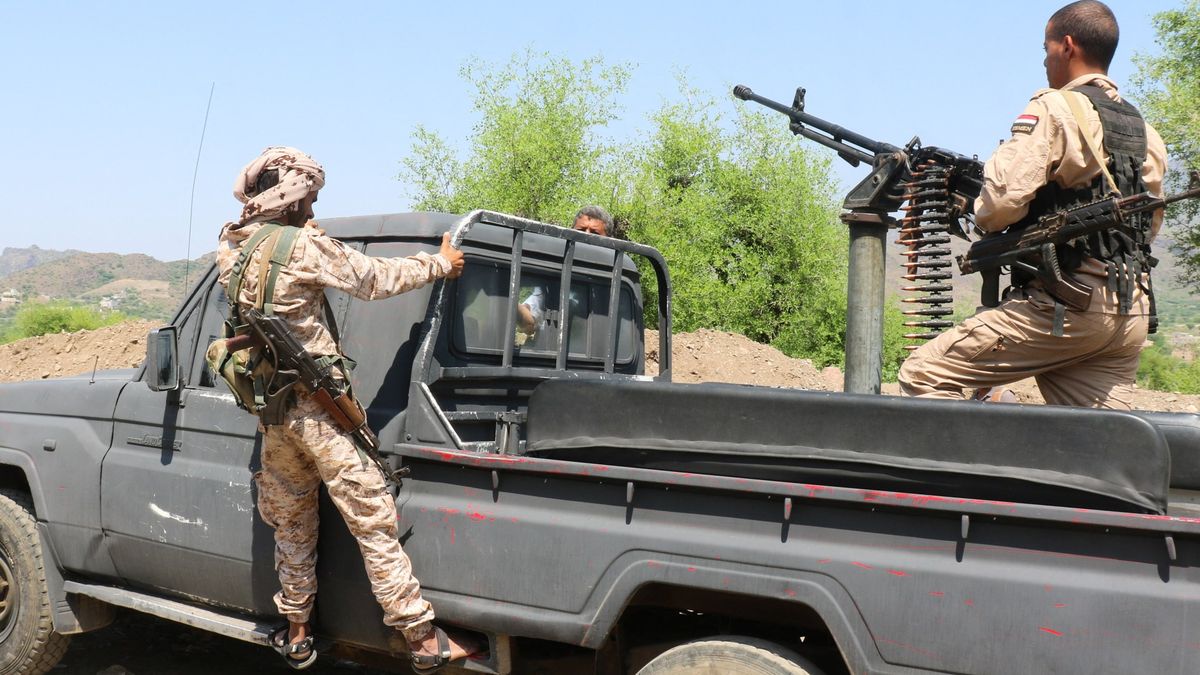
In the same week, Saudi‑backed Yemeni government forces reported heavy fighting in Taiz province, claiming to have killed dozens of Houthi fighters across multiple districts. The coalition also said it intercepted four drones and two ballistic missiles over the southern Saudi cities of Khamis Mushait and Jazan. Meanwhile, Saudi Arabia pledged nearly 224 million riyals (about $60 million) in budget funding for the internationally recognised Yemeni government, framing the money as support for fiscal stability and citizen purchasing power.
The incident marks the latest instance of the Yemen conflict spilling over into Saudi territory, a pattern that has intensified since the Houthi seizure of the strategic Bab al‑Mandeb strait and the Red Sea city of Mocha earlier this year.
The Saudi‑Yemen war is fundamentally a proxy contest between Saudi Arabia and Iran, each seeking to shape the political landscape of the Arabian Peninsula. For Riyadh, projecting the ability to defend holy sites reinforces its claim as the guardian of Islam’s most sacred places, a narrative that underpins domestic legitimacy and regional influence. Funding the Yemeni government and showcasing defensive successes against Houthi drones serve that narrative.
For Tehran, supporting the Houthis offers leverage over the Red Sea trade artery and a bargaining chip in broader negotiations over its nuclear programme and regional ambitions. Even if the Houthis deny responsibility for the Medina strike, the mere perception that they can reach Saudi heartland forces Riyadh to allocate more resources to air defence, missile interception and border security—expenditures that strain its fiscal budget.
Both sides have adopted a “low‑intensity, high‑visibility” doctrine: small‑scale attacks that generate disproportionate media impact. A drone hitting a transformer that powers the Prophet’s Mosque is symbolically potent, even if the physical damage is limited. The coalition’s rapid public attribution and promise of retaliation fit a pattern of signalling intended to deter further incursions while rallying domestic support.
The Houthi denial, framed as a defense against Saudi propaganda, is equally strategic. By rejecting the claim, they aim to avoid international condemnation for targeting a holy site while preserving their image as a resistance movement defending Yemeni sovereignty.
Saudi Arabia’s coalition includes the United Arab Emirates, Bahrain, and other Gulf states, all of which share concerns about Iranian influence. The recent funding boost for Yemen’s recognised government is a signal to coalition partners that Riyadh remains the primary patron, ensuring continued military and logistical backing.
Conversely, Iran’s indirect support for the Houthis is calibrated to avoid direct confrontation with Saudi air defences. Supplying longer‑range drones and missiles allows the Houthis to threaten Saudi territory without exposing Iranian forces to overt retaliation.
The Bab al‑Mandeb strait handles an estimated $3 trillion of oil and commodity flow annually. Houthi control of Mocha threatens shipping insurance premiums and could be leveraged in future negotiations over oil prices or sanctions relief. Saudi Arabia’s investment in Yemen’s fiscal apparatus is partly aimed at stabilising a neighbour whose collapse would create a vacuum for Iranian influence and disrupt the flow of goods through the strait.
The damaged transformer meant a temporary loss of power for parts of Medina, affecting households, businesses, and the extensive network of services that support millions of pilgrims each year. Even brief outages strain water pumps, traffic lights, and medical facilities that rely on uninterrupted electricity, raising safety concerns for both locals and visitors.
The coalition’s claim of killing dozens of Houthi fighters came alongside reports of 197,906 internally displaced people (IDPs) across Yemen, with 97,000 now housed in Taiz province. The surge in displacement reflects the expanding frontlines, as government forces push to retake Mocha and surrounding districts. IDP camps face shortages of food, clean water, and medical care, exacerbating a humanitarian crisis that has already claimed over 24,000 lives since 2015.
Saudi funding of $60 million may appear generous, but it represents a fraction of Yemen’s fiscal needs. Many families depend on remittances from relatives working in Saudi Arabia; heightened security measures and travel restrictions reduce these cash flows, deepening poverty in already vulnerable communities.
Saudi Arabia relies on a large migrant workforce from Yemen, Egypt, India, and Pakistan for construction, domestic work, and service sectors. Heightened security alerts after the Medina strike could trigger stricter visa controls, jeopardising employment for thousands of Yemeni workers and their families back home.
Both Riyadh and Tehran control the flow of information from their respective fronts. The coalition’s release of drone debris is intended to provide tangible proof, yet independent verification remains limited. Satellite imagery of the Medina site shows only minor damage, raising questions about the scale of the attack versus the political weight attached to it.
The Houthi denial is similarly opaque. Their media outlets rarely publish technical assessments of weaponry, making it difficult for external analysts to confirm whether the drones used match known Iranian‑supplied models or are locally manufactured.
Saudi Arabia’s announcement of 224 million riyals in aid coincides with a period of low oil prices, which pressures the kingdom’s budget. By framing the funding as humanitarian assistance, Riyadh diverts attention from domestic fiscal tightening and reinforces its image as a benevolent regional power.
Iran, meanwhile, downplays its role in recent Houthi victories, as noted in related reporting, to avoid triggering a broader coalition response that could include additional sanctions or direct military action.
The emphasis on defending the Prophet’s Mosque and the Grand Mosque taps into deep religious sentiment, but the narrative often eclipses the everyday hardships faced by worshippers who must navigate power cuts, crowded transport, and heightened security checks. The spiritual significance is leveraged to justify military expenditures that could otherwise be allocated to social services.
Repeated drone and missile strikes on power infrastructure increase the risk of fires, hazardous material releases, and long‑term degradation of the grid. Repair cycles are costly, and the focus on rapid restoration for symbolic sites can divert resources from broader regional electrification projects that would benefit rural communities in both Saudi Arabia and Yemen.
- Drone proliferation: Monitor the types and origins of drones intercepted over Saudi Arabia; a shift toward longer‑range, more sophisticated models would indicate deeper Iranian involvement.
- Bab al‑Mandeb traffic: Shipping data showing increased insurance premiums or rerouting of vessels could signal escalating Houthi control and broader economic repercussions.
- Saudi fiscal moves: Watch for further budget allocations to Yemen or domestic austerity measures, which may reveal how Riyadh balances regional ambitions with internal economic pressures.
- Humanitarian access: Reports from UN agencies on IDP camp conditions in Taiz will indicate whether the conflict’s spill‑over continues to exacerbate Yemen’s humanitarian crisis.
- Public sentiment in Saudi Arabia: Social media analysis of reactions to the Medina attack can uncover whether the narrative of defending holy sites maintains popular support or if fatigue over the proxy war grows.
By tracking these indicators, readers can gauge whether the Medina power station incident is an isolated provocation or a sign of a broader escalation that could reshape security dynamics across the Red Sea corridor.
The Saudi‑led coalition says drone wreckage proves Houthi involvement, but the Houthis deny the claim and independent verification is limited.
In Medina, the strike caused a temporary power loss affecting households and pilgrims, while intensified fighting in Yemen has displaced nearly 200,000 people and strained humanitarian aid.
Source referenced: ALJAZEERA
This brief was synthesized by our Editorial Engine and reviewed by The Ground Narrative team.