TRENDING

Thursday, 15 October 2026
----------------------
4 Jumada Al-Awwal 1448 AH
A new U.S.-mediated ceasefire between Israel and Lebanon has emerged as a potential diplomatic off-ramp for the wider U.S.-Israeli conflict with Iran, though its implementation remains uncertain. This development follows recent escalations in the Gulf and underscores the complex interplay of regional proxy warfare, direct military engagements, and critical economic stakes.
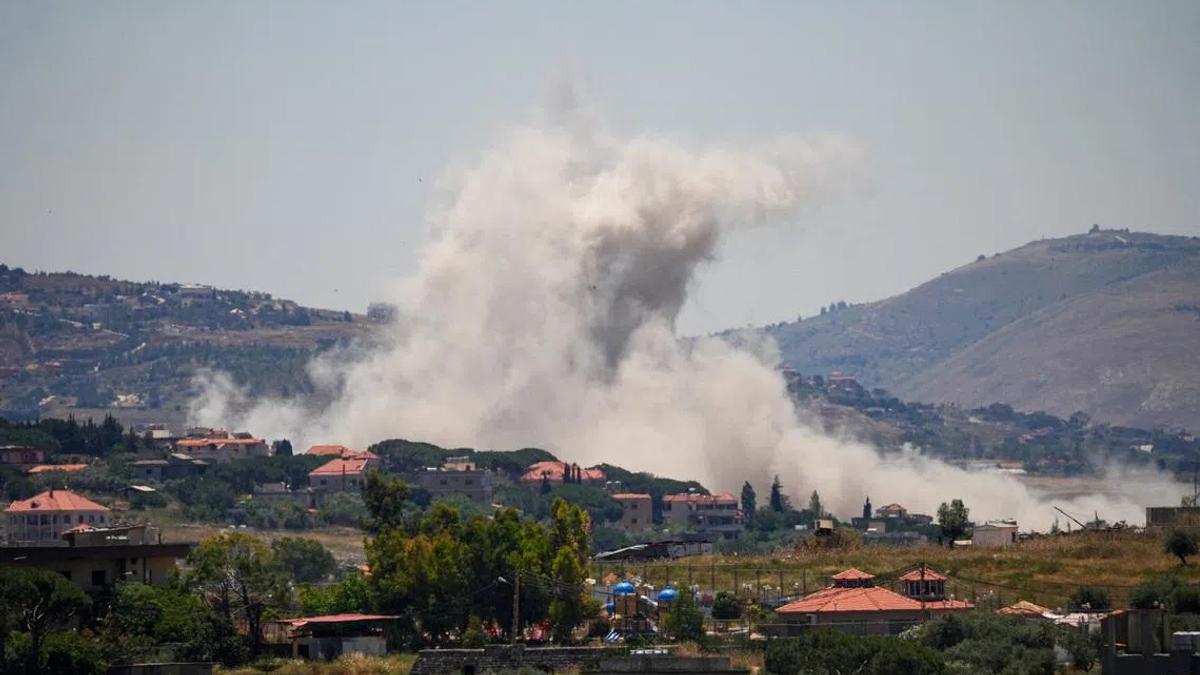
A U.S.-mediated ceasefire agreement between Israel and Lebanon, announced on June 4, 2026, has introduced a glimmer of hope for de-escalation in a region fraught with conflict. This agreement is particularly significant as Tehran has explicitly conditioned any broader peace deal with Washington on an end to hostilities in Lebanon. The ceasefire, intended to come into force within 24 hours of approval by all concerned parties, primarily targets the ongoing exchanges between Israeli forces and Hezbollah, the powerful Iranian-backed Lebanese militant group.
However, the robustness of this truce is immediately challenged by several factors. Lebanese President Joseph Aoun's reference to 'all concerned parties' approving the deal implicitly points to Hezbollah, which was not a direct signatory to the agreement and has yet to issue a public statement. Compounding this uncertainty, Israel's Defence Minister Israel Katz declared that the military would continue strikes in Lebanon and would not withdraw from the south, casting a shadow over the ceasefire's immediate effectiveness. This stance directly contradicts the minimum demand articulated by Esmail Qaani, commander of Iran's Revolutionary Guards' Quds Force, who insisted on an Israeli withdrawal to pre-war positions.
Hostilities between Hezbollah and Israel reignited on March 2, when Hezbollah initiated attacks in support of Iran amidst a broader U.S.-Israeli offensive against the Islamic Republic. This latest ceasefire follows several previous attempts at de-escalation since April, none of which have fully held, highlighting the deep-seated nature of the conflict and the challenges of implementing agreements involving non-state actors like Hezbollah.
The Lebanon ceasefire is inextricably linked to a larger, ongoing U.S.-Israeli war with Iran, which has seen significant escalation across multiple fronts. Just prior to the ceasefire announcement, the Gulf region experienced one of its most intense flare-ups since a separate ceasefire halted large-scale U.S.-Israeli bombing of Iran in early April. On June 3, Iranian forces launched attacks that struck Kuwait, causing damage to its airport and injuring dozens. While Iran's Revolutionary Guards denied targeting Kuwait's airport, blaming U.S. interceptor missile failures, the U.S. military asserted that Iranian drones deliberately targeted the facility. Simultaneously, Iranian media reported attacks on the U.S. Fifth Fleet headquarters in Bahrain and a U.S. airbase, claims denied by U.S. Central Command (CENTCOM), which instead reported successful 'defensive strikes' against Iranian missile launch sites, mine-laying boats, and targets on Qeshm Island near the Strait of Hormuz.
This renewed violence in the Gulf carries significant global economic implications. The Strait of Hormuz, a vital chokepoint through which approximately one-fifth of the world's oil and liquefied natural gas supplies normally transit, remains largely closed more than three months after the initial U.S. and Israeli strikes on Iran. The closure has contributed to global energy market volatility, with oil prices reacting sharply to regional developments. U.S. President Donald Trump, facing domestic pressure to lower fuel prices, has indicated potential progress in negotiations with Iran, suggesting a breakthrough could occur as early as the upcoming weekend. He also noted efforts to decouple the issue of reopening the Strait from the conflict in Lebanon, signaling a pragmatic approach to address the immediate economic fallout.
For Iran, the Lebanon ceasefire is merely one component of a more comprehensive set of demands for a lasting peace deal with Washington. Beyond an end to fighting in Lebanon, Tehran seeks access to billions of dollars in frozen oil revenue, waivers on sanctions impacting its crude exports, and the lifting of a U.S. blockade on its ports. Furthermore, Iran aims to secure leverage over the Strait of Hormuz, a strategic asset that grants it significant influence over global energy flows. These conditions underscore Iran's objective to alleviate economic pressure and reassert its regional and international standing.
Iran's Supreme Leader Ayatollah Mojtaba Khamenei, in a message read on his behalf, framed the conflict as a defeat for Iran's enemies on the battlefield, now attempting to sow internal divisions. His call for patience, unity, and mutual trust reflects a strategy to consolidate domestic support while projecting an image of resilience against external pressures. The long-standing U.S. priority to prevent Iran from acquiring nuclear weapons remains a core point of contention, with Iran consistently maintaining that its atomic program is for peaceful purposes.
The current situation represents a delicate balance between military confrontation and diplomatic overtures. The U.S.-mediated ceasefire in Lebanon, while fragile, could serve as a crucial test of willingness for broader de-escalation. If it holds, it might create the necessary political space for more complex negotiations between Washington and Tehran, potentially leading to the reopening of the Strait of Hormuz and a stabilization of global energy markets. However, the conflicting statements from Israeli and Iranian officials, coupled with Hezbollah's unconfirmed participation, highlight the significant hurdles to effective implementation.
The recent flare-up in the Gulf underscores the inherent risks of the wider conflict, where direct and proxy engagements can quickly escalate. The economic imperative of reopening the Strait of Hormuz provides a strong incentive for all parties to find a diplomatic solution, particularly for the U.S. facing domestic economic pressures. The path forward remains uncertain, contingent on the ability of diplomatic efforts to bridge deep-seated mistrust and address the multifaceted security and economic demands of all key actors in this volatile region. The interplay of regional stability, global energy security, and the enduring challenge of Iran's nuclear ambitions will continue to define the geopolitical landscape. The success or failure of this Lebanon ceasefire will be a critical indicator of the potential for a broader, more stable resolution to the ongoing U.S.-Iran confrontation. The international community watches closely, aware that missteps could lead to further regional destabilization and global economic disruption.
Editor's Note: The analysis acknowledges the inherent uncertainty regarding the implementation and long-term effectiveness of the Lebanon ceasefire, given the conflicting statements from involved parties and Hezbollah's unconfirmed participation.
Source referenced: STRAITSTIMES
This brief was synthesized by our Editorial Engine and reviewed by The Ground Narrative team.