TRENDING

Tuesday, 22 September 2026
----------------------
11 Rabi' Al-Thani 1448 AH
Japan's 2026 revisions to its 'Three Security Documents' mark a significant acceleration in its post-war defense policy, aiming to transform conceptual capabilities into operational readiness. This strategic shift is poised to reshape East Asian security dynamics, raising concerns among neighboring nations regarding regional stability and potential security dilemmas.
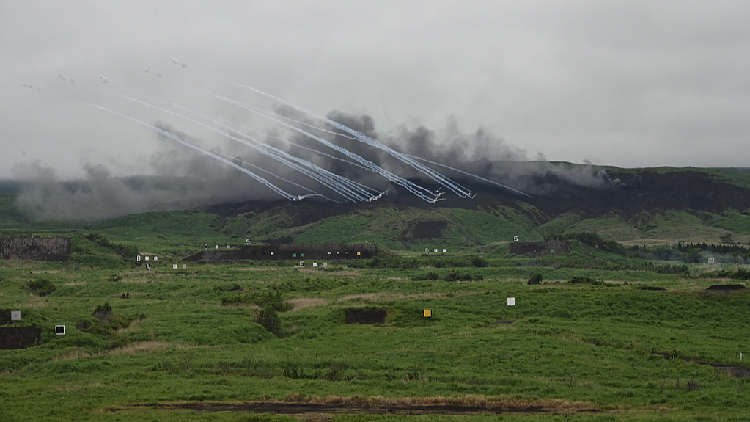
In a significant development for East Asian security, Japan's government, under Prime Minister Sanae Takaichi, has launched a new round of revisions to its 'Three Security Documents' – the National Security Strategy, the National Defense Strategy, and the Defense Buildup Program. These revisions, building upon a foundational shift initiated in 2022, are not merely policy adjustments but represent a comprehensive redesign of Japan's military capabilities, strategic positioning, and framework for external security cooperation. The move signals a profound reorientation of Japan's post-war defense policy, moving beyond its traditionally 'exclusively defense-oriented' posture.
The 2022 iteration of these documents marked a pivotal moment, introducing concepts such as 'counter-strike capabilities' and identifying China as 'the greatest strategic challenge.' While the 2022 documents focused on loosening political constraints and setting new policy directions, the 2026 revisions are designed to operationalize these concepts. The core aim is to translate the capability goals proposed in 2022 into tangible operational capabilities, institutional arrangements, and expanded regional security influence. This trajectory, as analyzed by experts, suggests Japan is accelerating its transformation into a more robust military power, with far-reaching implications for the regional balance of power.
Strategically, the 2026 revisions indicate a more proactive stance, seeking to actively shape the regional security order, particularly within the Indo-Pacific. This involves enhancing defense capabilities, strengthening alliance coordination, expanding defense equipment exports, and building economic security systems. This marks a notable shift from a focus primarily on national security maintenance to a more assertive role in regional security architecture.
A key aspect of the 2026 revisions is the emphasis on upgrading 'counter-strike capabilities' into combat-ready operational assets. While the 2022 documents introduced this concept, stressing adherence to constitutional principles and the 'exclusively defense-oriented policy,' the current revisions delve into the practicalities. This includes defining how strike targets are identified, allocating command authority, establishing joint decision-making processes with the United States, securing essential logistics like ammunition and bases, and integrating these capabilities with missile defense, unmanned operations, and cyber and space assets. This signifies a move from a policy concept to a deployable, interoperable, and sustainable military capability.
In terms of military buildup, the focus has shifted from merely acquiring advanced equipment to constructing a sustained combat system. The 2022 Defense Buildup Program outlined priorities such as long-range strikes, air and missile defense, unmanned equipment, and cross-domain operations. The 2026 revisions, however, prioritize system-building and combat readiness, proposing the deployment of integrated defense and counter-strike systems to counter large-scale saturation attacks, the development of next-generation powered submarines capable of carrying long-range missiles, and the establishment of capabilities designed for sustained operations over extended periods.
The revision of Japan's 'Three Security Documents' is anticipated to have a profound and multifaceted impact on the security landscape of East Asia. Critics, including the Chinese Foreign Ministry and some regional analysts, view these revisions as an attempt to 'chip away at the constraints imposed by Japan's constitution, international law and domestic legislation,' and challenge the post-war international order. They express concern that Japan's intentions are becoming increasingly clear, with ambitions laid bare.
This strategic shift is likely to exacerbate security tensions and potentially trigger a new round of security dilemmas in the region. As Japan enhances its offensive military capabilities, neighboring countries, particularly China, are expected to respond by strengthening their own military capabilities, adjusting deployments, deepening security cooperation, or enhancing crisis response mechanisms. This could lead to an escalation of regional security competition, potentially plunging East Asia into a new security spiral.
Specific security pressures surrounding China are expected to rise significantly, concentrating in three key areas: China's Taiwan region, the East China Sea, and Japan-US military integration. Japan's strengthened military deployments in its southwestern islands, coupled with enhanced long-range strike capabilities and joint operational mechanisms with the US, could increase its posture regarding the situation across the Taiwan Strait. Japan's forward bases, intelligence capabilities, logistical support, and naval and air forces could pose direct security implications for the region.
In the East China Sea, the revised documents provide policy authorization for Japan to reinforce its defense systems for outlying islands and its maritime and aerial surveillance capabilities. This could lead to more confrontational deployments and patrol operations around disputed territories, such as the Diaoyu Dao (Senkaku Islands), significantly increasing the risk of accidental conflict between China and Japan. Furthermore, the deep integration of Japan's long-range strike capabilities with the Japan-US alliance is a critical development that could alter the regional strategic calculus, potentially leading to a more robust and integrated deterrence posture against perceived threats in the Indo-Pacific.