TRENDING

Friday, 16 October 2026
----------------------
5 Jumada Al-Awwal 1448 AH
Israel's national elections on October 27 are widely seen as a referendum on Prime Minister Benjamin Netanyahu's leadership, with his government's handling of the Gaza war and regional security issues dominating the campaign.
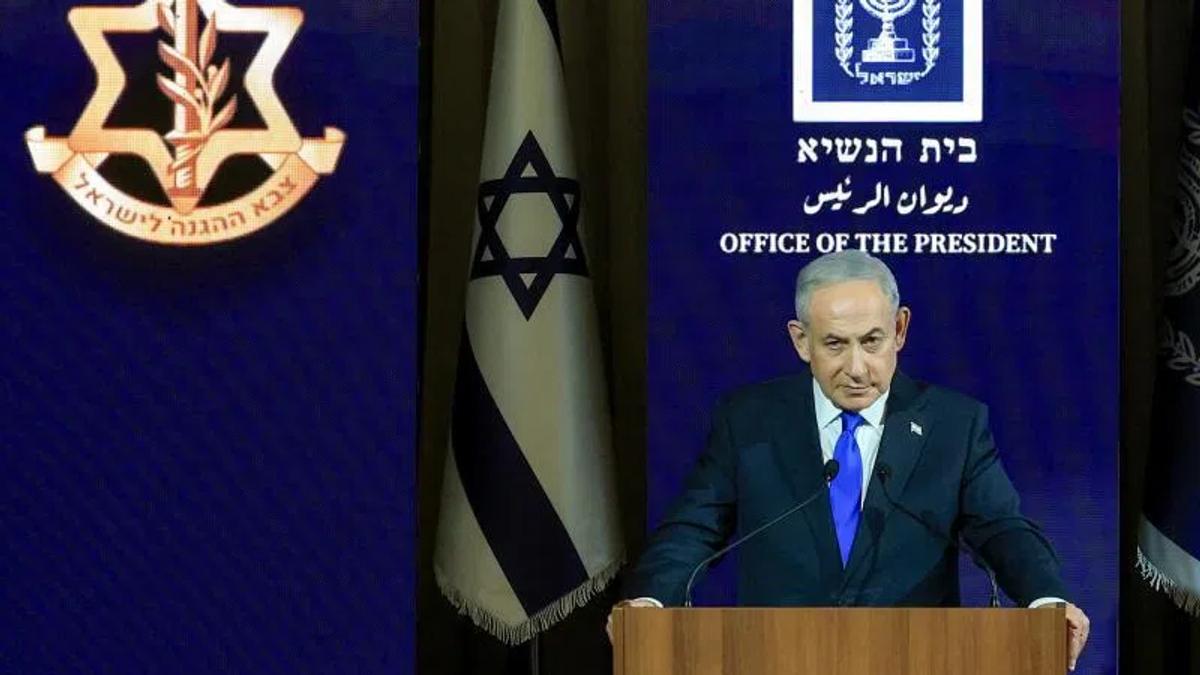
Israel's national elections on October 27 are widely seen as a referendum on Prime Minister Benjamin Netanyahu's leadership, with his government's handling of the Gaza war and regional security issues dominating the campaign.
The upcoming elections are the last date allowed by law, and the ruling coalition has completed a full four-year term for the first time in decades. Netanyahu, 76, is already the country's longest-serving prime minister across multiple terms, and has declared his intention to run again. His government has been racing to pass a series of bills in a bid to shore up his alliance and enter the election from a position of strength.
Netanyahu's decision to run again is likely driven by a desire to maintain his grip on power and shape Israel's regional policies. His government has been criticized for its handling of the Gaza war, and recent polls show that a majority of Israelis want him out of office. By reaching across the aisle and framing his electoral pitch around national unity, Netanyahu appears to be trying to reframe his image and appeal to a broader audience.
The Gaza war and the subsequent ceasefire have created a politically complicated backdrop for Netanyahu. The war against Iran and Hezbollah has left a lasting impact on the region, and Netanyahu's government has been criticized for its handling of the conflict. The recent poll by the Hebrew University of Jerusalem found that more than 92 per cent of Israelis believe Iran had won the Middle East war, and support for Netanyahu's premiership plummeted from 40.5 per cent in early March to 29.4 per cent in June.
The outcome of the elections will have significant implications for Israel's regional policies and its relationships with its neighbors. If Netanyahu loses, it could lead to a shift in Israel's approach to regional security and its relationships with Iran and Hezbollah. On the other hand, if Netanyahu wins, it could embolden his government to pursue more aggressive policies in the region.
Several key issues are dominating the campaign, including the bitter dispute over whether ultra-Orthodox Jewish men should serve in the military, judicial reforms, and Netanyahu's ongoing corruption trials. The wars against Hezbollah and Iran have created a complex backdrop for Netanyahu, and his government's handling of these issues will be closely watched by the international community.
The upcoming elections in Israel are a critical moment in the country's history, with significant implications for its regional policies and relationships. The outcome of the elections will depend on a range of factors, including Netanyahu's ability to reframe his image and appeal to a broader audience, and the impact of key issues such as the military draft and judicial reforms on voter sentiment. Regardless of the outcome, the elections will have significant consequences for Israel's place in the region and its relationships with its neighbors.
Editor's Note: The analysis is based on publicly available information and may not reflect the full complexity of the situation.
Source referenced: STRAITSTIMES
This brief was synthesized by our Editorial Engine and reviewed by The Ground Narrative team.