TRENDING

Thursday, 15 October 2026
----------------------
4 Jumada Al-Awwal 1448 AH
Israel and Lebanon have agreed to a conditional ceasefire, mediated by the US, contingent on Hezbollah's complete cessation of fire and withdrawal from southern Lebanon. The agreement highlights the complex interplay of state and non-state actors in a volatile region, with Iran asserting a linkage between regional conflicts.
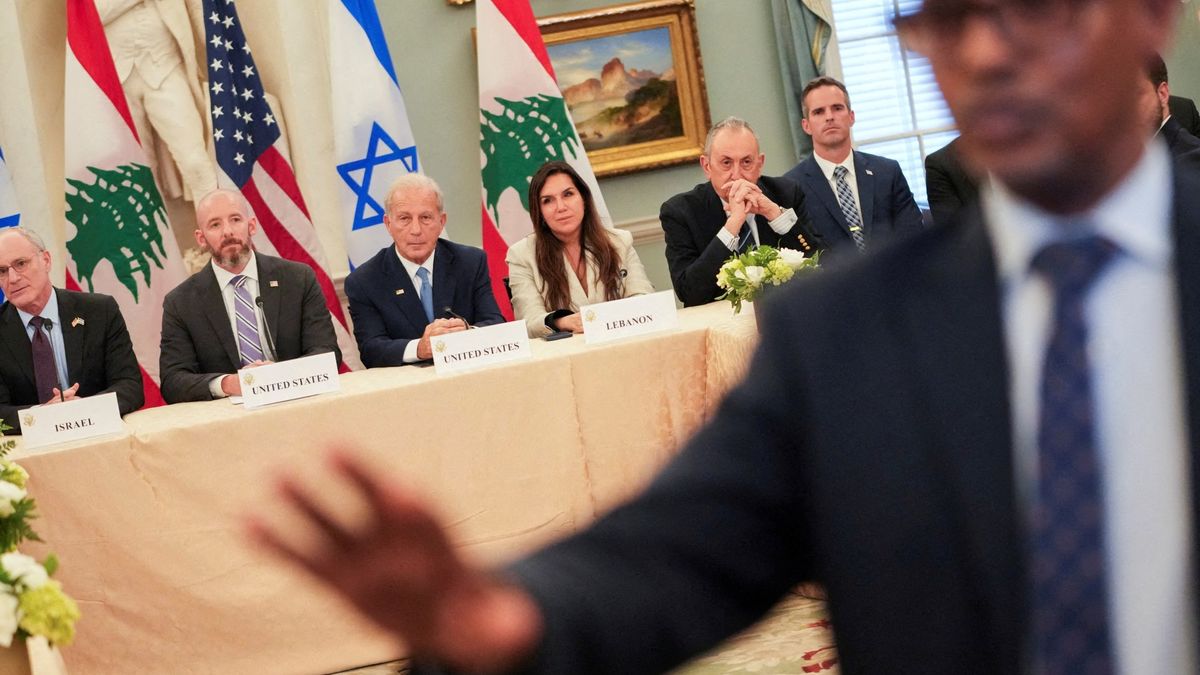
In a significant diplomatic development, Israel and Lebanon have agreed to implement a conditional ceasefire following US-led talks in Washington, D.C., on June 3, 2026. The agreement, announced on June 4, 2026, is not a new truce but rather an assertion of respect for an existing ceasefire, which included a 45-day extension agreed upon in May. This latest understanding aims to de-escalate cross-border hostilities that have intensified since March 2, 2026, when Hezbollah renewed attacks against Israel, prompting retaliatory Israeli bombardments and a ground invasion of southern Lebanon.
The core condition for the ceasefire's implementation is a "complete cessation" of fire by Hezbollah, alongside the removal of the group's operatives from southern Lebanon. Additionally, both nations, which lack formal diplomatic relations, agreed to establish "pilot zones" where the Lebanese armed forces would assume "exclusive control of the territory to the exclusion of all non-state actors." This provision underscores an attempt to reassert state sovereignty and diminish the operational freedom of non-state actors in critical border areas.
The most critical challenge to the ceasefire's durability lies in the role of Hezbollah, a powerful non-state actor that was not directly involved in the Washington negotiations. As Al Jazeera's Manuel Rapalo noted, Hezbollah's absence from the negotiating table makes it a "wild card," raising significant questions about the practical implementation and enforcement of any framework. Indeed, just hours after the agreement was announced, air raid alarms were reported in northern Israel, and Hezbollah claimed to have targeted Israeli soldiers in response to alleged Israeli violations, demonstrating the immediate fragility of the truce.
Hezbollah's actions are deeply intertwined with Iran's broader regional strategy. While US President Donald Trump expressed a desire to separate talks on the Lebanon conflict from ongoing US-Israeli negotiations concerning Iran, Tehran maintains that these conflicts are inextricably linked. Iranian Foreign Minister Abbas Araghchi explicitly warned that any attack on Beirut would trigger a "full-scale resumption" of war, emphasizing that returning to the negotiating table is conditional on ensuring Iranian rights, ending the war in Lebanon, and de-escalating regional tensions. This divergence in perspectives highlights the profound geopolitical complexities, where the Lebanon-Israel front is often viewed as a proxy arena for wider regional power struggles involving Iran and its allies.
The recent escalation has exacted a heavy toll. Prior to the ceasefire announcement, cross-border attacks continued, with Hezbollah targeting Israeli soldiers and Israeli strikes killing at least 10 people in southern Lebanon. The humanitarian impact has been severe, with reports of Israeli attacks targeting a car on a main highway, strikes on over 20 locations in the south, and the tragic deaths of civilians, including four Syrians, two Palestinians, and multiple paramedics from aid organizations affiliated with Hezbollah and the Amal movement. The Lebanese army also reported the death of a soldier and injuries to others, denouncing what it termed Israel's "deliberate targeting of army personnel, vehicles and positions."
This current ceasefire attempt follows a pattern of previous, unobserved truces, including one meant to take hold on April 17, underscoring the deep-seated mistrust and the cycle of retaliatory actions. The mention of Israeli attacks in Gaza City, which killed at least nine people, including four children, further contextualizes the broader regional instability and Israel's multi-front security challenges. The interconnectedness of these conflicts makes any localized ceasefire inherently precarious.
Looking ahead, both sides are scheduled to meet for more talks the week of June 22, with the stated goal of reaching a "comprehensive agreement." However, the success of these diplomatic efforts hinges not only on the commitment of Israel and Lebanon but, crucially, on the willingness and ability of Hezbollah to adhere to the terms, and on the broader geopolitical calculations of Iran. The establishment of pilot zones for the Lebanese armed forces represents a potential pathway to strengthening state control, but its implementation will be a significant test of sovereignty in a region long influenced by non-state actors. The conditional ceasefire is a fragile step towards de-escalation, but the underlying strategic tensions and the intricate web of regional alliances mean that sustained peace remains a distant and challenging prospect.
Source referenced: ALJAZEERA
This brief was synthesized by our Editorial Engine and reviewed by The Ground Narrative team.