TRENDING

Monday, 5 October 2026
----------------------
24 Rabi' Al-Thani 1448 AH
Iran presented a seven‑day cease‑fire plan to reopen the Strait of Hormuz, only to receive a vague US reply after President Trump’s rejection. The episode reveals shifting power calculations and a hidden human cost for Gulf economies and seafarers.
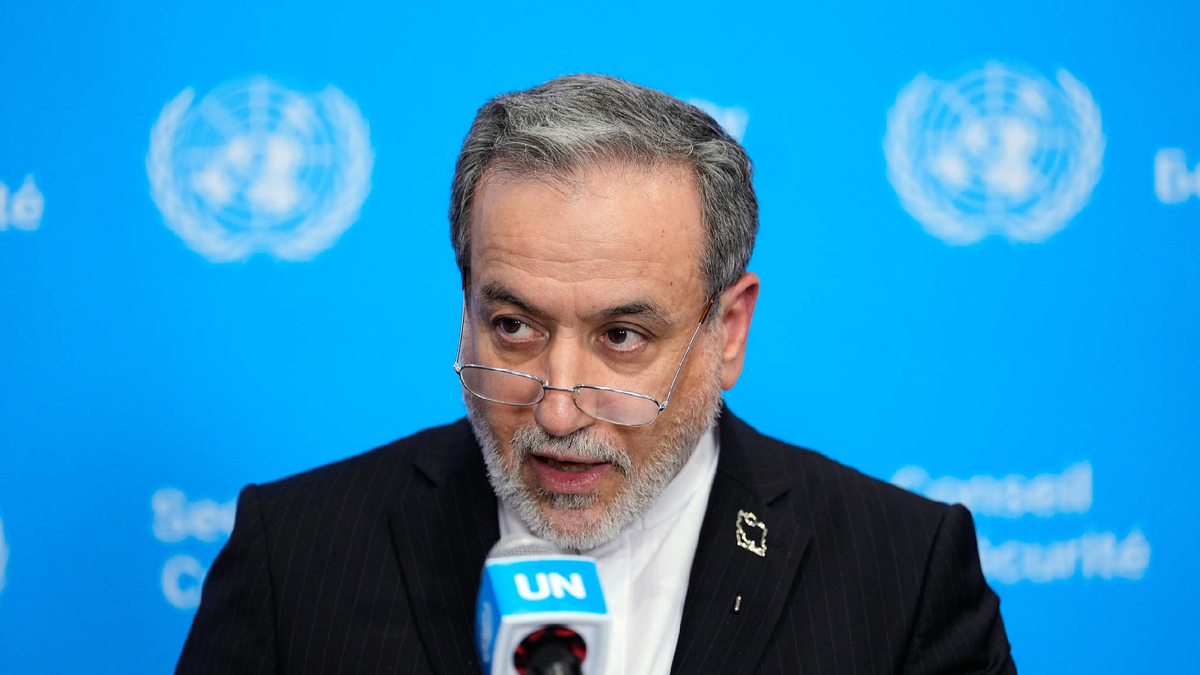
Iranian Foreign Minister Seyed Abbas Araghchi announced that Washington had sent feedback on Tehran's latest cease‑fire proposal, a plan that would lift the U.S. blockade on Iranian ports in exchange for reopening the Strait of Hormuz within seven days. President Donald Trump publicly rejected the offer, and Tehran claimed it had not yet received a formal response. The diplomatic exchange occurred amid the eighth month of the U.S.–Israeli‑led conflict with Iran, with mediators in Qatar relaying the U.S. comments to Araghchi during a stopover in Doha.
- Strategic leverage of the Strait – The Hormuz waterway channels roughly 20% of global oil shipments. Controlling its flow lets the United States pressure Tehran without committing ground troops, while Iran can threaten a choke‑point to extract concessions.
- Domestic political calculus – President Trump faced a Republican base demanding a hard line on Iran; a public acceptance of Tehran’s terms could be portrayed as weakness. Conversely, Iranian hardliners needed a diplomatic win to offset war fatigue at home.
- Alliance math – The United States coordinates closely with Israel and Gulf allies, especially Saudi Arabia, whose economies depend on unhindered oil exports. Any U.S. concession risks alienating these partners, who view Iran as an existential threat.
- Economic trade‑offs – Lifting the blockade would revive Iran’s crippled shipping sector, but it would also restore revenue streams for sanctioned entities linked to the Revolutionary Guard. The United States must weigh the benefit of reduced regional tension against the risk of empowering those same networks.
- Mediation dynamics – Qatar’s role as a conduit reflects its broader strategy to position itself as a neutral broker, preserving its own security and economic interests while extracting diplomatic fees and prestige.
The blockade has left thousands of dockworkers idle, eroding household incomes and increasing reliance on informal economies. A sudden reopening could spark a brief surge in wages, but the uncertainty surrounding the proposal has already forced many families into debt.
Seafarers from India, Pakistan, and Bangladesh regularly navigate the Hormuz corridor. Prolonged closures raise insurance premiums and force vessels to take longer routes around the Cape of Good Hope, inflating freight costs that ultimately burden consumers in Europe and Asia.
Saudi Arabia and UAE depend on uninterrupted oil flow for fiscal stability. Any disruption amplifies inflationary pressures, eroding real wages for low‑income workers in those countries. The broader Middle‑East labor market, already strained by war‑related displacement, feels the ripple effects.
Higher shipping costs translate into pricier gasoline and goods worldwide, disproportionately affecting low‑income households that spend a larger share of income on energy and food.
- U.S. diplomatic ambiguity – By delivering feedback through a Qatari intermediary rather than a formal statement, Washington avoids domestic scrutiny while keeping strategic options open. This opacity masks the extent to which the United States may be willing to negotiate on the blockade.
- Iran’s internal signaling – Tehran’s public presentation of the proposal serves to demonstrate to its own populace and to hard‑line factions that it is still capable of dictating terms, even as it seeks relief from sanctions.
- Qatar’s profit motive – Acting as a go‑between allows Doha to charge mediation fees and to cement its reputation as a peace‑broker, a status that attracts foreign investment and diplomatic goodwill.
- The war’s hidden budget – While headlines focus on missile exchanges, the majority of the conflict’s cost is borne by civilian infrastructure, reconstruction contracts, and private security firms, whose profits remain largely invisible to the public.
- Media framing – Western outlets often portray the U.S. rejection as a decisive stance, downplaying the possibility that the feedback contained concessions that could de‑escalate the conflict if communicated differently.
- Formal U.S. response – Whether Washington issues a written reply or continues informal channels will indicate its willingness to adjust the blockade policy.
- Qatar’s mediation role – Any shift in Qatari involvement, such as hosting a multilateral summit, could reshape the negotiation dynamics and signal a broader regional push for stability.
- Oil market reactions – Spot prices for crude and tanker freight rates will reveal how market participants interpret the diplomatic back‑and‑forth.
- Domestic political moves – Upcoming elections in the United States and Iran may prompt leaders to recalibrate their public positions on the proposal.
- Humanitarian indicators – Monitoring employment data in Iranian port cities and freight cost indices in Gulf states will provide concrete measures of the proposal’s real‑world impact.
Iran offered to lift the U.S. blockade on its ports if Washington agreed to reopen the Strait of Hormuz within seven days, aiming to restore oil flow and reduce economic pressure on Tehran.
Trump faced pressure from his political base and regional allies to maintain a hard line on Iran, making a public acceptance appear as a concession that could be portrayed as weakness.
The strait handles about one‑fifth of world oil shipments; any disruption raises shipping costs and insurance premiums, which in turn push up global crude prices.
Source referenced: CGTN
This brief was synthesized by our Editorial Engine and reviewed by The Ground Narrative team.


