TRENDING

Monday, 5 October 2026
----------------------
24 Rabi' Al-Thani 1448 AH
Iran's national soccer team relocated its World Cup training to Tijuana, Mexico, due to US visa uncertainties, highlighting deep US-Iran diplomatic friction. This move also illuminates the complex political divisions within the Iranian diaspora, unified only by support for Team Melli.
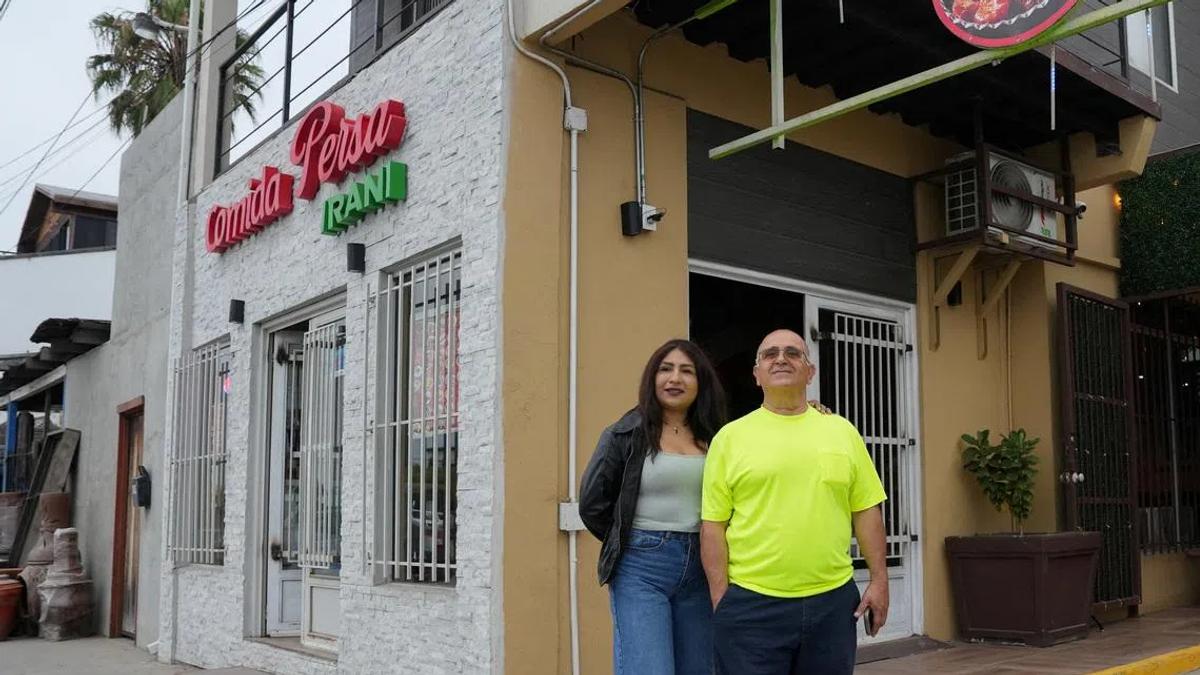
The decision by Iran's national soccer team, Team Melli, to establish its World Cup training base in Tijuana, Mexico, rather than the United States, serves as a poignant illustration of the intricate interplay between international sports, geopolitical tensions, and diaspora politics. Announced in May 2026, this relocation was a direct consequence of uncertainties surrounding visa issuance from the U.S., reflecting the deep-seated diplomatic friction between Washington and Tehran. While ostensibly a logistical choice for proximity to upcoming group-stage games in Los Angeles and Seattle, the move to Tijuana has inadvertently cast a spotlight on the complex dynamics of the Iranian diaspora and the enduring challenges of navigating international relations through the lens of sports.
The primary driver behind Team Melli's presence in Tijuana is the strained relationship between the United States and Iran. The article explicitly notes the team's uncertainty about U.S. visas, citing the perception of "the two countries at war" – a phrase that underscores the severe diplomatic hostility and mistrust that characterizes their bilateral ties. This tension was further highlighted by the U.S. State Department's statement expressing concern that Iran might "abuse this system to sneak terrorists into the U.S. under false pretenses," a claim vehemently rejected by Iran's ambassador to Mexico, Abolfazl Pasandideh, who accused the U.S. administration of labeling dissenters as terrorists.
Mexico's role in this scenario is noteworthy. By welcoming Team Melli, Mexico positions itself as a neutral host, capable of facilitating international events even amidst complex geopolitical rivalries. This decision reflects Mexico's independent foreign policy, allowing it to engage with nations that may have contentious relationships with its northern neighbor. For Iran, Tijuana offered a pragmatic solution: a location geographically close to its competition venues in the U.S. but politically distant enough to circumvent direct U.S. visa hurdles. The city's reputation, often associated with a more liberal social environment, stands in stark contrast to Iran's conservative societal norms, making the choice a bold, yet strategically sound, one for the team.
The small Iranian community in Tijuana, numbering only about 20 individuals, provides a compelling microcosm of the broader Iranian diaspora's political landscape. Despite its tiny size, this community is deeply divided, primarily over symbols of national identity tied to Iran's pre- and post-1979 revolution eras. The pre-revolutionary flag, featuring a lion and sun motif, displayed prominently at a local Iranian restaurant, symbolizes allegiance to the former Shah-led government and is a point of contention for many who oppose it. This division mirrors the ideological schisms prevalent within larger Iranian diaspora communities globally, particularly in places like Los Angeles, which hosts the largest Iranian population outside Iran.
However, amidst these political differences, a powerful unifying force emerges: support for Team Melli. Both proponents and opponents of the current Iranian government, as exemplified by restaurant owner Saied Assadi and immigrant Dara Makoipour, set aside their political views to rally behind the national soccer team. This phenomenon underscores the profound role of sports in fostering a sense of shared national identity and pride, capable of transcending deep ideological divides. The team's arrival in Tijuana, despite the city's cultural contrasts, was met with a warm welcome from these fans, demonstrating the universal appeal of sports as a cultural bridge.
The World Cup, as a global spectacle, offers nations a significant platform for soft power and public diplomacy. For Iran, Team Melli's participation is more than just a sporting event; it is an opportunity to project a national image on the international stage, potentially fostering goodwill and national unity. The team's journey, from the diplomatic complexities of securing a training base to the internal political divisions within its diaspora, highlights how sports can become a focal point for national aspirations and identity, even in the face of external pressures and internal disagreements.
The controversy surrounding the pre-revolutionary flag further illustrates the challenges faced by international sports organizations like FIFA in maintaining neutrality. FIFA's rules prohibit flags "of a political, offensive and/or discriminatory nature," a stance that often clashes with expressions of political dissent or historical identity, as seen in the lawsuit filed by a California non-profit seeking to protect the right to display the pre-revolutionary flag. This ongoing tension between sporting regulations and freedom of expression underscores the difficulty of divorcing sports from the broader geopolitical and socio-political contexts in which they operate.
Team Melli's sojourn in Tijuana is a multifaceted narrative that extends far beyond the realm of soccer. It is a story of geopolitical friction between the U.S. and Iran, skillfully navigated by Mexico. It is a testament to the enduring political divisions within the Iranian diaspora, yet also a powerful demonstration of how national pride, channeled through sports, can temporarily bridge these divides. As the team prepares for its first World Cup match, its presence in Tijuana serves as a vivid reminder that in an increasingly interconnected world, even a sporting event can become a significant arena for diplomatic maneuvering, cultural exchange, and the complex assertion of national identity on the global stage. The journey of Team Melli, therefore, offers valuable insights into the intricate dynamics shaping contemporary international relations.
Source referenced: STRAITSTIMES
This brief was synthesized by our Editorial Engine and reviewed by The Ground Narrative team.


