TRENDING

Thursday, 15 October 2026
----------------------
4 Jumada Al-Awwal 1448 AH
Iran's Revolutionary Guard Corps released a video on July 12, 2026, purporting to show retaliatory missile strikes against US forces, intensifying a dangerous standoff in the critical Strait of Hormuz. This development underscores the escalating military tensions and the profound geopolitical implications for global energy security and regional stability.
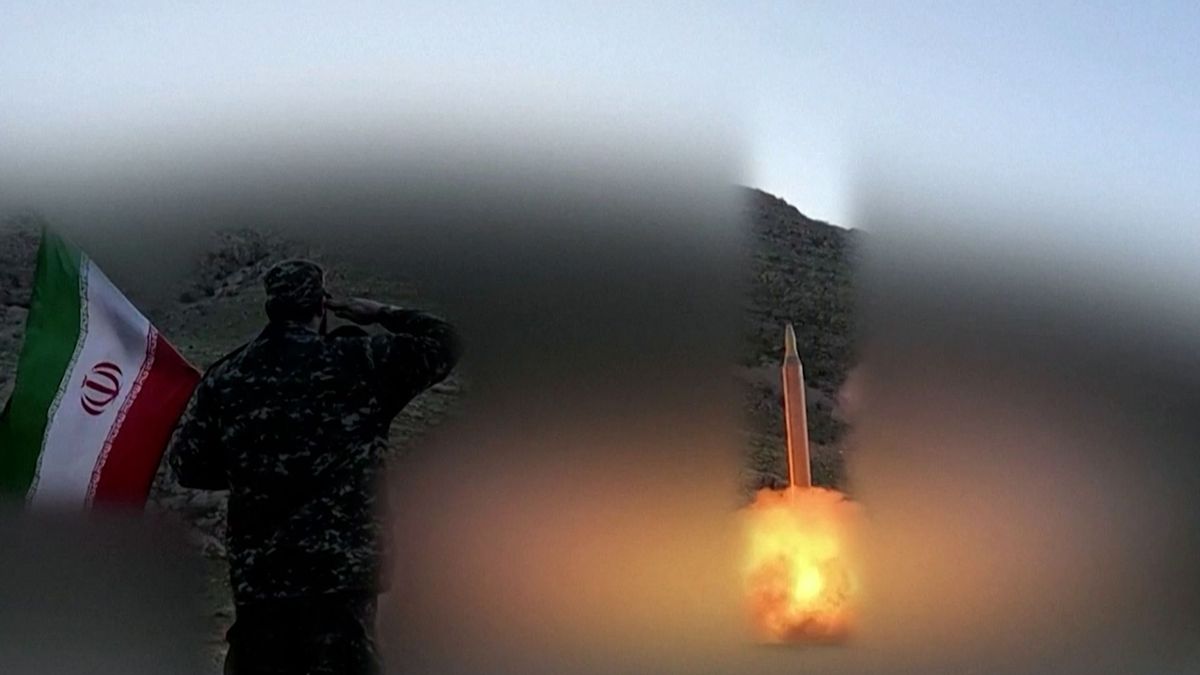
On July 12, 2026, Iran's Revolutionary Guard Corps (IRGC) released a video claiming to depict missile strikes launched by its naval forces in retaliation for recent US military actions. This public display of military capability and resolve marks a significant escalation in the ongoing confrontation between the United States and Iran, particularly centered around the strategically vital Strait of Hormuz. The incident follows a series of tit-for-tat exchanges, including previous US strikes on Iranian targets and Tehran's subsequent closure of the Strait, a critical chokepoint for global oil shipments.
The recent events unfold against a backdrop of deeply entrenched animosity and a history of military posturing in the Persian Gulf. The immediate catalyst appears to be a series of US strikes, which Washington likely framed as responses to perceived Iranian aggression or threats to maritime navigation. In turn, Iran, through its powerful IRGC, has responded with its own military actions and public declarations, culminating in the release of the video. This sequence of events demonstrates a dangerous cycle of escalation, where each action by one party elicits a counter-response from the other, pushing the region closer to a broader conflict.
The Strait of Hormuz, a narrow waterway connecting the Persian Gulf to the open ocean, is arguably the world's most important oil transit chokepoint. Approximately one-fifth of global oil consumption, and a significant portion of liquefied natural gas (LNG), passes through this strait daily. Iran's repeated threats and, in this instance, its actual closure of the Strait, are a potent demonstration of its capacity to disrupt global energy markets and exert leverage on international powers. For Iran, control or the threat of control over the Strait is a core component of its asymmetric defense strategy against superior conventional forces.
The IRGC's decision to release a video of its alleged retaliatory strikes serves multiple strategic purposes. Firstly, it aims to project an image of strength and deterrence, signaling to the United States and its regional allies that Iran possesses the capability and willingness to respond forcefully to military provocations. This is crucial for Tehran's domestic audience, bolstering national pride and demonstrating the regime's resolve. Secondly, it acts as a psychological warfare tool, aiming to sow uncertainty and raise the costs of continued US military presence and operations in the region. The video, regardless of its verifiable accuracy, contributes to a narrative of Iranian resilience and military prowess.
From the US perspective, its military actions in the region are typically framed as efforts to protect freedom of navigation, deter Iranian aggression, and safeguard the interests of its allies, particularly the Gulf Arab states. The US maintains a significant military presence in the region, including naval assets, to ensure the unimpeded flow of commerce and to project power. The current escalation challenges these objectives, forcing Washington to weigh the risks of further military engagement against the imperative of maintaining regional stability and global energy security.
The escalating tensions in the Strait of Hormuz carry profound geopolitical ramifications. A sustained closure of the Strait, or even the perception of imminent conflict, would send shockwaves through global energy markets, leading to significant price spikes and economic instability worldwide. Beyond economics, the risk of miscalculation is exceptionally high. A minor incident could rapidly spiral into a full-scale regional conflict, drawing in other regional and international actors and potentially destabilizing the entire Middle East.
Regional states, particularly Saudi Arabia and the United Arab Emirates, are acutely vulnerable to disruptions in the Strait and would likely face direct security threats in the event of a wider conflict. Their strategic alliances with the US would be tested, and their own security postures would come under intense scrutiny. Internationally, major powers like China and European nations, heavily reliant on Gulf oil, would face immense pressure to de-escalate the situation, potentially through diplomatic initiatives or increased sanctions pressure on either side.
The current standoff underscores the enduring volatility of the US-Iran relationship and the critical importance of the Persian Gulf as a flashpoint for global security. The release of the IRGC video is not merely a military claim but a strategic communication designed to shape perceptions and influence the trajectory of this dangerous geopolitical confrontation. The coming weeks will likely determine whether this cycle of retaliation can be broken through diplomatic channels or if the region is destined for further military escalation with unpredictable global consequences.
Source referenced: ALJAZEERA
This brief was synthesized by our Editorial Engine and reviewed by The Ground Narrative team.