TRENDING

Friday, 16 October 2026
----------------------
5 Jumada Al-Awwal 1448 AH
The US Federal Bureau of Investigation's 'Operation Hard Ball' has exposed India-based organized crime gangs' global reach, highlighting the evolving nature of transnational crime and the challenges of international law enforcement.
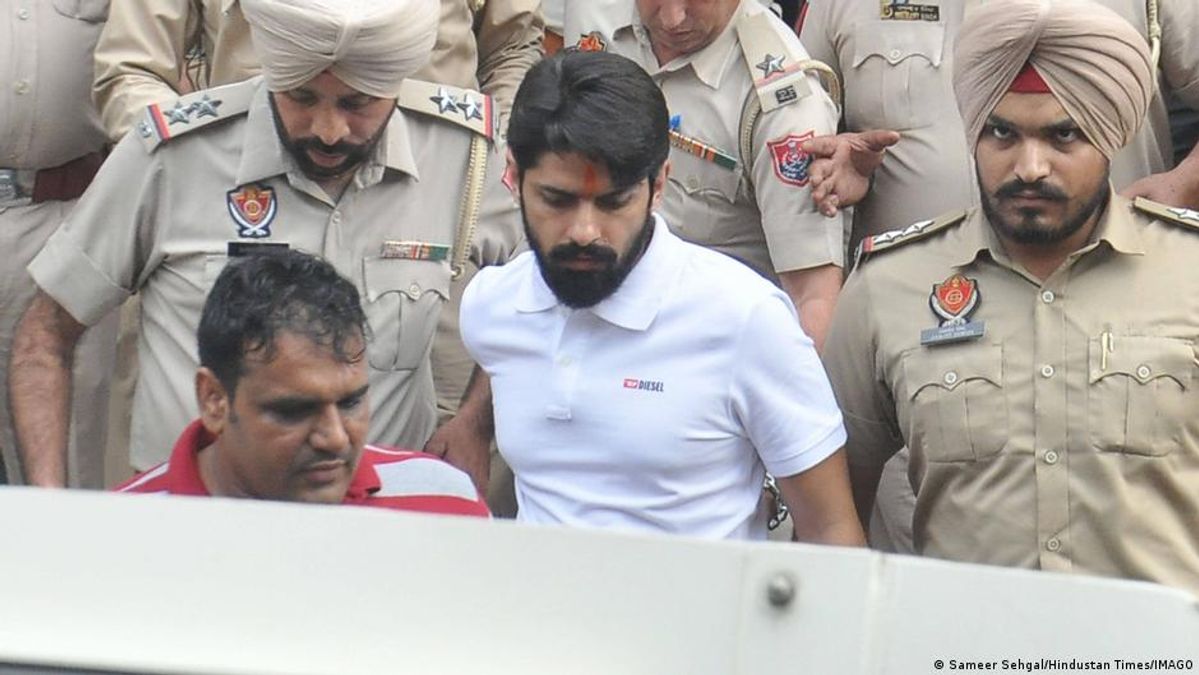
India's organized crime landscape has undergone a significant transformation in recent decades. What was once a domestic law-and-order problem has evolved into a transnational criminal enterprise spanning North America, Europe, and beyond. The US Federal Bureau of Investigation's (FBI) 'Operation Hard Ball' has brought to light the global reach of India-based organized crime gangs, led by the notorious Lawrence Bishnoi.
The Bishnoi gang represents a new generation of Indian organized crime, distinct from its predecessors. Unlike Dawood Ibrahim's D-Company or Chhota Rajan's syndicate, which operated largely through the Dubai-Mumbai axis using smuggling networks centered on gold and silver, the Bishnoi gang has expanded its operations across India, Canada, and the United States. This new generation of organized crime relies on diaspora networks, digital communications, drug trafficking, and firearms to sustain extortion rackets and project influence across continents.
Technology has played a crucial role in the evolution of India's transnational crime gangs. Encrypted communications, cryptocurrencies, and cheap international travel have enabled loosely connected cells to collaborate across continents without the rigid hierarchies that older syndicates relied on. The Bishnoi gang's use of encrypted messaging apps and social media has facilitated recruitment, intimidation, and propaganda, turning the Indian diaspora into both a source of opportunity and a target.
The Bishnoi case has significant international implications. It highlights the need for sustained international cooperation to combat transnational organized crime. The action by US authorities, working with international partners, has the potential to make a significant dent in the Bishnoi network. Earlier Indian crime syndicates were successfully disrupted only when intelligence sharing and law enforcement cooperation crossed national borders.
The evolution of India's transnational crime gangs has outpaced law enforcement. Organized crime has become increasingly transnational, but policing remains largely national. Criminal networks exploit jurisdictional fragmentation, while investigators must navigate legal, diplomatic, and procedural barriers before coordinated action becomes possible. The Bishnoi case underscores the need for improved intelligence sharing, coordinated arrests, and tracing encrypted communications and financial flows across borders.
The Bishnoi case marks a significant turning point in the evolution of India's transnational crime gangs. It highlights the need for sustained international cooperation to combat this global threat. As the nature of organized crime continues to evolve, law enforcement must adapt to stay ahead of these networks. The international community must work together to disrupt and dismantle these transnational crime gangs, protecting the public interest and upholding the rule of law.
* India's transnational crime gangs
* Operation Hard Ball
* Lawrence Bishnoi
* Global organized crime
* International law enforcement
* Diaspora networks
* Digital communications
* Drug trafficking
* Firearms
* Extortion rackets
* Social media
* Encrypted communications
* Cryptocurrencies
* Intelligence sharing
* Coordinated arrests
* Jurisdictional fragmentation
* Law enforcement challenges
Editor's Note: The analysis is based on publicly available information and may not reflect the full scope of the Bishnoi case or the Indian government's involvement.
Source referenced: DW
This brief was synthesized by our Editorial Engine and reviewed by The Ground Narrative team.