TRENDING

Thursday, 12 November 2026
----------------------
2 Jumada Al-Thani 1448 AH
New Delhi has quietly amplified its diplomatic overtures to both Moscow and Kyiv, aiming to ease Black Sea shipping and grain exports. The move tests India’s ability to juggle its historic ties with Russia against growing economic stakes and Western expectations.
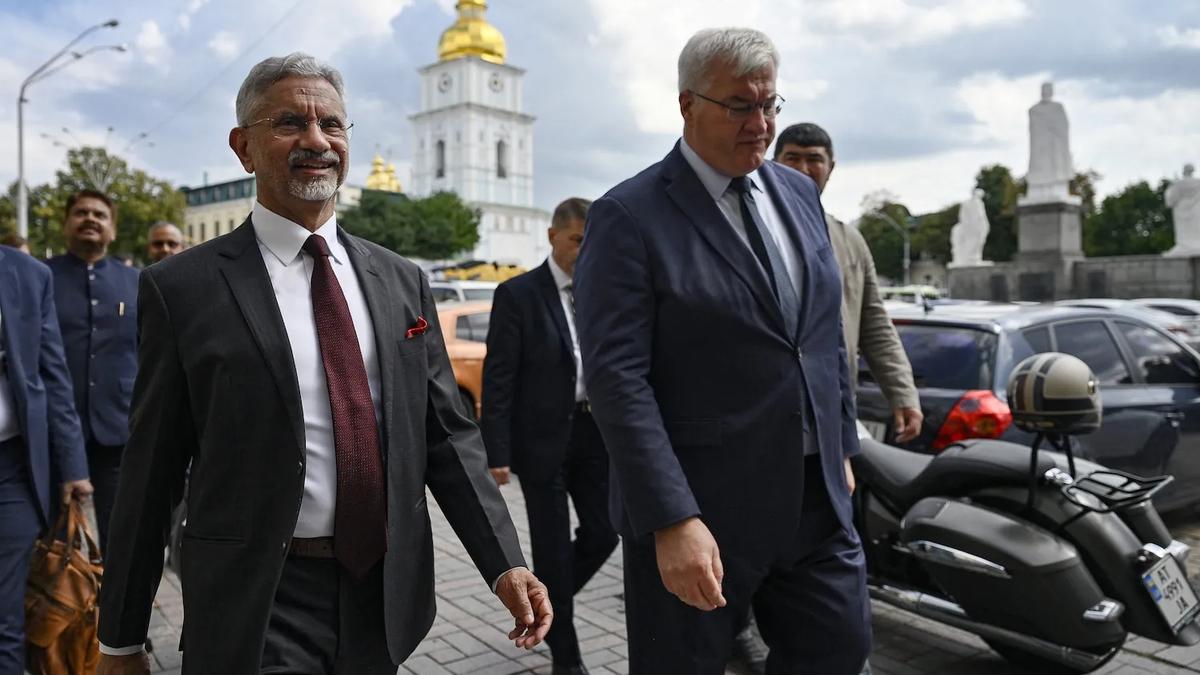
India’s foreign ministry announced that senior officials are holding high‑level talks with both Kyiv and Moscow on the Ukraine conflict. The push follows a series of meetings: Prime Minister Narendra Modi spoke with President Volodymyr Zelensky, while External Affairs Minister S. Jaishankar conferred with Russian Foreign Minister Sergey Lavrov. A truce proposal drafted in New Delhi last month received a warm response from both sides, and Indian diplomats are now focusing on safer commercial shipping in the Black Sea and the flow of grain and energy commodities.
India’s diplomatic calculus rests on three intersecting incentives. First, its long‑standing defence partnership with Russia supplies a steady stream of weapons, oil and strategic technology; a protracted war threatens to erode Moscow’s capacity to deliver. Second, the Black Sea grain corridor is vital for Indian food‑processing firms that rely on Ukrainian wheat to keep domestic prices low. Disruptions raise inflation risks for India’s massive low‑income population. Third, New Delhi seeks to deepen its strategic partnership with the United States, whose own mediation ambitions are hampered by strained ties with Russia. By positioning itself as a pragmatic broker, India can extract concessions from both belligerents while showcasing its relevance to Washington’s Indo‑Pacific agenda. The diplomatic dance also reflects domestic politics: Modi’s image as a global peacemaker bolsters his electoral narrative ahead of the 2027 general election.
Ukrainian grain exporters face daily uncertainty as naval mines and intermittent shelling threaten the Black Sea lanes. Small‑scale farmers, who lack insurance, risk losing entire harvests, pushing rural poverty higher.
Indian households feel the ripple effect when wheat prices climb, squeezing budgets already stretched by rising fuel costs. Export‑oriented Indian agribusinesses confront delayed shipments, jeopardising contracts with European buyers and eroding profit margins.
The war has turned the Black Sea into a hazardous zone for merchant mariners from Bangladesh, India and Turkey. Casualties among crew members ripple back to their home ports, where families depend on remittances for basic needs.
Official U.S. statements emphasize a multilateral peace framework, yet diplomatic cables reveal a reluctance to hand the spotlight to New Delhi. By keeping India’s role low‑profile, Washington preserves its claim as the primary architect of any settlement, even as it quietly coordinates logistics on grain shipments.
Russian officials publicly thank India for “readiness,” but internal analyses suggest the Kremlin uses Indian mediation to buy time for military re‑equipping. The narrative of a friendly third‑party broker masks Moscow’s aim to keep Western sanctions from tightening further.
Ukraine welcomes any channel that can break the Black Sea blockade, but its leadership must balance Indian overtures against the risk of appearing dependent on a nation that still purchases Russian arms. The subtle pressure to align with Indian diplomatic language is rarely highlighted in public briefings.
Future developments will hinge on three observable trends. One, the pace of grain‑export negotiations in the Black Sea—any breakthrough will signal India’s leverage and could reshape global food‑price dynamics. Two, the alignment of Indian and U.S. diplomatic messaging at upcoming UN sessions; convergence would indicate a deeper strategic partnership, while divergence may expose competing agendas. Three, Moscow’s response to any Indian‑backed ceasefire proposal—whether it translates into concrete de‑escalation on the ground or remains a diplomatic gesture. Monitoring these signals will reveal whether India’s back‑room push can move beyond rhetoric to tangible peace outcomes.
India wants stable Black Sea grain routes for its food‑import market, to keep Russian defence supplies flowing, and to strengthen its strategic partnership with the United States.
If India helps reopen the Black Sea corridor, Ukrainian wheat can reach markets faster, easing price pressures on staple foods worldwide, especially in low‑income countries.
Source referenced: FOREIGNPOLICY
This brief was synthesized by our Editorial Engine and reviewed by The Ground Narrative team.


