TRENDING

Friday, 16 October 2026
----------------------
5 Jumada Al-Awwal 1448 AH
India has successfully launched its first privately developed orbital rocket, Vikram-1, marking a significant milestone in its space ambitions. This achievement positions India as a major contender in the global commercial space sector, intensifying competition and signaling a strategic shift towards private innovation.
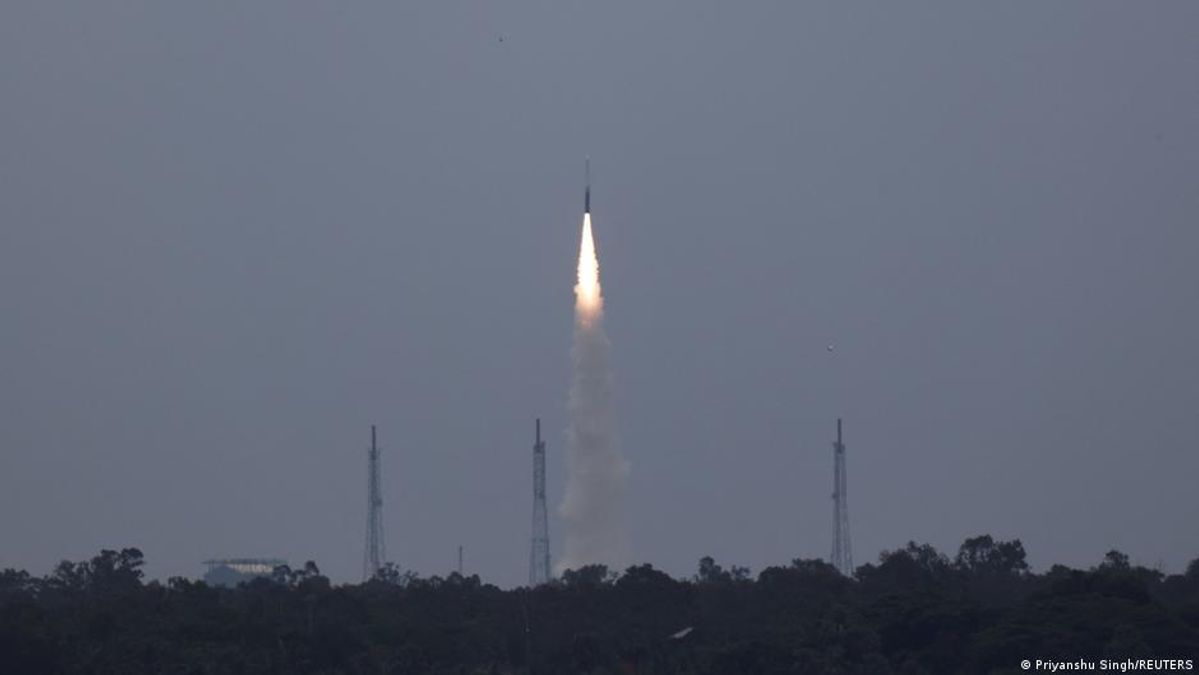
India achieved a significant milestone in its burgeoning space program on Saturday with the successful launch of Vikram-1, the nation's first privately developed orbital rocket. This event, spearheaded by Hyderabad-based Skyroot Aerospace, marks a pivotal moment for India, positioning it as only the third nation, after the United States and China, to possess private orbital launch capabilities. Prime Minister Narendra Modi lauded the achievement as "opening new frontiers and accelerating innovation," underscoring its strategic importance for the country's technological and economic future.
The Vikram-1 rocket, named in honor of Vikram Sarabhai, widely regarded as the father of the Indian space program, lifted off from the Satish Dhawan Space Centre on Sriharikota island in the southeastern state of Andhra Pradesh. The launch, dubbed "Mission Aagaman" (Hindi for "arrival"), occurred at 06:35 UTC/GMT. Standing approximately 22 meters (72 feet) tall, Vikram-1 is designed to carry payloads of up to 350 kilograms (711 pounds) into low-Earth orbit. Its inaugural mission carried several experimental payloads from both Indian and international clients, including a lab-grown diamond and robotic arms intended for space debris removal. The primary objective of this test flight was to rigorously evaluate the rocket's propulsion, avionics, telemetry, and guidance systems, gathering crucial data for subsequent commercial operations.
The successful launch of Vikram-1 is a direct outcome of a significant policy shift initiated by the Indian government in 2020, which opened the nation's space sector to private investment. Historically, space activities in India were exclusively the domain of the government-run Indian Space Research Organisation (ISRO). This policy change has catalyzed a surge of investment and the emergence of over 400 space startups, transforming India's space ecosystem. Skyroot Aerospace itself exemplifies this growth, having become the first Indian space sector company to achieve a $1 billion valuation earlier this year.
This strategic pivot is driven by India's ambitious economic goals. The government agency IN-SPACe projects a fivefold increase in India's global share of the space economy, aiming to reach a valuation of $44 billion by 2033, up from its current 2%. By fostering private sector participation, India seeks to accelerate innovation, reduce reliance on state-funded launches, and enhance its competitiveness in the rapidly expanding global commercial space market. This move is also seen as a way to leverage the country's vast pool of engineering and scientific talent, although ISRO has expressed concerns about a potential exodus of scientists to the more lucrative private sector.
India's entry into the private orbital launch market carries substantial geopolitical and economic implications. On a global scale, it intensifies competition in a sector increasingly dominated by private entities like Elon Musk's SpaceX, alongside state-backed programs in China, Japan, South Korea, and European nations. By offering competitive launch services, India aims to capture a larger share of the global small satellite launch market, which is experiencing exponential growth. This not only generates revenue but also enhances India's strategic autonomy and technological prowess on the international stage.
From a geopolitical perspective, a robust and diversified space industry provides a nation with significant advantages. While Vikram-1's mission is commercial, space launch capabilities inherently possess dual-use potential, serving both civilian and military applications. This enhances India's overall strategic independence and its capacity to deploy and maintain its own satellite constellations for communication, navigation, and intelligence gathering. Furthermore, successful space endeavors bolster national prestige and soft power, reinforcing India's image as a technologically advanced nation capable of leading in critical scientific and engineering domains. This achievement follows India's historic success in August 2023, when it became only the fourth country to successfully land an unmanned spacecraft on the Moon.
The long-term consequences of this development are likely to include a more dynamic and innovative Indian space sector, characterized by increased private investment, accelerated technological advancements, and a stronger position in the global space economy. As Skyroot Aerospace plans further test flights before commencing routine commercial operations, the successful launch of Vikram-1 represents not just a technical triumph but a strategic declaration of India's intent to be a frontrunner in the new era of space exploration and commercialization. This shift will undoubtedly reshape the global space landscape, fostering both collaboration and competition among nations vying for dominance in the final frontier.
Source referenced: DW
This brief was synthesized by our Editorial Engine and reviewed by The Ground Narrative team.