TRENDING

Monday, 21 September 2026
----------------------
10 Rabi' Al-Thani 1448 AH
An ICE officer shot a 28‑year‑old Venezuelan man during a foot chase in Austin, sparking protests and calls for an independent probe. The incident highlights the clash between federal immigration enforcement and local public safety expectations.
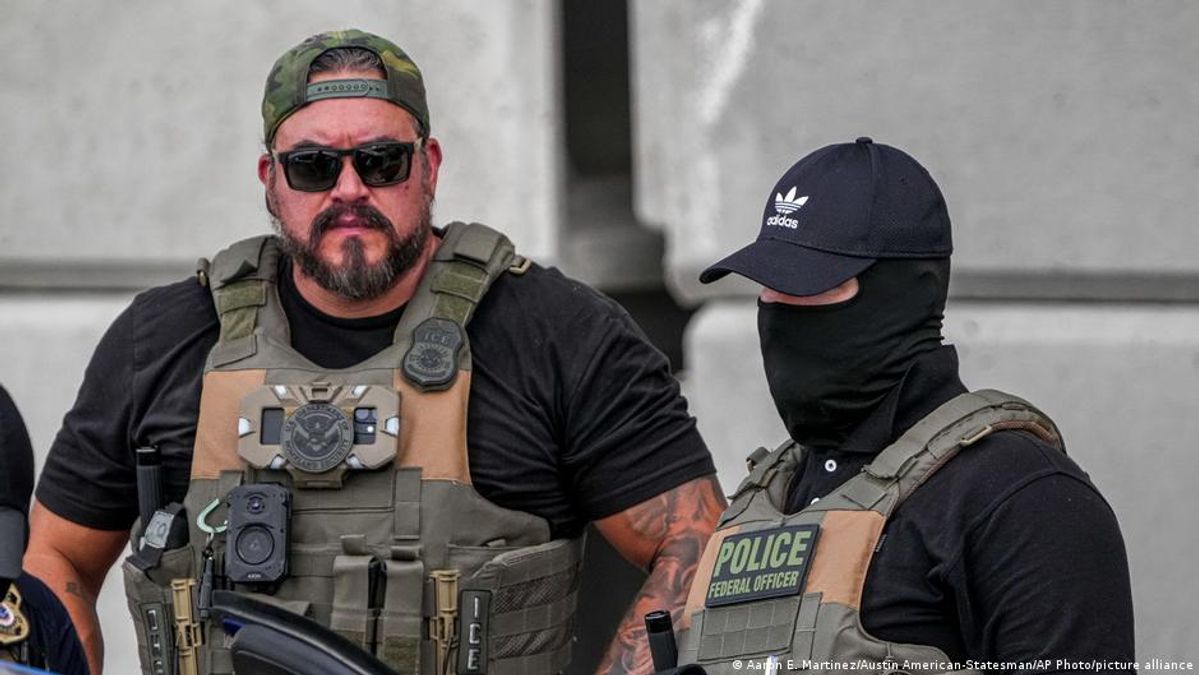
A 28‑year‑old Venezuelan man, identified by his family’s lawyer as Wilber Rafael Garces Perez, was shot in the torso by an Immigration and Customs Enforcement (ICE) officer during a brief foot pursuit on Austin’s north side on Sunday. He remains in serious but stable condition at a local hospital. The city’s police were not involved in the operation, and ICE has yet to release an official statement.
ICE operates under the Department of Homeland Security, a federal agency whose budget and operational tempo have surged since the 2020 election, driven by a political narrative that frames immigration as a national security threat. Funding allocations, performance metrics tied to arrests and removals, and a chain of command that bypasses local law‑enforcement oversight give ICE agents a de‑facto policing role in many jurisdictions. In Austin, the mayor’s office and the Democratic‑leaning city council have been vocal critics of the federal surge, labeling it “rogue” and demanding local investigative involvement. The mayor’s call for the Austin Police Department’s Special Investigation Unit and the Texas Rangers reflects a tactical move to re‑assert municipal authority and to pressure ICE into transparency. Meanwhile, ICE agents benefit from a legal shield: qualified immunity and limited state‑level jurisdiction, which insulates them from many civilian oversight mechanisms that apply to local police.
The victim’s family, likely already navigating a precarious immigration status, now faces medical bills, potential trauma, and an uncertain legal future. Migrant communities across Texas watch the incident as a warning sign that any encounter with federal agents can turn violent, prompting self‑isolation and reduced cooperation with authorities. Local businesses near the shooting site experience a dip in foot traffic as protests and heightened police presence deter customers. Moreover, the broader Latin American diaspora, especially Venezuelan refugees who arrived in recent years, confront amplified fear that their presence makes them targets for aggressive enforcement, regardless of criminal history.
Official narratives from ICE and the Department of Homeland Security remain silent, a pattern that obscures accountability. What is omitted is the legal ambiguity that allows ICE to conduct arrests and use force in public spaces without local law‑enforcement coordination. The agency’s internal policies on use‑of‑force are rarely disclosed, and the lack of a transparent reporting mechanism means that data on injuries or fatalities involving ICE agents stays hidden from public scrutiny. Additionally, the political calculus behind the “ICE surge” is downplayed: it serves as a rallying point for hard‑line voters and a distraction from other policy failures, while the human cost is framed as an unfortunate side effect rather than a systemic risk.
Watch for the outcome of the independent investigation requested by Mayor Kirk Watson, especially whether the Austin Police Department’s Special Investigation Unit or the Texas Rangers will issue findings that could lead to policy changes or disciplinary action. Legislative activity at the state level—such as bills aimed at limiting ICE’s ability to operate without local consent—will indicate whether Texas lawmakers are willing to push back against federal enforcement. Finally, monitor community organizing efforts: the size and persistence of protests, legal aid mobilization for the victim’s family, and any shifts in public opinion that could pressure elected officials to renegotiate the balance of power between federal immigration enforcement and local public safety.
Source referenced: DW
This brief was synthesized by our Editorial Engine and reviewed by The Ground Narrative team.


