TRENDING

Thursday, 15 October 2026
----------------------
4 Jumada Al-Awwal 1448 AH
The Gulf region faces heightened instability as Iran launches missile and drone attacks on Kuwait and Bahrain, prompting US retaliatory strikes on Qeshm Island and an Iranian oil tanker. This dangerous escalation underscores a deepening diplomatic impasse and raises fears of a return to full-scale conflict.
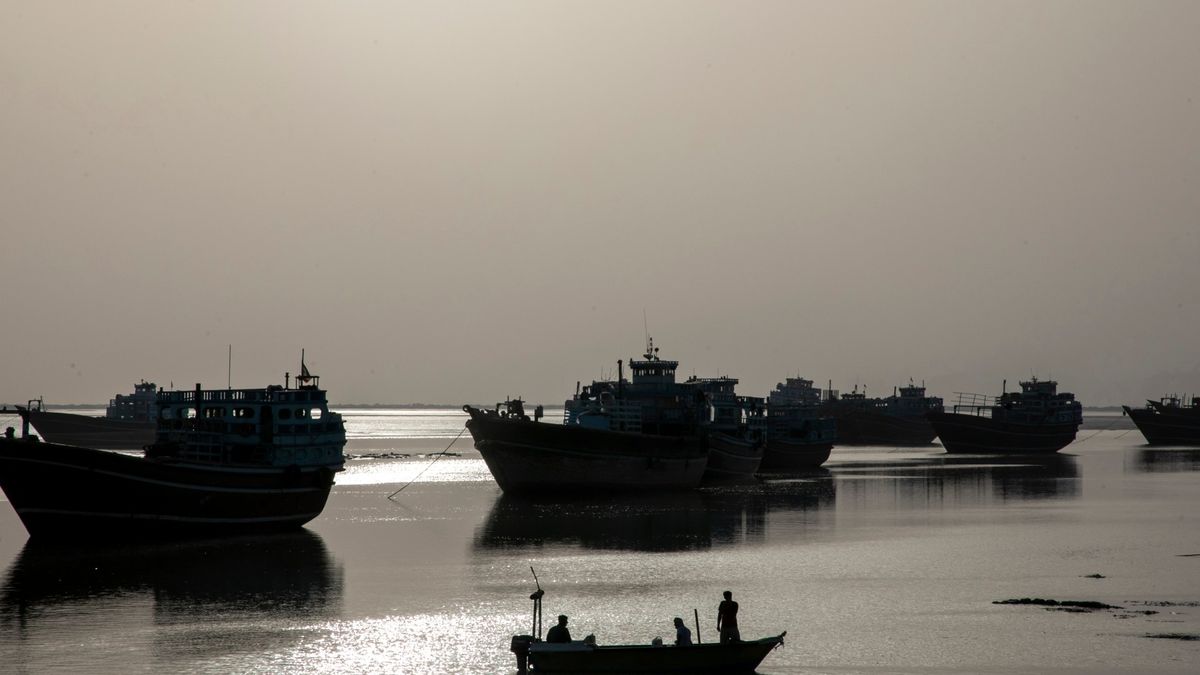
The Gulf region has witnessed a significant escalation of hostilities, with Iran launching missile and drone attacks against Kuwait and Bahrain, prompting retaliatory strikes by the United States on Iran's Qeshm Island and an Iranian oil tanker. This latest flare-up, occurring in the early hours of Wednesday, June 3, 2026, marks a dangerous intensification of a conflict between Tehran and Washington that has persisted for nearly 100 days, despite a temporary ceasefire in April. The events underscore a deepening diplomatic impasse and raise fears of a return to full-scale fighting, with severe implications for regional stability and international shipping.
The recent surge in aggression began with Iran's targeting of Kuwait International Airport with missiles and drones, as reported by Kuwait's state news agency KUNA. The attack resulted in an unspecified number of injuries, including the death of an Indian national, and caused damage to airport facilities, leading to flight suspensions. While Iran's semi-official Tasnim news agency claimed the Islamic Revolutionary Guard Corps (IRGC) aimed at US helicopters in a "regional country," US Central Command (CENTCOM) stated that two Iranian missiles either fell short or broke apart, and several ballistic missiles failed to reach their targets, with no US personnel or assets harmed. Simultaneously, the IRGC reportedly fired missiles and drones at a US airbase and the headquarters of the US Fifth Fleet in Bahrain, triggering sirens, though CENTCOM again reported intercepting these projectiles without harm to US forces.
The Iranian strikes followed US military actions. According to competing narratives, the escalation appears to have been initiated by a US hit on an Iranian oil tanker near the Strait of Hormuz, damaging its engine room. Subsequently, US forces struck a telecommunications tower on Iran’s Qeshm Island, believed to house missile facilities, and downed Iranian drones targeting civilian ships in regional waters. Iran's Foreign Ministry condemned the US attacks as a violation of the ceasefire and asserted its right to self-defense, holding Kuwait and Bahrain "direct and clear responsibility" for allegedly supporting US military operations. The IRGC warned that disrupting the security of the Strait of Hormuz would carry a "heavy price" for the US military.
This cycle of attacks is deeply rooted in the ongoing strategic confrontation between Iran and the United States. Iran's actions are a clear response to the US blockade of its ports and ships, particularly the Trump administration's stance against Iranian oil passing through the Strait of Hormuz—a critical chokepoint for a fifth of the world's oil and liquefied natural gas traffic. By targeting countries hosting US military bases, Iran aims to demonstrate its capacity to project power, deter further US aggression, and impose costs on regional allies perceived as facilitating US operations. The attacks also serve as leverage in stalled diplomatic negotiations, where Tehran seeks access to billions in oil revenues, waivers on crude exports, and a lifting of the US blockade.
For the United States, the strikes on Qeshm Island and the downing of drones reflect a commitment to protecting its assets, personnel, and regional shipping lanes, while maintaining pressure on Iran to curb its nuclear activities. Secretary of State Marco Rubio reiterated that sanctions relief is contingent on Iran abandoning its nuclear program, highlighting the fundamental disagreement that fuels the conflict. The US also seeks to uphold the principle of freedom of navigation in international waters, particularly the Strait of Hormuz, which is vital for global energy security.
The involvement of Kuwait and Bahrain underscores the precarious position of Gulf states caught between the two powers. While hosting US military facilities, they become potential targets for Iranian retaliation, as evidenced by the attack on Kuwait International Airport and the threat to Bahraini bases. The civilian casualties and infrastructure damage highlight the broader human and economic costs of this regional proxy conflict.
Diplomatic efforts to de-escalate the conflict remain at an impasse. Despite a Pakistan-mediated ceasefire in April, the underlying issues—Iran's nuclear program, its regional influence, and US sanctions—have not been resolved. The US position, articulated by Secretary Rubio, suggests a firm stance on nuclear concessions, while Iran's chief negotiator, Mohammad Bagher Ghalibaf, has linked potential abandonment of negotiations to continued Israeli attacks on Lebanon, indicating a broader regional calculus. The reported involvement of Mojtaba Khamenei, the new supreme leader, in negotiations suggests high-level engagement but also the potential for miscalculation given the complex power dynamics.
The recent escalation, following weeks of a relative lull, signals a dangerous shift away from de-escalation. Previous incidents, such as US "self-defense strikes" on Iranian radar and drone sites and a drone strike near the UAE's Barakah nuclear plant, illustrate a pattern of tit-for-tat exchanges that risk spiraling out of control. Without a significant diplomatic breakthrough, the Gulf region faces the prospect of continued instability, increased military confrontation, and potential disruption to global energy supplies. The international community remains concerned that the current trajectory could lead to a full-scale war, with devastating consequences for all involved.
Source referenced: ALJAZEERA
This brief was synthesized by our Editorial Engine and reviewed by The Ground Narrative team.


