TRENDING

Sunday, 20 September 2026
----------------------
9 Rabi' Al-Thani 1448 AH
Regional elections in Germany are testing Chancellor Friedrich Merz's leadership and the nation's political stability, with the far-right AfD seeking further gains. The outcomes could reshape not only German domestic policy but also its crucial role within the European Union.
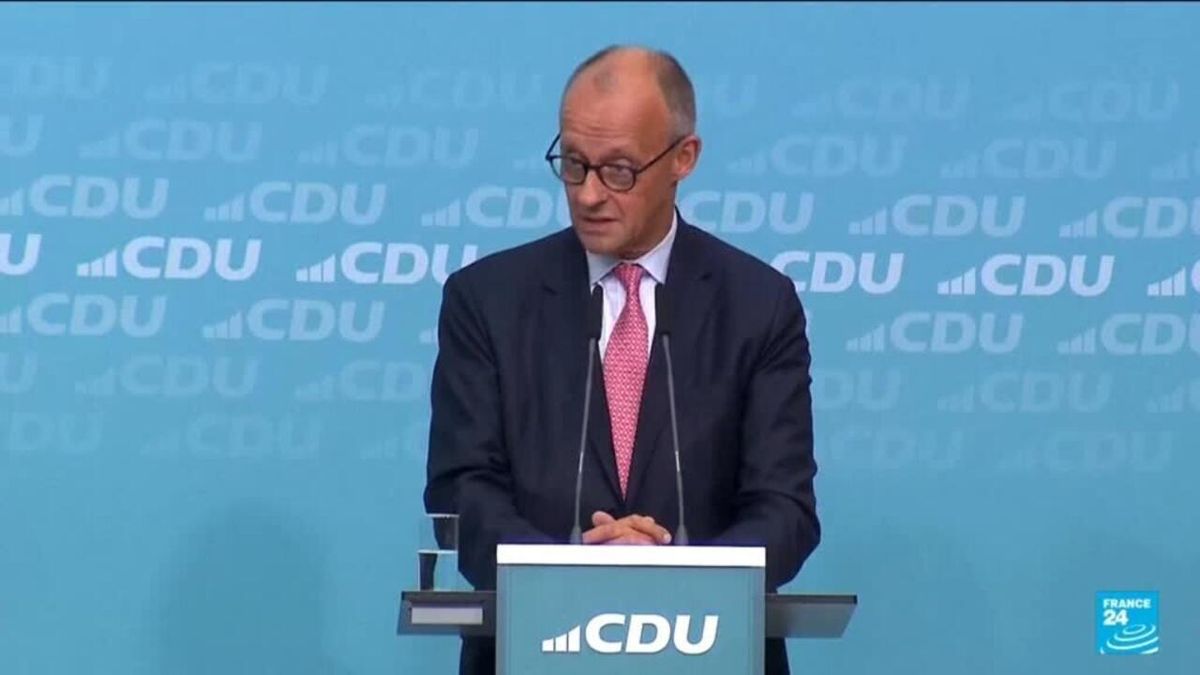
Regional elections are currently underway in Germany, specifically in the capital Berlin and the largely rural state of Mecklenburg-Western Pomerania. These polls are being closely watched as a critical test for Germany's centre-right Chancellor, Friedrich Merz. The significance of these local contests is underscored by Merz's decision to skip the UN General Assembly and schedule a crisis meeting, indicating the potential for significant domestic political fallout, particularly concerning the performance of the far-right AfD party.
These regional elections are far more than local contests; they are a direct challenge to the political survival of Chancellor Merz and his party. A poor showing could trigger internal dissent, leadership challenges, or weaken the stability of his national coalition. Germany's federal system means that strong regional performances by parties like the AfD translate into increased influence in the Bundesrat, the upper house of parliament, giving them a greater say in national legislation and potentially paralyzing government initiatives. The AfD's strategy consistently leverages anxieties around immigration, economic uncertainty, and energy policy, pushing mainstream parties to adopt tougher stances to stem voter losses, thereby shifting the entire political discourse. The alliance math at the state level will dictate future coalition possibilities, and if Merz's party (CDU/CSU) falters, it could force a re-evaluation of national coalition strategies, potentially leading to prolonged political gridlock. Such instability, or a shift towards more protectionist policies often espoused by the far-right, could significantly impact Germany's economic standing, investor confidence, and its foundational role as an economic anchor for the entire European Union.
The most immediate human cost of the far-right's ascent falls disproportionately on marginalized communities. Migrants, refugees, and minority groups often face heightened rhetoric, increased social division, and the threat of harsher policies. Beyond these groups, the broader populace experiences a steady erosion of trust in democratic institutions as populist narratives gain traction, leading to increased polarization and governance challenges. For ordinary citizens, persistent political instability translates into delayed policy decisions on crucial issues like inflation, energy transition, and social welfare, directly affecting jobs, livelihoods, and long-term economic security. The divisive rhetoric fostered by the far-right can fracture social cohesion, making it harder for communities to unite and address shared challenges, leaving many feeling unheard and unrepresented by traditional political actors.
What governments and official statements often downplay is the mainstream parties' own role in the AfD's rise. Their inability to effectively address core voter concerns—such as economic security, social integration, or bureaucratic inefficiencies—or their occasional adoption of far-right talking points to win back voters, inadvertently legitimizes the AfD's agenda. Crucially, the EU dimension of Germany's internal struggles is rarely highlighted in domestic reporting. A weakened German government, or one increasingly swayed by nationalist sentiment, could severely hamper EU decision-making, particularly on critical issues like climate policy, defense, and economic integration, affecting every member state. Furthermore, the narrative often focuses on the vocal support for the AfD, overlooking the underlying long-term demographic and socio-economic shifts in regions like Mecklenburg-Western Pomerania—aging populations, brain drain, and economic decline—which contribute to a profound sense of abandonment that the AfD expertly exploits. This structural context is frequently overshadowed by immediate political skirmishes.
Readers should closely watch several key indicators. First, Merz's immediate future will be determined by the election results; will he survive a poor showing, or will internal party pressure force a leadership challenge? Second, observe the AfD's post-election strategy: will they push for more radical policies, or will they attempt to further normalize their image to broaden their appeal? Third, the response of mainstream parties is critical: will they form broad coalitions to exclude the AfD, or will political necessity force them to engage with the far-right on certain issues? Finally, monitor Germany's leadership role within the EU. Any prolonged political instability in Berlin could have significant repercussions for the bloc's ability to act decisively on global challenges, affecting millions across the continent.
Editor's Note: Analysis is based on raw intelligence dated 20/09/2026, treating the event as current for the purpose of geopolitical analysis.
Source referenced: FRANCE24
This brief was synthesized by our Editorial Engine and reviewed by The Ground Narrative team.


