TRENDING

Thursday, 15 October 2026
----------------------
4 Jumada Al-Awwal 1448 AH
The U.S.-Iran conflict's impact on oil and gas prices has triggered widespread unrest in the Global South, compelling nations to rapidly pivot towards clean energy as a critical national security imperative. This shift redefines energy policy, prioritizing stability over traditional climate diplomacy.
The outbreak of the U.S.-Iran conflict and its subsequent disruption of shipping through the Strait of Hormuz in early 2026 has inadvertently catalyzed a profound shift in energy policy across the Global South. The resulting spikes in oil and gas prices have exposed the acute vulnerabilities of nations dependent on imported fossil fuels, transforming the pursuit of clean energy from a long-term environmental goal into an immediate national security and stability imperative. This development marks a significant departure from decades of often-stalled climate diplomacy, demonstrating how geopolitical crises can force rapid, structural changes in global energy landscapes.
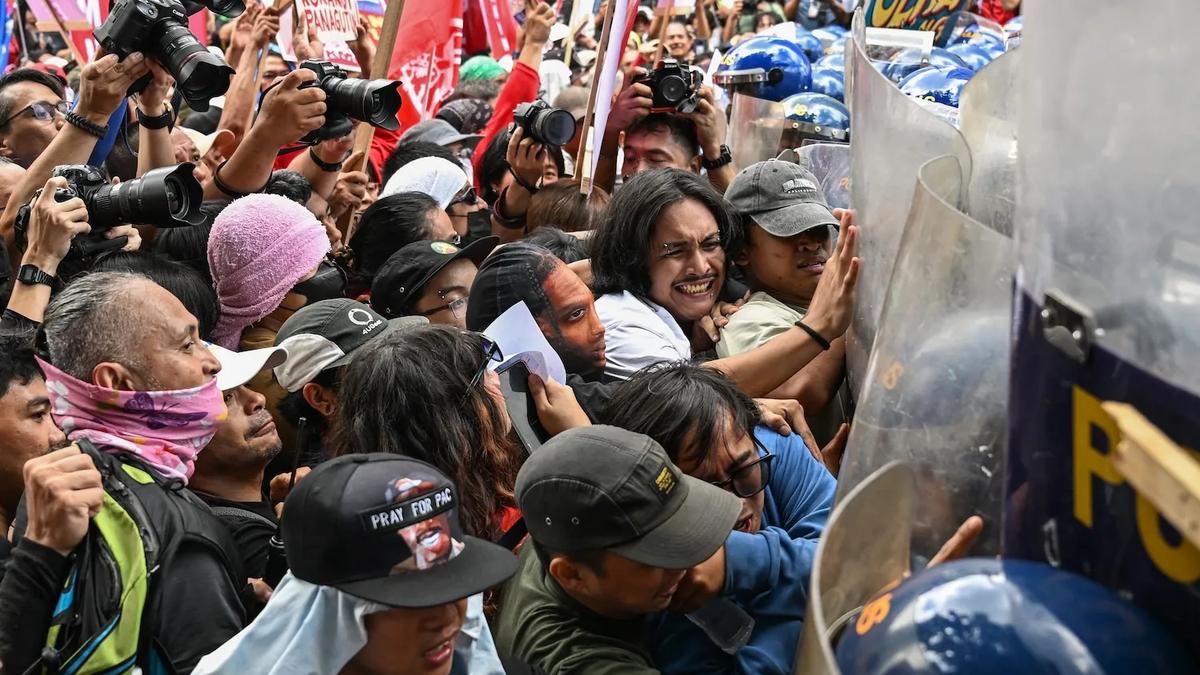
Within the first month of the conflict, at least 60 governments implemented nearly 200 emergency energy measures. These ranged from fuel conservation orders and consumer subsidies to urgent efforts to secure alternative supplies. The crisis quickly manifested as widespread public unrest and economic disruption. In the Philippines, President Ferdinand Marcos Jr. declared a national energy emergency in March, invoking executive powers as worker strikes paralyzed major cities. Bangladesh's vital garment industry, accounting for 84 percent of its exports, was forced to operate at reduced capacity due to fuel shortages. Kenya witnessed deadly protests over fuel prices in mid-May, while Pakistan experienced street closures in Lahore following a substantial price hike, exacerbated by an International Monetary Fund program that limited fiscal relief options. An internal World Bank document revealed that 27 countries sought rapid crisis financing within weeks, underscoring the immediate and severe economic strain.
The core analytical insight emerging from this crisis is the redefinition of clean energy. For many fossil fuel-importing nations, renewable sources are no longer primarily about emissions reduction or long-term economic development. Instead, they are increasingly viewed as a crucial hedge against street unrest, the depletion of foreign reserves, and potential political collapse. Technologies such as solar panels, battery storage, electric vehicles, and grid efficiency now offer leaders a tangible means to mitigate the risks of future fuel riots or revolutions, a protection that traditional climate diplomacy often struggled to provide.
This geopolitical impetus builds upon an already accelerating global trend towards green solutions. Global clean energy investment reached a record $2.2 trillion in 2025, double the investment in fossil fuels. In 2024, 91 percent of new utility-scale renewable projects were more cost-effective than the cheapest new fossil fuel alternatives, and battery storage costs have plummeted by 93 percent since 2010. Even before the U.S.-Iran war, the green transition was expanding beyond wealthy nations, with Chinese solar exports to developing economies surpassing those to advanced economies in 2024. Pakistan, for instance, imported 17 gigawatts of Chinese solar modules that year, nearly half its grid-connected capacity. In Southeast Asia and Latin America, Chinese-made electric vehicles achieved price parity with internal combustion options.
However, the transition was not uniform. In 2025, China and India approved 88 GW of new coal capacity, the highest in nearly a decade, and structural barriers persisted. Africa, despite its vast population, received only 2 percent of global clean energy investment, with capital costs for projects three times higher than in developed nations. Many developing governments remained locked into fuel subsidy commitments, long-term LNG and coal contracts, and import patronage networks. Indonesia, for example, had budgeted $12.3 billion for energy subsidies in 2026 before the war.
The cost of the U.S.-Iran war for developing countries is now rapidly overcoming these historical and structural barriers. The International Energy Agency (IEA), in its State of Energy Policy 2026 report, noted that while immediate responses focused on emergency relief, many countries are now actively pursuing policies to reduce dependence on imported oil and gas, curb exposure to price volatility, and accelerate low-emissions alternatives. IEA Executive Director Fatih Birol explicitly stated that the war would likely push countries towards renewables to mitigate geopolitical risk.
Early evidence of this shift is particularly visible in Southeast and South Asia. At an ASEAN summit in May, Indonesian President Prabowo Subianto emphasized that energy dependence amidst Middle East volatility was no longer a long-term concern but an urgent problem. Days later, Indonesia's state utility launched a tender for 1,225 megawatts of utility-scale solar, part of a new national target of 100 GW, and Jakarta began exploring a $30 billion subsea cable to export solar energy to Singapore. Bangladesh issued tenders for 495 MW of grid-tied solar, and the Philippines saw financial closure on a 440 MW solar project. In India, regulators adopted tariffs for 2,000 MW of solar, and Vietnam's Vingroup proposed replacing a planned LNG plant with renewables.
While these large-scale energy projects require years of preparation, the crisis has fundamentally altered their political meaning and accelerated approval processes. Investments once justified by climate goals or economic efficiency are now being fast-tracked as national security measures, offering a tangible way to reduce exposure to foreign conflicts and domestic instability. Similar logic is driving changes in the transport sector, with Chile offering preferential credit for EV taxis, Cambodia cutting EV import taxes, and Laos lowering fuel excise duties. India's Prime Minister Narendra Modi urged reduced petrol and diesel use, visibly scaled back his motorcade, and announced expanded biogas and renewables initiatives, while Hindustan Unilever accelerated EV adoption in its supply chains. Electrification now promises not only long-term emissions reductions but also immediate relief from oil price spikes and external coercion.
While some governments have temporarily leaned on coal or expanded fuel subsidies as short-term coping mechanisms, analysis suggests that any return to coal would be minimal and temporary. The structurally significant response is expected to come from sustained investments over the next few years, permanently reducing reliance on imported fuels. The historical precedents of Sri Lanka's 2022 government collapse due to fuel import inability and Indonesia's 1998 protests ending President Suharto's rule underscore the severe political risks associated with energy insecurity. This geopolitical crisis is thus not merely a temporary disruption but a powerful accelerator, fundamentally reshaping the energy transition in the Global South and redefining clean energy as a cornerstone of national stability and security.
Source referenced: FOREIGNPOLICY
This brief was synthesized by our Editorial Engine and reviewed by The Ground Narrative team.


