TRENDING

Sunday, 20 September 2026
----------------------
9 Rabi' Al-Thani 1448 AH
The US-backed Board of Peace has reassured Israel that its withdrawal from Gaza will only begin after Hamas's complete disarmament, following objections from Prime Minister Benjamin Netanyahu. The move highlights the complex power dynamics at play in the region, with Israel, the US, and Hamas engaging in a delicate dance of diplomacy and disarmament. As the situation unfolds, the human cost of the conflict continues to mount, with civilians bearing the brunt of the violence.
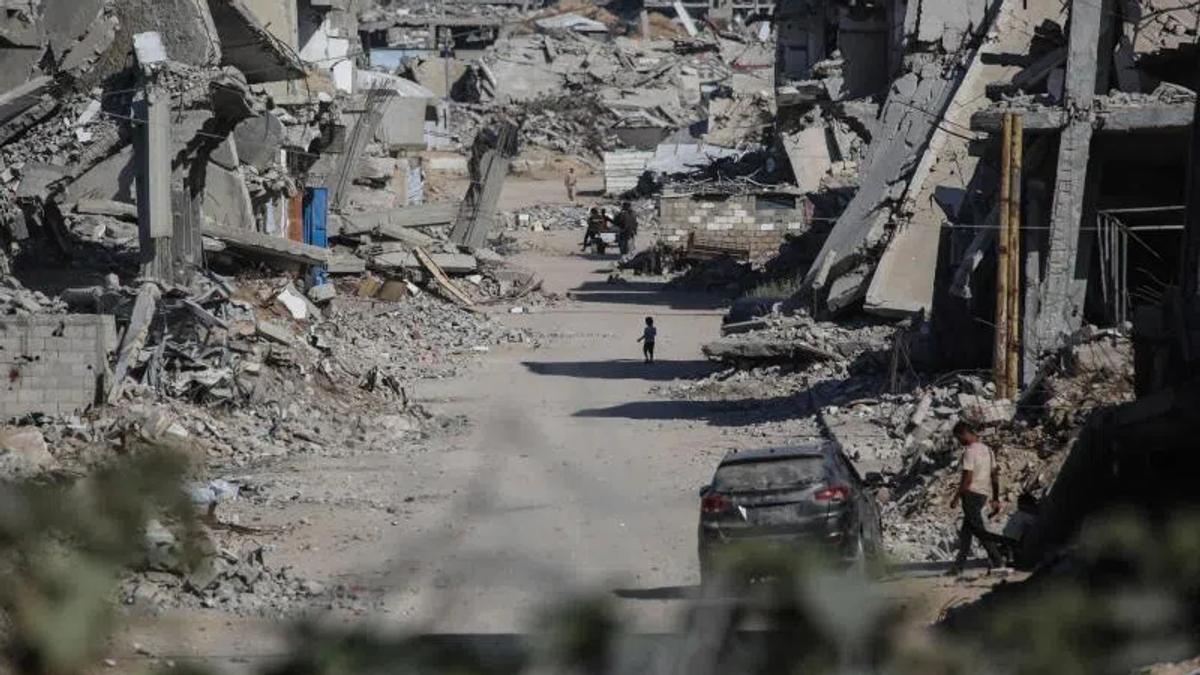
The US-backed Board of Peace has reassured Israel that its withdrawal from Gaza will only begin after Hamas's complete disarmament, following objections from Prime Minister Benjamin Netanyahu. The move comes after Netanyahu's security Cabinet urged a vote to tear up the deal championed by US President Donald Trump, citing concerns over the pace of disarmament. The Board of Peace has since clarified that Israel's withdrawal will only take place once Hamas has fully disarmed, as agreed upon by the mediators.
The power dynamics at play in the region are complex, with Israel, the US, and Hamas engaging in a delicate dance of diplomacy and disarmament. Trump's announcement of a deal between Hamas and a nascent Palestinian governing committee was hailed as a major milestone, but Israel's objections have highlighted the challenges of implementing such an agreement. The US has a significant stake in the region, with Trump seeking to broker a peace deal that would bolster his legacy. Meanwhile, Netanyahu is facing a tough re-election fight in October and has heavily promoted his relationship with Trump, whom he met again in Washington last week.
The human cost of the conflict continues to mount, with civilians bearing the brunt of the violence. On August 2, Israeli attacks killed 19 Palestinians, including women and children. The conflict has also had a devastating impact on the economy and infrastructure of Gaza, with many buildings destroyed and essential services disrupted. The people of Gaza are caught in the middle of the conflict, with their lives and livelihoods hanging in the balance. As the situation unfolds, it is essential to remember that the human cost of the conflict is not just a statistic, but a reality that affects real people and families.
What is being downplayed in the official statements is the fact that Israel's withdrawal from Gaza will not necessarily mean an end to its control over the region. Even if Israel withdraws, it will maintain control of much of Gaza under a Trump-led October ceasefire. This raises questions about the true nature of the deal and the extent to which Israel is willing to cede control over the region. Furthermore, the role of other regional actors, such as Iran, is also being downplayed, despite their significant influence over the conflict. As the situation unfolds, it is essential to consider the broader regional dynamics and the potential implications for the conflict.
As the situation unfolds, there are several key developments to watch. Firstly, the pace of disarmament by Hamas will be crucial in determining the success of the deal. Secondly, the response of other regional actors, such as Iran, will be important in shaping the conflict. Finally, the outcome of Netanyahu's re-election fight in October will have significant implications for the future of the conflict. As the situation continues to evolve, it is essential to remain vigilant and to consider the potential implications for the region and the world at large.
Editor's Note: The analysis is based on publicly available information and may not reflect the full complexity of the situation on the ground.
Source referenced: STRAITSTIMES
This brief was synthesized by our Editorial Engine and reviewed by The Ground Narrative team.


