TRENDING

Saturday, 10 October 2026
----------------------
29 Rabi' Al-Thani 1448 AH
Four years after the war that razed Gaza, calls to dismantle Hamas clash with the deep‑seated grievances that birthed the group. The article unpacks the power play, the human price, and the missing pieces in the public narrative.
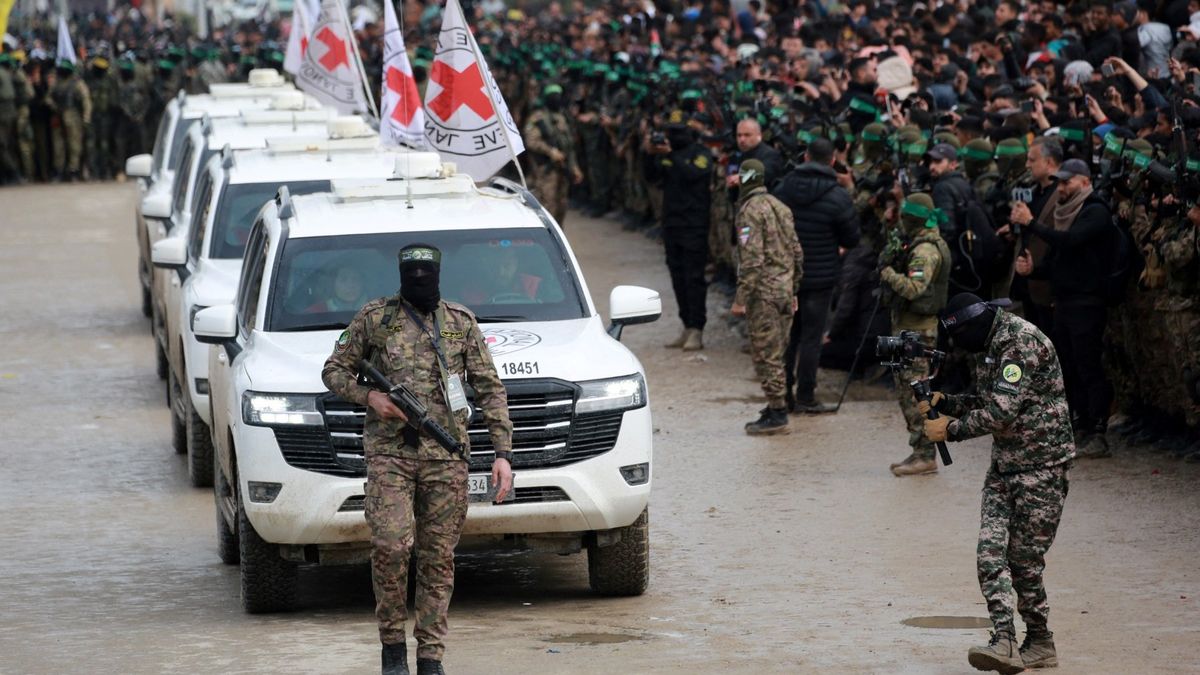
The war that began in October 2023 entered its fourth year, leaving Gaza in near‑total ruin and prompting a surge of international calls for Hamas to surrender its political and military authority. While some argue that removing the group is the only path to reconstruction, the conflict’s roots stretch back to the 1948 Nakba, the 1967 occupation, and the rise of faith‑based nationalism that gave Hamas its birth.
The current deadlock is less about a single militant organization and more about a web of incentives that bind regional and global actors. Israel’s leadership, especially under Prime Minister Benjamin Netanyahu, has long portrayed Hamas as the sole obstacle to peace, a narrative that justifies continued military pressure and sidesteps the broader issue of occupation. By demanding total disarmament as a precondition for any ceasefire, Israeli officials preserve a strategic advantage: they can maintain control over Gaza’s borders, limit the flow of reconstruction aid, and keep the Palestinian question off the diplomatic agenda.
Internationally, the United States continues to supply Israel with advanced weaponry and diplomatic cover, reinforcing a status quo that benefits American influence in the Middle East while limiting the leverage of moderate Arab states. At the same time, Gulf donors pour billions into humanitarian projects, but most of that money is funneled through UNRWA and other agencies that operate under strict political conditions, ensuring that aid does not translate into political empowerment for Palestinian institutions.
Within Gaza, the economic calculus is stark. The destruction of factories, power plants, and water infrastructure has collapsed the local economy, forcing families to rely on informal labor and aid. Any political entity that can promise reconstruction—whether Hamas, a technocratic council, or an external administration—gains a potent bargaining chip. Yet the Israeli demand for Hamas’s eradication means that any such promise is contingent on a political outcome that favors Israeli security concerns over Palestinian self‑determination.
Nearly half of Gaza’s 2.3 million residents are under 18, and the war has robbed an entire generation of schooling, health, and stability. Over 12,000 children have been registered as displaced, living in overcrowded shelters where disease spreads easily. The psychological trauma of constant air‑raid sirens, loss of parents, and the sight of rubble has led to a surge in PTSD diagnoses among adolescents, a burden that will echo for decades.
The destruction of the sole desalination plant and the power grid has left more than 90 % of households without reliable electricity or clean water. Agricultural plots that once fed the Strip are now salt‑laden, and the fishing fleet—once a vital source of protein and income—has been crippled by a naval blockade that restricts both fuel and export markets. Unemployment has risen above 70 %, pushing many families into informal work that offers no social protection.
With the blockade limiting imports of construction materials, even the modest rebuilding efforts are stalled. International donors have pledged over $10 billion for reconstruction, but most of that money is tied up in bureaucratic approvals and security vetting, delaying the flow of cash to local contractors. The resulting slowdown fuels a black market for building supplies, inflating prices and widening inequality.
Beyond the physical scars, the war has eroded community trust. Surveys conducted by the Arab Barometer show that only 29 % of Gaza residents trust the Hamas‑led administration, while 31 % directly blame it for the ongoing poverty. The erosion of confidence in local governance complicates any effort to organize collective action, leaving many to depend on informal networks of kinship and charity.
Official Israeli statements frequently frame the humanitarian crisis as a consequence of Hamas’s actions, sidestepping the fact that the occupation that began in 1967 set the conditions for the group’s emergence. By portraying Gaza as a security threat rather than a population under prolonged military rule, Israeli leaders avoid confronting the legal and moral obligations tied to the Decisive Plan advanced by far‑right politician Bezalel Smotrich, which explicitly rejects any Palestinian national aspirations.
Western governments routinely condemn Israeli civilian casualties while applying limited pressure on settlement expansion or the blockade. This asymmetry stems from strategic alliances and domestic political calculations, allowing Israel to continue policies that keep Gaza dependent on external aid without granting it genuine sovereignty. The focus on Hamas as the sole obstacle masks the broader power imbalance that lets Israel dictate the terms of any future settlement.
Mainstream coverage often simplifies the conflict into a binary of terror versus victim, rarely delving into the historical dispossession of villages like Naj and Huj or the demographic shifts that followed the 1948 war. Moreover, major donors condition reconstruction funds on security guarantees, effectively giving Israel a veto over how aid is used, which perpetuates a cycle where rebuilding is contingent on political compliance rather than humanitarian need.
The next twelve months will reveal whether the international community can shift from a Hamas‑centric discourse to a broader reckoning with occupation. Key indicators include: the outcome of the upcoming Palestinian local elections, which could signal a move toward technocratic governance; any change in U.S. congressional support for unconditional aid to Israel; the emergence of a unified Palestinian negotiating team that can present a viable alternative to Hamas; and the pace at which reconstruction funds are released, especially if tied to measurable improvements in civilian infrastructure. Observers should also monitor Israel’s internal political dynamics, particularly the influence of far‑right factions that may harden the demand for total disarmament, as well as regional actors like Egypt and Qatar, whose mediation efforts could either bridge or widen the diplomatic gap.
Many view Hamas as the primary security threat to Israel, believing that its removal would eliminate the justification for military operations and open space for reconstruction. This perspective often overlooks the broader historical grievances that gave rise to the group.
The Israeli blockade restricts entry of construction materials, while international aid is tied to security vetting that slows disbursement. Combined with massive unemployment and a shattered local economy, these factors stall reconstruction.
By portraying Hamas as the sole obstacle, Israeli leaders avoid addressing the occupation itself, setting a precondition of total disarmament that limits any negotiated settlement and maintains strategic advantages.
Source referenced: ALJAZEERA
This brief was synthesized by our Editorial Engine and reviewed by The Ground Narrative team.