TRENDING

Saturday, 17 October 2026
----------------------
6 Jumada Al-Awwal 1448 AH
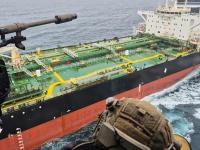
France's detention of a Russian-linked oil tanker and its captain in the Atlantic Ocean marks a significant escalation in Western efforts to enforce sanctions against Moscow's 'shadow fleet.' Russia has vehemently condemned the action as 'international piracy,' demanding the captain's immediate release and signaling potential countermeasures.

On Monday, June 1, 2026, the French navy intercepted the tanker *Tagor* in the Atlantic Ocean, a vessel identified as being linked to the Russian oil trade. Following the interdiction, French authorities ordered the tanker to proceed to the French mainland and subsequently detained its Russian captain. This action has ignited a sharp diplomatic confrontation, with Russia's embassy in Paris on Wednesday, June 3, demanding the captain's immediate release, asserting that he was detained on "trumped-up charges" and labeling the French action as "illegal" and an act of "international piracy."
This incident unfolds against a backdrop of intensified economic warfare between Western nations and Russia, primarily driven by Moscow's ongoing conflict in Ukraine. Following Russia's full-scale invasion, the European Union, alongside the United States and other allies, imposed extensive sanctions targeting Russia's energy sector, aiming to curtail its ability to finance the war. A key component of these sanctions is a price cap on Russian oil, enforced by prohibiting Western companies from providing shipping, insurance, and other services for oil sold above the cap.
In response, Russia has developed what Western observers refer to as a "shadow fleet" – a vast network of older vessels, often operating under opaque ownership structures and less stringent regulatory oversight, to transport its oil and gas globally, thereby circumventing Western sanctions. Russia rejects this label, maintaining that its oil shipments are legitimate and adhere to international trade norms.
France and Britain have explicitly vowed to obstruct such vessels as part of a broader European strategy to diminish Russia's revenue streams. The interception of the *Tagor* represents a tangible manifestation of this commitment, moving beyond financial sanctions to direct physical interdiction of vessels suspected of violating these economic restrictions.
Economic Warfare Escalation: The detention of the *Tagor* and its captain signifies a notable escalation in the enforcement of sanctions. While previous measures primarily focused on financial penalties and restrictions on services, this action demonstrates a willingness by European powers to physically interdict vessels. This could set a precedent for future operations against Russia's shadow fleet, increasing the operational risks and costs for Moscow's oil exports.
Maritime Law and Sovereignty Dispute: The core of the dispute lies in differing interpretations of international maritime law and the legitimacy of such interdictions in international waters. France's actions are presumably justified under its national implementation of international sanctions regimes. Conversely, Russia's accusation of "international piracy" challenges the legal basis of the interdiction, asserting that its commercial shipping is legitimate and protected under international law. This clash highlights the complex legal grey areas emerging from the application of unilateral sanctions in global maritime trade.
Impact on Russia's Oil Trade: While the detention of a single tanker may not significantly impact Russia's overall oil export volumes, the precedent of physical interdiction could have broader implications. It may compel Russia and its shipping partners to adopt even more clandestine methods, potentially increasing insurance premiums, shipping costs, and transit times, thereby indirectly impacting Russia's oil revenues.
Diplomatic Fallout and Potential Countermeasures: The incident has predictably exacerbated already strained relations between Russia and France, and by extension, with the broader Western alliance. Russia's strong condemnation and its warning that it "reserves the right to take steps to protect its own shipping" suggest the possibility of reciprocal actions or increased assertiveness in maritime domains. While direct military escalation is unlikely, Russia could explore diplomatic retaliations, increased naval presence in strategic areas, or even legal challenges in international forums.
The *Tagor* incident underscores the evolving nature of economic warfare, where the battleground extends from financial institutions to the high seas. It signals a more aggressive posture by Western nations in enforcing sanctions, potentially leading to further interdictions of vessels associated with Russia's shadow fleet. Moscow, in turn, is likely to redouble its efforts to protect its shipping lanes and challenge what it perceives as illegal interference, potentially leading to a more confrontational maritime environment in key shipping corridors. The international community will closely watch how this dispute unfolds, as it could shape future norms for sanctions enforcement and maritime security.
Source referenced: STRAITSTIMES
This brief was synthesized by our Editorial Engine and reviewed by The Ground Narrative team.