TRENDING

Sunday, 8 November 2026
----------------------
28 Jumada Al-Awwal 1448 AH
For a fourth consecutive weekend, tens of thousands have taken to the streets across France, protesting the soaring cost of living and fuel prices. This widespread discontent is reshaping the political landscape ahead of the upcoming presidential election.
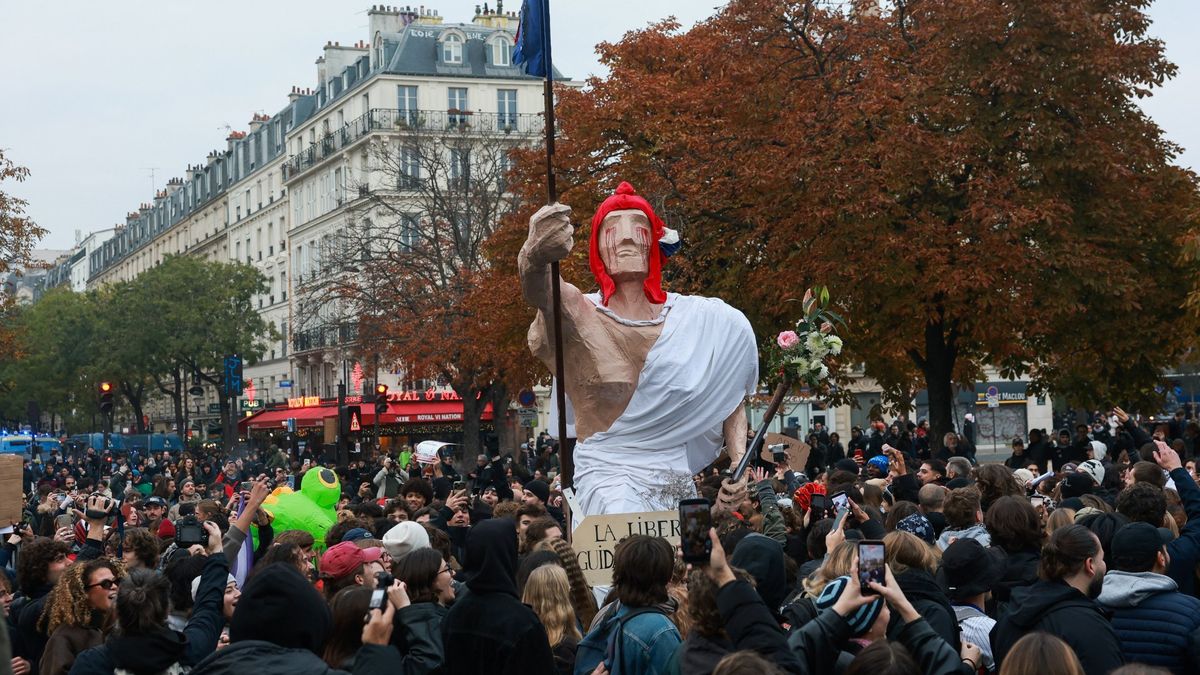
For the fourth consecutive weekend, more than 140,000 people across France rallied to protest against the escalating cost of living and rising fuel prices. The demonstrations, which saw 46,000 people in Paris alone according to the Interior Ministry (unions claimed higher figures), mark a significant escalation of public anger against the government. Originating from student-led grievances over school conditions, the movement has broadened to encompass a wide array of economic concerns, drawing participation from various sectors including railway workers and trade unions. Clashes erupted between protesters and 70,000 security personnel deployed nationwide, with police using tear gas and batons to disperse crowds in Paris and Lyon, underscoring the government's firm stance against unrest, all against the backdrop of an impending presidential election in April.
The current wave of protests in France is a potent illustration of how global economic pressures can rapidly translate into domestic political crises, challenging the authority and legitimacy of incumbent governments. At its core, this is a struggle over economic power and its distribution, exacerbated by external shocks and internal policy choices.
President Emmanuel Macron's centrist government finds itself in a precarious position. His administration has largely pursued a pro-business, reformist agenda aimed at modernizing the French economy, often involving austerity measures and deregulation. While these policies are intended to boost competitiveness and fiscal stability, they have frequently been perceived by segments of the population as favoring capital over labor, and the wealthy over the working class. The current inflation, driven by global energy price spikes (partially a consequence of the Ukraine war) and supply chain disruptions, hits ordinary citizens directly, eroding purchasing power. Macron's challenge is to manage public expectations and economic realities without alienating his political base or conceding too much to populist demands, which could undermine his long-term economic vision for France within the European Union.
Trade unions, historically a formidable force in France, have experienced a period of relative decline in recent years. However, these protests signal a potential resurgence of their influence. By joining and expanding the student-led movement, unions are leveraging widespread public discontent to press for higher wages and better working conditions. Their power lies in their ability to mobilize large numbers, disrupt economic activity, and articulate a collective grievance that transcends specific sectors. The sheer scale of the protests – with unions claiming 250,000 nationwide – demonstrates a renewed capacity to challenge the government's narrative and force concessions.
The upcoming presidential election adds another critical layer to these power dynamics. The protests are not just economic grievances; they are also a pre-election audition for opposition parties. Far-right candidate Marine Le Pen and far-left candidate Jean-Luc Mélenchon are currently leading in the polls, positioning themselves as champions of the working class and critics of Macron's policies. Mélenchon's pledge to stimulate the economy through consumer spending and redirect existing wealth towards
People are protesting against the rising cost of living, including soaring fuel and energy prices, and stagnant wages. The movement began with students but has expanded to include workers and unions, reflecting widespread economic hardship.
The French government has deployed a large number of security personnel, with police using tear gas and batons to disperse crowds. Officials have warned against rioting and looting, signaling a firm stance against unauthorized demonstrations.
The protests are occurring just months before the presidential election, with opposition candidates like Marine Le Pen and Jean-Luc Mélenchon capitalizing on public discontent. The unrest could significantly influence voter sentiment and the election's outcome, potentially leading to a shift in political power.
Editor's Note: Analysis relies on interpreting reported facts within broader geopolitical and economic context, applying TGN's critical lens. Political implications are forward-looking based on current polling and historical patterns of French protest.
Source referenced: ALJAZEERA
This brief was synthesized by our Editorial Engine and reviewed by The Ground Narrative team.