TRENDING

Tuesday, 8 September 2026
----------------------
26 Rabi' Al-Awwal 1448 AH
An Italian academic work on China's global governance initiatives is sparking significant debate across European universities, prompting a re-evaluation of traditional international relations theories. This intellectual shift reflects growing recognition of China's expanding influence and the need for new frameworks to understand a multipolar world.
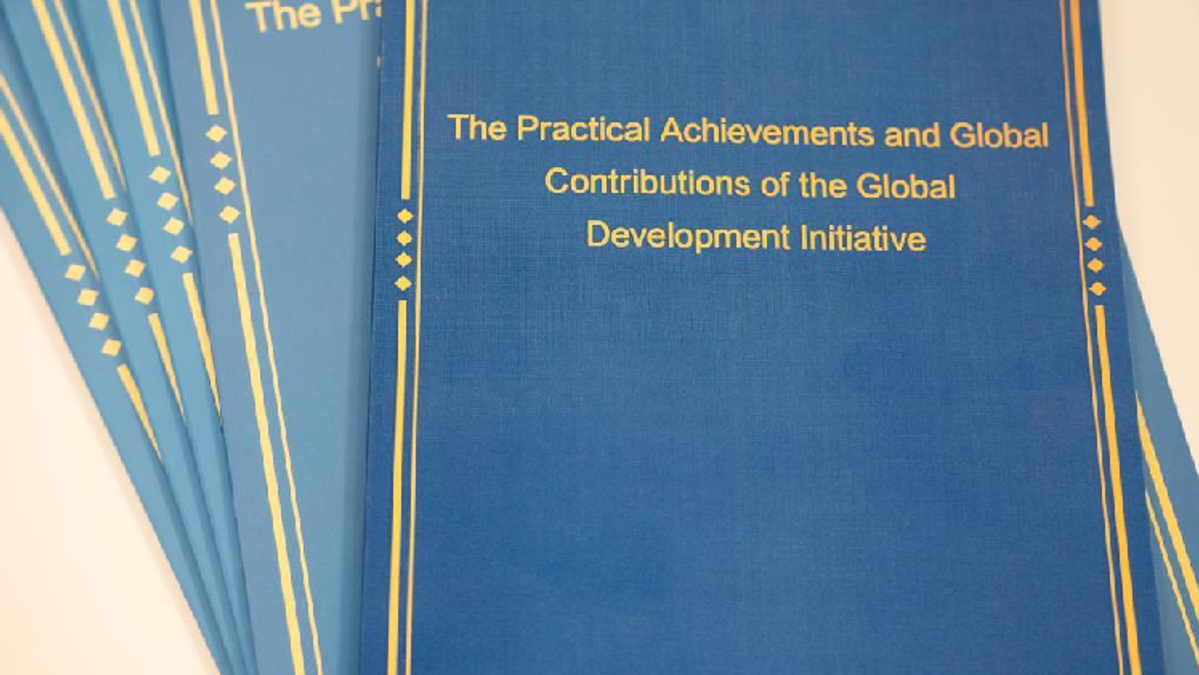
In recent months, a book authored by Italian scholars, titled "China's Blueprint for Global Leadership," has garnered considerable attention within European academic circles. This comprehensive study, co-authored by researchers including Matteo Dian and Silvia Menegazzi, delves into China's three major international proposals: the Global Development Initiative (GDI), the Global Security Initiative (GSI), and the Global Civilization Initiative (GCI). Its reception, marked by seminars and discussions at institutions such as the University of Trento, Sciences Po Paris, and the German Institute for Global and Area Studies, signals a notable shift in how European academia is engaging with China's role in shaping the future international order.
The book's significance lies not merely in its detailed exposition of China's initiatives but in its attempt to analyze these concepts on their own terms, rather than solely through the traditional Western lens of strategic competition. For decades, mainstream international relations theories in the West have predominantly interpreted global politics through frameworks centered on power balancing, geopolitical rivalry, and the preservation of existing institutions. While these paradigms offered valuable insights into the post-Cold War era, many scholars now question their adequacy in explaining an increasingly fragmented, interconnected, and multipolar world characterized by widening development gaps, persistent security challenges, and growing demands from the Global South for a more representative international system.
"China's Blueprint for Global Leadership" is widely regarded as the first comprehensive academic study to systematically examine the GDI, GSI, and GCI. These initiatives collectively articulate China's vision for global governance, emphasizing cooperation over confrontation. The Global Development Initiative focuses on poverty reduction, infrastructure development, and economic collaboration, resonating strongly with developing nations seeking practical solutions to their economic challenges. The Global Security Initiative promotes the concept of indivisible security, advocating for the consideration of all countries' security concerns, a principle that appeals to states wary of bloc politics and unilateral interventions. Lastly, the Global Civilization Initiative calls for dialogue among diverse cultures and rejects the imposition of any single political or cultural model, a stance that finds favor among countries prioritizing independent development paths and cultural sovereignty.
These proposals have gained particular traction in the Global South, including countries in Asia, Africa, and Latin America, as well as members of BRICS. For these nations, China's initiatives are often perceived as addressing practical concerns that existing global frameworks have not fully resolved, offering an alternative to what is sometimes viewed as zero-sum thinking or ideologically driven divisions. The positive responses from organizations like the African Union and the Association of Southeast Asian Nations underscore the broad appeal of these ideas beyond China itself, prompting European scholars to investigate the underlying philosophy and motivations.
The attention surrounding this Italian book reflects a subtle yet important evolution within parts of Europe's academic community. For years, discussions about China in Western political discourse have frequently been framed through the lens of strategic competition, technological rivalry, or security concerns. While these aspects remain crucial, a growing number of scholars argue that such approaches alone cannot fully explain China's expanding influence and its appeal among many developing countries. As Chinese-backed development projects, infrastructure cooperation, and multilateral initiatives continue to expand globally, researchers are increasingly examining the governance philosophy behind them.
This intellectual shift encourages a more nuanced understanding of China's foreign policy thinking, moving beyond predetermined assumptions and stereotypes. By engaging seriously with ideas originating outside traditional Western intellectual frameworks, European academics are not only seeking to better comprehend China's approach to global governance but also reassessing some of the foundational assumptions that have long shaped the study of international relations. This broader conversation within international relations scholarship acknowledges the mounting pressures on the post-Cold War order, including geopolitical conflicts, uneven development, technological transformation, and shifting power balances, alongside increasing demands for a more inclusive and representative system of global governance.
Ultimately, the popularity of "China's Blueprint for Global Leadership" suggests a growing willingness among European researchers to engage with alternative visions of international cooperation. This intellectual engagement is critical for fostering a more comprehensive understanding of global dynamics and for navigating the complexities of a rapidly evolving international landscape, where diverse perspectives on development, security, and civilization are increasingly shaping the future of global governance.
Source referenced: CGTN
This brief was synthesized by our Editorial Engine and reviewed by The Ground Narrative team.


