TRENDING

Sunday, 18 October 2026
----------------------
7 Jumada Al-Awwal 1448 AH
Ethiopia's recent election, set to re-elect Prime Minister Abiy Ahmed, is unfolding amidst widespread violence and electoral irregularities, threatening to deepen internal rifts and escalate regional tensions. Abiy's 'existential' push for Red Sea access has already triggered a new alliance among Eritrea, Somalia, and Egypt, raising the specter of broader conflict in the strategically vital Horn of Africa.
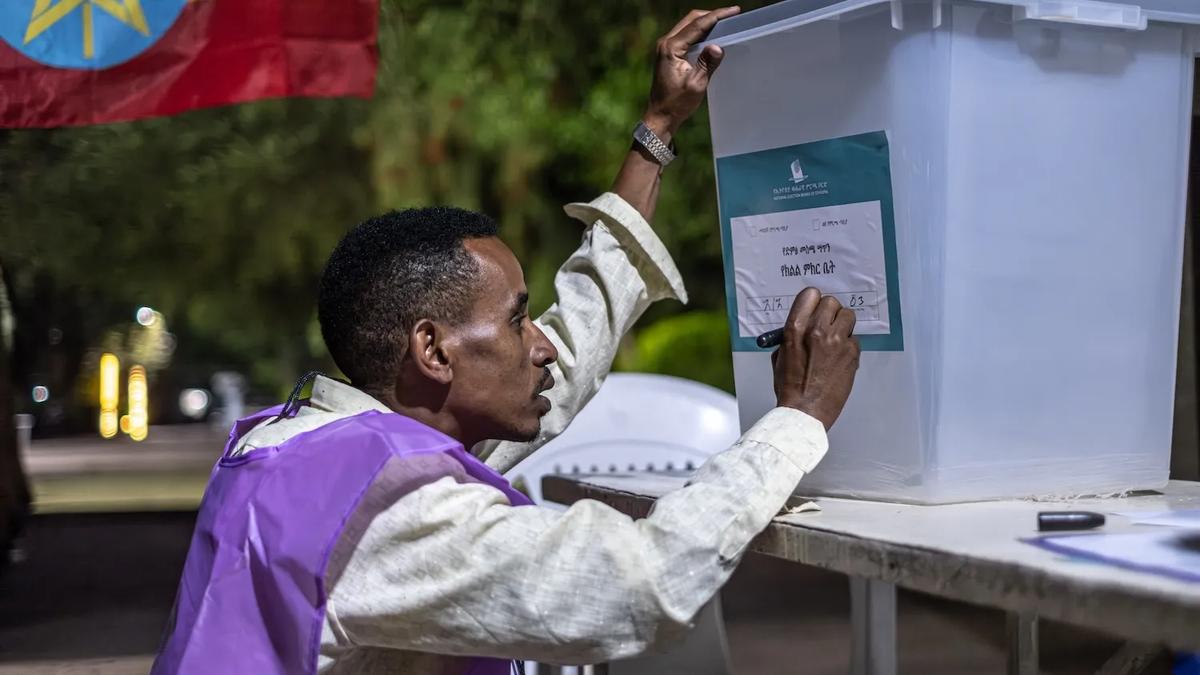
Ethiopia's recent parliamentary election, held on June 1, 2026, appears poised to grant Prime Minister Abiy Ahmed a new five-year term, yet the process has been marred by significant irregularities and widespread violence. This outcome, while consolidating Abiy's power, risks deepening internal political rifts and escalating tensions across the strategically vital Horn of Africa, potentially triggering a broader regional conflict. The election's conduct and its immediate aftermath underscore the fragility of Ethiopia's political landscape and the complex interplay of domestic grievances with ambitious geopolitical objectives.
The electoral process itself was deeply contentious. Ethiopia's electoral body suspended or canceled voting in numerous constituencies, citing “unfavourable conditions” and violent disruptions. Most notably, no voting occurred in the northern Tigray region, which remains a flashpoint following a devastating civil war from 2020 to 2022. Despite the 2022 Pretoria Agreement aimed at peace, renewed fighting between the federal government and the Tigray People's Liberation Front (TPLF) has persisted, exacerbating mass internal displacement. The peace deal now teeters on the brink of collapse, with the TPLF announcing its intention to retake control of the regional government and forming a rival administration, effectively creating two competing cabinets. This move stems from TPLF factions' dissatisfaction with the Pretoria Agreement, which they perceived as sidelining them and mandating disarmament without adequate political concessions, alongside accusations that Addis Ababa has withheld funds from the region.
Beyond Tigray, violence from the Fano militia in Amhara and clashes involving federal, regional, and separatist forces in Abiy's home region of Oromia also derailed voting in parts of these areas. An armed attack in a farming community in Oromia over the election weekend reportedly killed dozens of civilians, highlighting the pervasive insecurity. Despite these challenges, Abiy's Prosperity Party is projected to secure a landslide victory, largely attributed to a fragmented opposition lacking national appeal and financial resources. This electoral dominance, however, comes amid concerns over democratic backsliding, with Human Rights Watch reporting limitations on independent media, harassment of journalists, and curtailed free speech under Abiy's tenure. The prevailing sentiment among many voters, as observed, was one of resignation, believing the outcome to be predetermined.
A critical driver of current and future instability is Prime Minister Abiy Ahmed's assertive push for Ethiopia to regain access to the Red Sea, which he describes as an “existential” imperative. Ethiopia lost its maritime access when Eritrea gained independence in 1993, and Abiy's ambition to reverse this has profound geopolitical implications. While Abiy received a Nobel Peace Prize in 2019 for negotiating an end to a two-decade war with Eritrea, and the two nations subsequently allied against the TPLF during the Tigray conflict, tensions have since spiked. Eritrea's refusal to withdraw its troops from border regions in western Tigray, coupled with Abiy's Red Sea aspirations, risks reigniting conflict between the former allies.
This pursuit of Red Sea access has already triggered a significant regional realignment. Eritrea, Somalia, and Egypt have formed an alliance, primarily in opposition to Addis Ababa's maritime ambitions. Egypt, in particular, harbors long-standing grievances with Ethiopia over the Grand Ethiopian Renaissance Dam (GERD) on the Nile River, adding another layer of complexity to the emerging regional power dynamics. The potential for a broader regional conflict involving these nations is a serious concern, given the strategic importance of the Red Sea for global trade and security. Any escalation could destabilize shipping lanes and draw in other international actors with interests in the region.
Abiy's Prosperity Party campaigned on a platform of strong economic growth, citing reforms such as easing foreign exchange controls and floating the birr, alongside record gold and coffee exports. Officials project a robust GDP growth of 10.2 percent for the 2025-26 fiscal year, a figure significantly higher than most of the continent. However, these economic achievements are overshadowed by the profound political and security fragility. Sustained internal conflict, the potential for renewed war with Eritrea, and a broader regional confrontation would severely undermine economic progress, deter foreign investment, and exacerbate humanitarian crises, particularly in regions like Tigray already grappling with mass displacement and food insecurity.
In conclusion, while Abiy Ahmed's re-election appears certain, it arrives at a critical juncture for Ethiopia. The unresolved internal conflicts, particularly in Tigray, combined with the Prime Minister's ambitious and potentially destabilizing Red Sea agenda, set the stage for a period of heightened uncertainty. The emerging regional alliances and counter-alliances underscore the interconnectedness of domestic politics with broader geopolitical shifts in the Horn of Africa, making Ethiopia's trajectory a matter of significant international concern.
Source referenced: FOREIGNPOLICY
This brief was synthesized by our Editorial Engine and reviewed by The Ground Narrative team.