TRENDING

Wednesday, 14 October 2026
----------------------
3 Jumada Al-Awwal 1448 AH
A New York exhibition of 3.5 million pages of Jeffrey Epstein's legal documents highlights systemic failures in the U.S. justice system and amplifies calls for transparency and accountability for powerful elites. The 'Donald J Trump and Jeffrey Epstein Memorial Reading Room' serves as a stark reminder of the global implications of domestic institutional integrity.
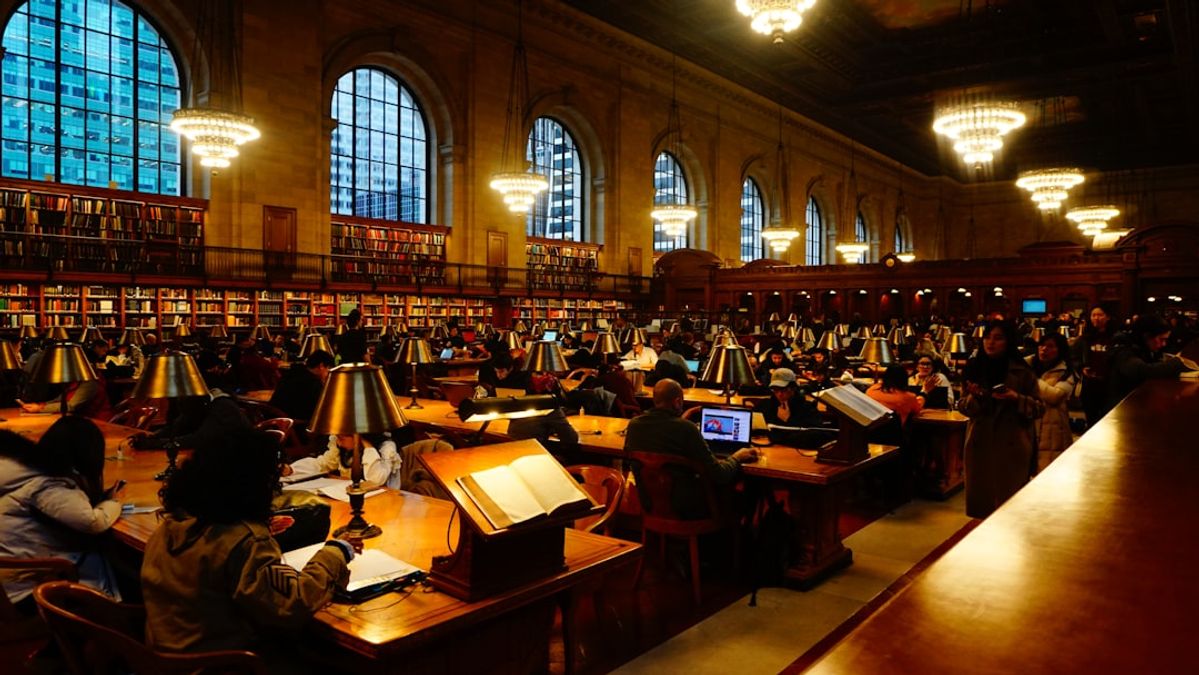
In a Tribeca gallery in New York City, an exhibition titled "The Donald J Trump and Jeffrey Epstein Memorial Reading Room" has transformed 3.5 million pages of law enforcement documents into a monumental physical archive. These documents, released by the United States Department of Justice, pertain to the cases of convicted sex offender Jeffrey Epstein. Bound into 3,437 volumes, they line the walls from floor to ceiling, creating what survivors have described as a "paper city." Organized by the Institute for Primary Facts, a nonprofit focused on transparency and anti-corruption, the exhibition, which opened in early May 2026, serves as a powerful, tangible testament to the scale of Epstein's crimes and the systemic failures that allowed them to persist.
Epstein's arrest on sex trafficking charges in July 2017 and subsequent death by suicide in his New York jail cell a month later denied his many victims the opportunity for justice through a trial. The exhibition, therefore, aims to shed light on the numerous cases connected to Epstein that never reached a courtroom. It includes documents released under the Epstein Files Transparency Act, timelines, and a dedicated memorial space for survivors. The overwhelming physicality of the archive is intentional, designed to force visitors to confront not only the extent of Epstein's abuse network, which identified thousands of victims, but also the profound impact on countless lives.
The exhibition's very existence underscores a critical demand for transparency and accountability from U.S. institutions. David Garrett, a co-founder of the project, emphasized that the initiative is centered around victims and survivors, aiming to generate public pressure on Congress and the Department of Justice for full and real transparency. This push for public outrage is intended to drive concrete action, highlighting a perceived deficit in governmental responsiveness and oversight.
A significant revelation from the exhibition's creation process was the Department of Justice's alleged failure in proper redaction. Organizers discovered that many survivors' names remained visible in the printed files, while names of witnesses and co-conspirators were hidden. Garrett stated, "What seems to have happened is the Department of Justice modified its search function instead of actually redacting the names... They brazenly broke the law." This incident not only highlights a potential breach of privacy for victims but also raises serious questions about the integrity and competence of official processes, further eroding public trust in governmental bodies tasked with upholding justice.
While primarily a domestic U.S. issue concerning legal transparency and victim advocacy, the Epstein files exhibition carries indirect but significant geopolitical implications. The perceived failures within the U.S. justice system, particularly concerning the handling of powerful individuals and the subsequent struggle for transparency, can impact international perceptions of American governance and its commitment to the rule of law. As a leading global power, the U.S. often champions human rights, anti-corruption, and democratic principles abroad. When its own institutions are seen to falter in such high-profile cases, it can diminish its soft power and diplomatic credibility on the global stage.
Furthermore, Epstein's network was known to have international dimensions, involving victims and alleged associates from various countries. The domestic demand for accountability in the U.S. resonates with broader global efforts to combat transnational human trafficking and hold powerful elites accountable across borders. A perceived lack of full justice or transparency in a case of this magnitude within a major democracy could be viewed internationally as a concerning precedent, potentially fueling cynicism about the ability of even robust legal systems to prosecute the most connected individuals. The exhibition, therefore, becomes a symbol not just of domestic struggle but also of the universal challenge of ensuring justice and accountability for transnational crimes, irrespective of perpetrators' influence.
The exhibition has drawn a steady stream of visitors, including survivors like Lara Blume McGee and Dani Bensky, who found a profound sense of validation in seeing their experiences documented. Blume McGee described the experience as a "long-overdue acknowledgment of our pain, our abuse and our reality." The gallery also hosted a 24-hour livestream reading of the files, led by survivors and advocates, an effort to ensure the documents are not "quietly buried again." This public recitation underscores the ongoing fight to keep the issue in the public consciousness and to prevent the narrative from being controlled solely by official channels.
However, survivors emphasize that documentation alone is not justice. Blume McGee articulated this sentiment, stating, "Visibility without consequence only prolongs the wound. We need both: the files on the table and the government to act — investigate, prosecute, reform — so that being 'finally seen' becomes finally safe." The exhibition, therefore, is not an end but a powerful catalyst, a physical manifestation of an ongoing demand for systemic change and genuine accountability. It serves as a stark reminder that the integrity of a nation's justice system, particularly in cases involving powerful figures, has far-reaching implications for its domestic stability and its standing in the international community.
Editor's Note: The geopolitical implications are primarily indirect, stemming from the impact on U.S. institutional credibility and the global discourse on accountability for powerful elites in transnational crime.
Source referenced: ALJAZEERA
This brief was synthesized by our Editorial Engine and reviewed by The Ground Narrative team.