TRENDING

Tuesday, 6 October 2026
----------------------
25 Rabi' Al-Thani 1448 AH
Two explosions in central Damascus during French President Emmanuel Macron's historic visit underscore Syria's persistent security challenges even as it seeks international re-engagement. The incident, which killed one and wounded 36, occurred as Syria's new leadership endeavors to rebuild its image and foster crucial diplomatic and economic ties with Europe.
French President Emmanuel Macron's visit to Damascus on July 7, 2026, marked a pivotal moment in Syria's post-conflict trajectory and its efforts to re-engage with the international community. As the first European Union head of state to visit Syria since the 2024 ouster of longtime leader Bashar al-Assad, Macron's presence signaled a potential shift in European policy towards the war-torn nation. The visit was strategically significant for both Paris and Damascus. For France, it represented an opportunity to reassert diplomatic influence in the Levant, a region with historical ties, and to potentially contribute to stability and reconstruction efforts. For Syria, under President Ahmed al-Sharaa, it was a crucial step towards breaking international isolation, rebuilding its devastated infrastructure, and attracting foreign investment.
President al-Sharaa explicitly articulated Syria's aspirations, envisioning France as a "primary partner" and highlighting Syria's potential role in global transit, particularly in light of disruptions in the Strait of Hormuz. This statement underscores Damascus's ambition to leverage its strategic geographic position for economic and geopolitical advantage. The visit culminated in the signing of 15 bilateral agreements spanning critical sectors such as civil aviation, health, banking, water infrastructure, and roads, indicating a comprehensive approach to re-establishing functional state-to-state relations and fostering economic recovery.
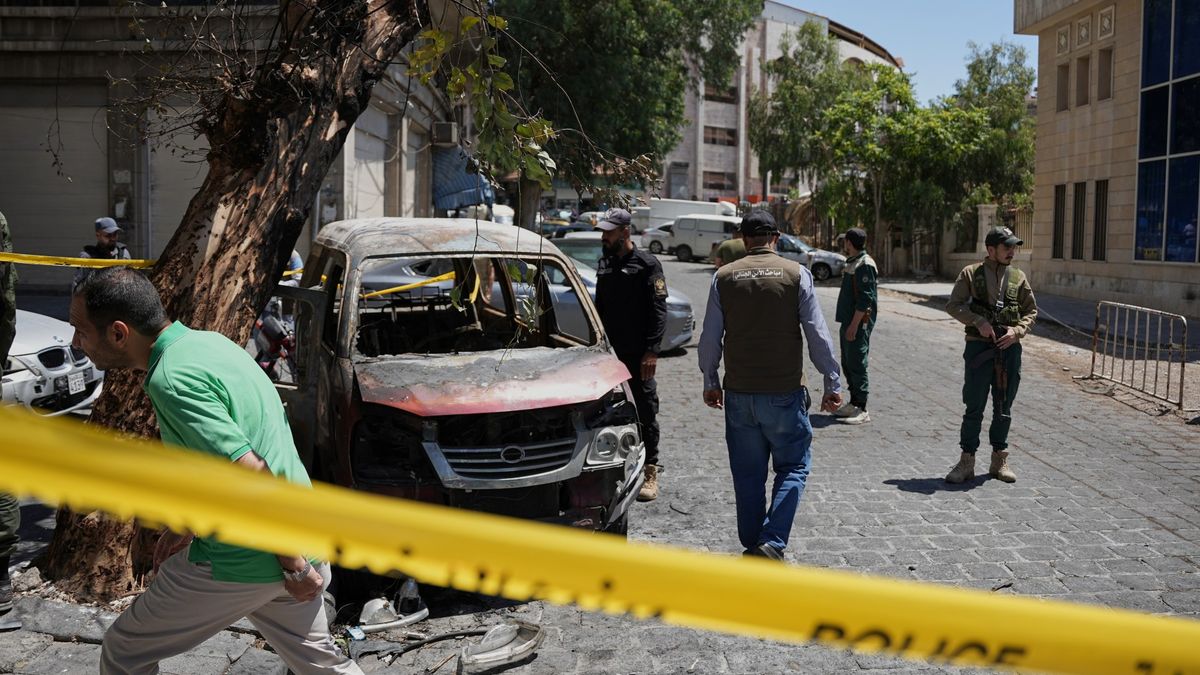
The diplomatic momentum, however, was significantly challenged by two explosions that rocked central Damascus on Tuesday, July 7. The blasts, which occurred near the Ministry of Tourism and the Four Seasons Hotel—where President Macron had stayed the previous night—resulted in one fatality and 36 injuries, according to Syria's Ministry of Health. Syrian authorities reported that one device was placed inside a parked car, while another was hidden in a rubbish container. Crucially, the Ministry of Interior stated that the explosions occurred "while preparations were under way" to dismantle them, suggesting that security forces had detected the devices but were unable to prevent their detonation entirely.
President Macron, who had already departed the hotel for the presidential palace at the time of the blasts, was unharmed. Despite the clear attempt to destabilize the visit, Macron affirmed his commitment to continue his engagements, stating alongside President al-Sharaa that they must "not let ourselves be destabilised." Al-Sharaa, in turn, commended Macron's "courage" for proceeding with the visit. This shared resolve, however, could not entirely dispel the "shadow" cast over the landmark diplomatic event, as acknowledged by observers.
The timing and location of the blasts carry significant strategic implications. Occurring during a high-profile visit by a major European leader, the attacks served as a stark reminder of the persistent security challenges within Syria, even as the country attempts to project an image of stability and readiness for international re-engagement. The incident could be interpreted as an attempt by internal or external actors opposed to Syria's normalization efforts to undermine the nascent diplomatic process and deter further international investment or political rapprochement.
For Syria, the blasts highlight the fragility of its security environment and the long road ahead in consolidating control and ensuring stability across the country. While President al-Sharaa's government seeks to rebuild its image and attract partners for reconstruction, such incidents underscore the inherent risks for foreign entities operating within Syria. For France and the wider European Union, the attacks bring into sharp focus the complexities and potential dangers of re-engaging with a nation still grappling with the aftermath of a protracted conflict and ongoing internal security threats.
Despite the immediate disruption, the decision by both presidents to continue their engagements, including their subsequent travel to Ankara for the annual NATO summit, signals a mutual determination to push forward with diplomatic and economic initiatives. The incident, while tragic, may ultimately serve to reinforce the narrative that international cooperation is essential to address the root causes of instability in Syria. However, it also serves as a potent warning that the path to full normalization and lasting peace in Syria remains fraught with significant challenges, both political and security-related, that could impede the country's reintegration into the global community and its ambitious reconstruction plans. The blasts underscore that while diplomatic doors may be opening, the underlying security landscape remains volatile and contested. The incident also follows a separate attack five days prior in Damascus that killed 10 people, further illustrating the ongoing security concerns in the capital. The long-term success of Syria's re-engagement strategy will depend heavily on its ability to demonstrate tangible improvements in security and governance, reassuring potential partners that their investments and diplomatic efforts are not unduly exposed to such disruptive acts. The international community will closely watch how these security challenges are managed as Syria navigates its complex path towards recovery and reintegration. The incident also highlights the intricate web of regional and international interests at play, with various actors potentially seeking to influence Syria's future trajectory through both diplomatic and coercive means.
Source referenced: ALJAZEERA
This brief was synthesized by our Editorial Engine and reviewed by The Ground Narrative team.