TRENDING

Wednesday, 7 October 2026
----------------------
26 Rabi' Al-Thani 1448 AH
The UN High Commissioner for Human Rights, Volker Türk, has called for an immediate ceasefire in South Kivu, Democratic Republic of Congo, as fighting between government forces and the M23 armed group intensifies.
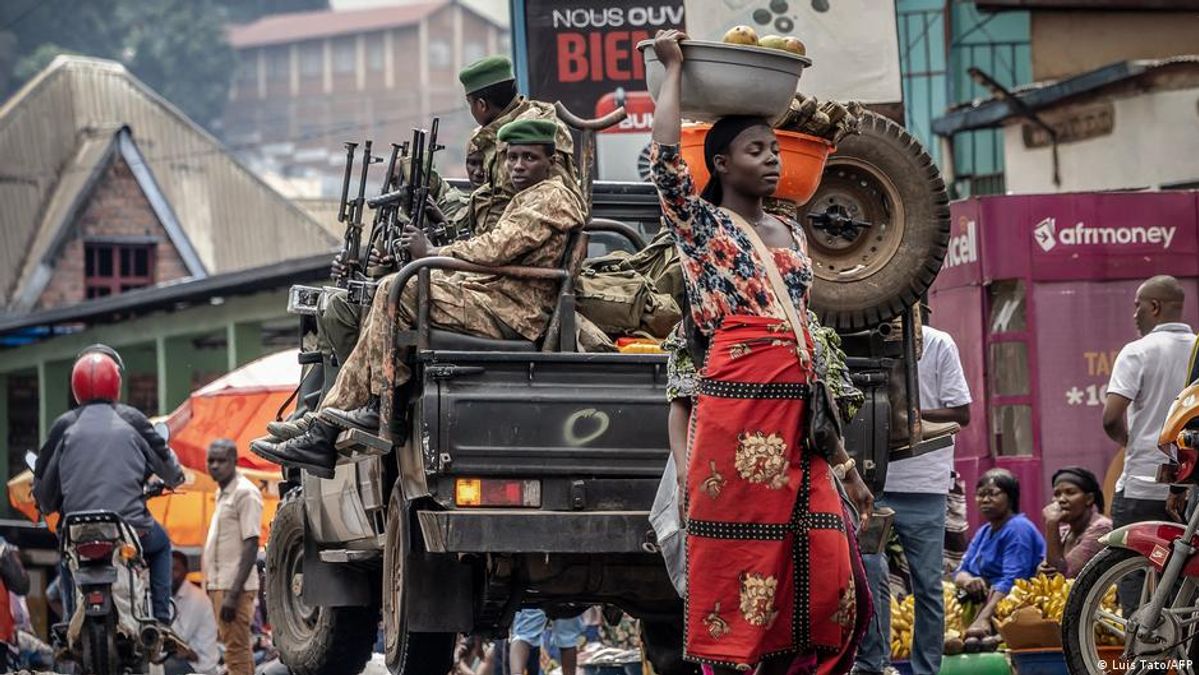
The Democratic Republic of Congo (DRC) is once again embroiled in a cycle of violence, as fighting between government forces and the M23 armed group intensifies in the eastern province of South Kivu. The UN High Commissioner for Human Rights, Volker Türk, has called for an immediate ceasefire, citing the devastating impact on civilians and the need for concerted national and international efforts to de-escalate tensions.
The conflict in South Kivu is a legacy of the Rwandan civil war and the genocide of the early 1990s. Millions of ethnic Hutu fled to what was then known as Zaire, leading to a decades-long cycle of violence and instability. Rwanda and allied countries launched an offensive in 1996, and Kigali was heavily involved in both the First and Second Congo Wars between 1997 and 2003. The DRC and Rwanda have a complex and tense relationship, with both countries accusing each other of supporting rebel groups.
The conflict in South Kivu has significant regional implications. The DRC is a key player in the African Great Lakes region, and instability in the country can have far-reaching consequences. The ongoing Ebola outbreak in the DRC has already been exacerbated by the conflict, with health officials warning that armed violence could impede containment and response efforts. The conflict also has implications for the wider region, with neighboring countries such as Rwanda and Uganda potentially drawn into the conflict.
The M23 armed group is backed by Rwanda's military, and the conflict is seen as a proxy war between the two countries. The DRC has accused Rwanda of failing to dismantle and withdraw support from the M23, while Rwanda has accused the DRC of showing no desire to undermine or dismantle groups like the FDLR. The conflict is also driven by economic interests, with South Kivu rich in gold, tin ore, and coltan reserves.
The conflict in South Kivu has the potential to escalate into a full-blown regional crisis. The UN has already expressed concerns about the use of explosive weapons with wide-area effects in populated areas, which has devastating consequences for civilians. The DRC and Rwanda must take immediate action to de-escalate tensions and protect civilians. The international community must also play a role in supporting the DRC and promoting a peaceful resolution to the conflict.
The conflict in South Kivu is a complex and multifaceted issue, driven by historical, strategic, and economic factors. The UN's call for an immediate ceasefire is a welcome step, but more needs to be done to address the root causes of the conflict. The international community must work together to support the DRC and promote a peaceful resolution to the conflict, which has significant regional implications.
Editor's Note: The analysis is based on publicly available information and may not reflect the full complexity of the conflict.
Source referenced: DW
This brief was synthesized by our Editorial Engine and reviewed by The Ground Narrative team.


