TRENDING

Saturday, 26 September 2026
----------------------
15 Rabi' Al-Thani 1448 AH
Chinese President Xi Jinping and Cambodian Senate President Samdech Techo Hun Sen met in Beijing, reaffirming their commitment to advancing a China-Cambodia community with a shared future. The meeting highlights China's efforts to strengthen its neighborhood diplomacy and deepen cooperation with Southeast Asian nations.
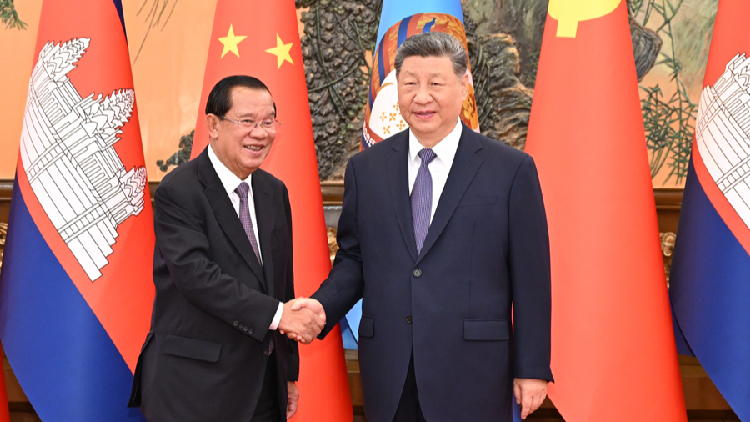
China's meeting with Cambodia's Senate President Samdech Techo Hun Sen in Beijing marks a significant development in China's neighborhood diplomacy. The meeting underscores China's commitment to strengthening its ties with Southeast Asian nations, particularly in the context of the complex and rapidly changing global landscape.
China and Cambodia have a long history of diplomatic relations, dating back to the 1950s. However, it was not until the 1990s that the two countries began to strengthen their ties, with China providing significant economic and military aid to Cambodia. Today, China is Cambodia's largest trading partner, with bilateral trade exceeding $10 billion in 2025.
China's meeting with Cambodia is part of its broader strategy to strengthen its ties with Southeast Asian nations. China's policy in the region is driven by several key motivations, including:
Economic Interests: China seeks to expand its economic influence in Southeast Asia, particularly in the areas of trade, investment, and infrastructure development.
Security Concerns: China is concerned about the growing military presence of the United States and its allies in the region, particularly in the South China Sea.
Regional Stability: China seeks to promote regional stability and cooperation, particularly in the context of the Association of Southeast Asian Nations (ASEAN).
China's meeting with Cambodia has significant implications for the region. The meeting highlights China's commitment to strengthening its ties with Southeast Asian nations, particularly in the context of the complex and rapidly changing global landscape.
Deepening Economic Ties: China's meeting with Cambodia underscores its commitment to deepening economic ties with Southeast Asian nations, particularly in the areas of trade, investment, and infrastructure development.
Enhancing Security Cooperation: China's meeting with Cambodia highlights its commitment to enhancing security cooperation with Southeast Asian nations, particularly in the context of the South China Sea.
Promoting Regional Stability: China's meeting with Cambodia underscores its commitment to promoting regional stability and cooperation, particularly in the context of ASEAN.
China's meeting with Cambodia has significant consequences for global governance. The meeting highlights China's commitment to strengthening its ties with Southeast Asian nations, particularly in the context of the complex and rapidly changing global landscape.
Rising Global Influence: China's meeting with Cambodia underscores its growing global influence, particularly in the areas of trade, investment, and security cooperation.
Challenging US Dominance: China's meeting with Cambodia highlights its commitment to challenging US dominance in the region, particularly in the context of the South China Sea.
* Promoting Multipolar World Order: China's meeting with Cambodia underscores its commitment to promoting a multipolar world order, particularly in the context of the complex and rapidly changing global landscape.
China's meeting with Cambodia marks a significant development in China's neighborhood diplomacy. The meeting underscores China's commitment to strengthening its ties with Southeast Asian nations, particularly in the context of the complex and rapidly changing global landscape. The meeting highlights China's strategic motivations, including economic interests, security concerns, and regional stability. The meeting also has significant implications for the region, including deepening economic ties, enhancing security cooperation, and promoting regional stability. Finally, the meeting has significant consequences for global governance, including rising global influence, challenging US dominance, and promoting a multipolar world order.