TRENDING

Thursday, 17 September 2026
----------------------
6 Rabi' Al-Thani 1448 AH
At the 18th BRICS summit in New Delhi, Xi Jinping outlined a roadmap for deeper cooperation among emerging economies. The plan promises development projects, but the power shifts and hidden costs raise questions for ordinary citizens across the Global South.
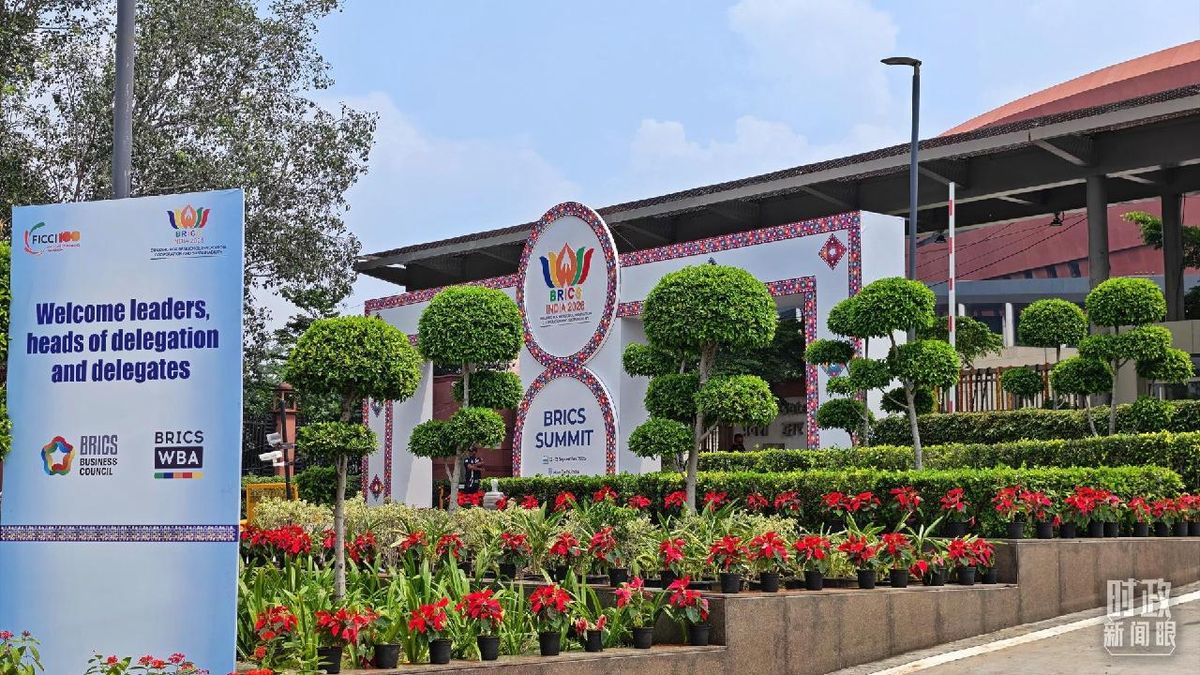
Chinese President Xi Jinping attended the 18th BRICS summit in New Delhi (Sept. 12‑13, 2026) and called for a "new chapter" of cooperation among the Global South. He presented four broad pioneering roles and five concrete initiatives – from open‑source AI to intelligent manufacturing – and announced that China will host the next summit, signaling a push toward what officials call the "third golden decade" of BRICS.
The summit serves several intersecting incentives. First, China secures a leadership mantle in a bloc that now represents half the world’s population and roughly 30 % of global GDP. By framing BRICS as the vehicle for a "more just and equitable" order, Beijing positions itself as the moral counterweight to U.S.‑led institutions, while also locking in trade and technology partnerships that reduce reliance on Western supply chains.
India’s role as host underscores its own balancing act: it welcomes Chinese engagement to diversify investment, yet must placate domestic constituencies wary of Beijing’s growing influence. The five initiatives – AI, digital industry, trade facilitation, intelligent manufacturing, and talent development – translate rhetoric into economic interdependence that can be leveraged in future negotiations on tariffs, loans, and strategic assets.
For the broader Global South, the promise of “open‑source AI” and “inclusive digital industry” offers a route to leapfrog traditional development stages. However, the governance architecture remains informal; decisions are made by consensus among a handful of powerful capitals (Beijing, New Delhi, Moscow, São Paulo, Johannesburg). This asymmetry lets China shape agendas while preserving the façade of collective decision‑making.
Ordinary workers, small‑scale farmers, and informal sector entrepreneurs bear the real cost of these high‑level deals. Infrastructure projects financed under BRICS frameworks often come with debt‑laden contracts, shifting repayment burdens onto already fragile public finances. In Africa, similar arrangements have previously led to revenue streams being diverted to service external creditors, limiting funds for health, education, and social safety nets.
The tech‑focused initiatives also risk creating a new digital divide. While elite universities and multinational firms may gain access to AI research hubs, rural communities could see their data harvested without robust privacy protections, and local tech ecosystems may be sidelined by Chinese platforms that dominate standards and market access.
Labor markets in member states could feel pressure as intelligent manufacturing drives automation. Workers in traditional factories may face job displacement unless retraining programs, often underfunded, are implemented. The promised “talent development” may primarily serve Chinese firms seeking cheap, skilled labor abroad, rather than fostering home‑grown innovation.
Official statements stress “mutual learning” and “win‑win cooperation,” yet they downplay the geopolitical calculus behind the push. By consolidating a bloc that can collectively negotiate with the IMF, World Bank, and WTO, China gains a bargaining chip to reshape global governance rules in ways that favor state‑led development models and reduce scrutiny over its own trade practices.
Western analysts note that the BRICS agenda subtly re‑centralizes financial flows through Chinese banks and development funds, bypassing traditional Western‑dominated channels. This re‑routing can obscure debt terms, making it harder for civil society in borrowing countries to monitor loan conditions.
Moreover, the summit’s rhetoric of “peace and stability” masks strategic competition with the United States and its allies. By presenting BRICS as the legitimate voice of the Global South, Beijing seeks to undermine democratic narratives that link human rights with economic assistance, thereby limiting leverage that Western governments might otherwise wield.
Watch for three concrete developments: (1) the rollout of the five initiative pilots – early contracts in AI labs, digital trade platforms, and joint manufacturing plants will reveal who controls intellectual property and profit streams; (2) China’s 2027 BRICS presidency – the agenda set for the 19th summit will indicate whether the bloc moves from rhetoric to enforceable standards, especially in debt sustainability and technology transfer; and (3) reactions from Western multilateral institutions – any coordinated response from the IMF, World Bank, or G‑7 could reshape financing options for countries caught between competing blocs.
The true test will be whether the promised “high‑quality development” translates into tangible improvements in livelihoods for the millions who live outside capital cities, or whether the new BRICS chapter simply reshapes the architecture of global power while leaving everyday hardships untouched.
Editor's Note: Analysis based on publicly available summit statements and expert commentary; specific debt terms of upcoming projects remain undisclosed.
Source referenced: CGTN
This brief was synthesized by our Editorial Engine and reviewed by The Ground Narrative team.