TRENDING

Thursday, 17 September 2026
----------------------
6 Rabi' Al-Thani 1448 AH
Israel has deployed the AI‑driven ImiSight system to map Palestinian land, accelerating home razings in the West Bank and turning demolition decisions into automated calculations.
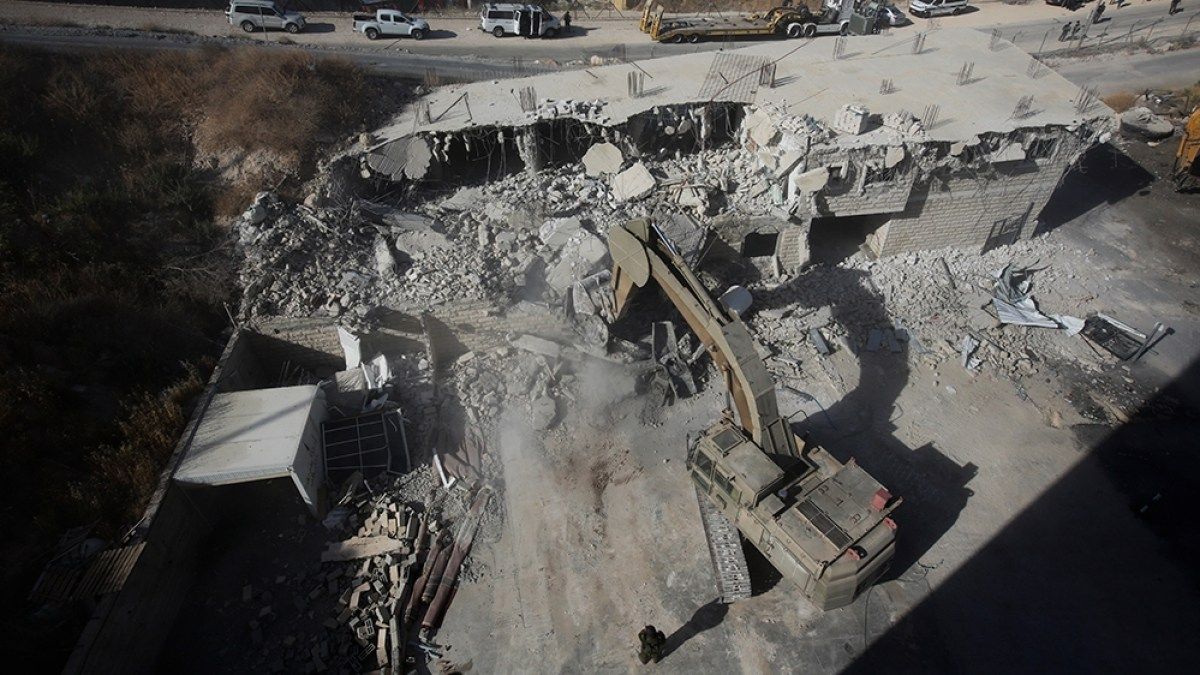
Israel’s Israel Land Authority, backed by the defence firm Rafael, rolled out an AI platform called ImiSight to monitor land use in the occupied West Bank. The system processes satellite imagery in orbit, flags structures deemed illegal, and hands the data to bulldozers. Between 2023 and 2025 demolition rates jumped 80 %, with 1,288 Palestinian buildings razed from January to September 2025 alone.
The rollout rests on three intersecting incentives. First, the military‑industrial complex gains a lucrative export product: a field‑tested algorithm that can be sold to other states or commercial firms. Second, the settler‑state logic uses AI to clear space for new housing units—over 40,000 units planned between 2023‑2025—while simultaneously legitimising outposts through a parallel digital land registry. Third, the political calculus of the Israeli government frames the Land Authority unit as a civil‑administrative step, masking annexation ambitions under the guise of “law‑enforcement.” Funding streams reinforce the loop: 33 million shekels for settler patrols and 40 million shekels for drones embed a private‑security network that feeds raw data into ImiSight, turning civilian volunteers into intelligence nodes.
For the families of Sur Baher, Naqab Bedouins, and countless West Bank villages, the algorithm translates into loss of shelter, livelihood, and community cohesion. An average of 966 homes a year were demolished, displacing thousands of residents who already face severe permit barriers. Children lose schools, farmers lose fields, and the informal economy—built on small‑scale construction and local markets—collapses under the weight of unpredictable, rapid demolitions. Humanitarian agencies report rising food insecurity and mental‑health trauma, while the legal system offers no recourse; the AI‑generated “violation” bypasses human review, leaving victims without a voice.
Official statements emphasize “security” and “illegal construction,” but they downplay the algorithm’s role in de‑humanising decision‑making. By converting a home into a data point, responsibility diffuses across software, satellite operators, and distant bureaucrats. The Israeli defence industry also omits the commercial upside: ImiSight is being refined for export, turning the occupied territories into a live testing ground for a product marketed worldwide. Meanwhile, the international community’s focus on Gaza’s casualties overshadows the systematic, technology‑driven displacement occurring in the West Bank, a narrative gap that shields the broader annexation strategy.
Watch for three developments. One, export licensing: any foreign sale of ImiSight will likely trigger diplomatic pushback and could embed similar surveillance regimes elsewhere. Two, legal challenges: Palestinian NGOs are preparing a case at the International Court of Justice, arguing that AI‑enabled demolitions constitute a violation of international humanitarian law. Three, tech‑policy responses: Western AI ethics boards may be pressured to address the weaponisation of civilian‑grade algorithms, potentially leading to export controls or corporate disengagement. The trajectory of settlement expansion, coupled with the digital land registry, will indicate whether Israel moves from de‑facto annexation to formal annexation, a shift that would reshape the legal status of the territories and the calculus of any future peace negotiations.
Editor's Note: Analysis based on publicly available reports and expert interviews; on‑ground verification limited.
Source referenced: ALJAZEERA
This brief was synthesized by our Editorial Engine and reviewed by The Ground Narrative team.